By Jeffrey A. Rendall
Spat with Canada shows much still needs improvement with the 2026 GOP messaging
“What’s in a name? That which we call a rose by any other name would smell as sweet.”
Shakespeare aficionados surely recognize the quote as being from the legendary English playwright’s Romeo and Juliet. The saying having become so ubiquitous in culture today that practically everyone recognizes it whether they can correctly identify the source or not.
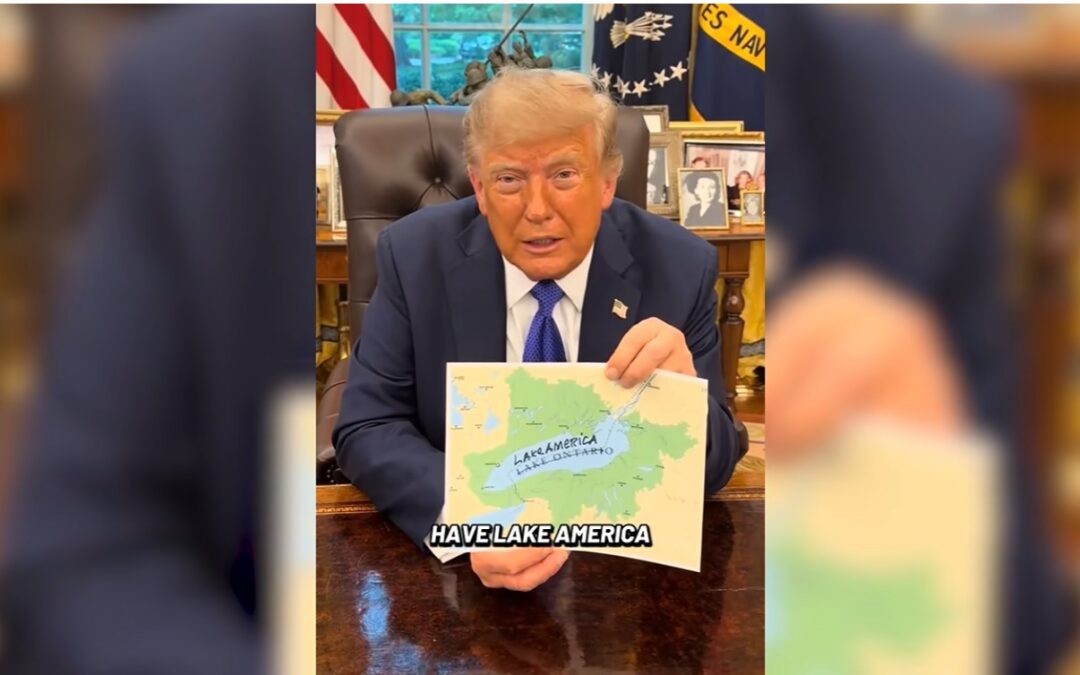
But the meaning of the quote bubbled to the surface – again – recently as a dispute arose between President Donald Trump and Canadian Prime Minister Mark Carney over tariffs, a particularly unpleasant back-and-forth that apparently motivated the American commander-in-chief to take action to rename Lake Ontario to “Lake America” as a retaliatory measure in response to our northern neighbor’s intractable tariff policy.
“What’s in a name?” Well, quite a lot it seems. And we will learn just how much by this year’s Election Day one way or another.
As we head towards Labor Day, 2026 – basically almost a week later than usual this year – many Americans will hit the “pause” button on their busy normal daily routines and reflect on their lives and the direction of the country. The unofficial conclusion of summer always provides a good chance to look back and ponder what’s transpired since the return of hot weather.
President Trump’s threat to rename one of the Great Lakes is but one recent occurrence, but it’s not insignificant. If for nothing else, the gesture showed the president hasn’t moved on from his stubborn personal vendettas in pursuit of a stronger, more “unified” message intended to bring people into the GOP’s tent rather than zip the narrow opening shut.
Is this really what people want? In an article titled, “Trump floats renaming Lake Ontario as Lake America”, Tom Howell Jr. reported at The Washington Times last week:
“President Trump said … that he wants to rename Lake Ontario as ‘Lake America,’ opening a new front in the trade war with Canada as Ottawa dropped the gloves and retaliated against U.S. tariffs.
“Mr. Trump’s proposal deepened his war of words with Canadian Prime Minister Mark Carney. If carried out, it would mirror his contentious renaming of the Gulf of Mexico as the Gulf of America at the start of his second term. ‘The United States is giving serious consideration to changing the name of Lake Ontario to Lake America in that we don’t expect to [be] doing much business with Ontario any longer,’ Mr. Trump said on social media.
“White House and Republican social media accounts reposted the message, suggesting it was no mere fancy and could be under consideration. Lake Ontario, one of the five Great Lakes, lies between the state of New York and the Canadian province that shares its name, with 47% of its area in U.S. territory and the rest in Canada. Cities such as Toronto and Rochester sit along the large body of water.”
Just like that, all the maps and globes we ever studied would need to be replaced because the names of famous landmarks (or waterways) suddenly changed because the American president decided he didn’t want to give Canada the leg up in the public relations feud over trade tariffs in our time.
Trump is a hundred percent right in his desire to motivate Canada to play fair in cross-the-border dealings and trade relationships – as well as on drug policy and immigration, among other things – but is this somewhat petty gesture the best way to get the urgency across in the all-important campaign messaging contest with Democrats?
Put it this way – will relabeling Lake Ontario win the Republican party’s candidates more support than not doing it?
Why stop there? Can’t we just say Canadians have funny accents, love vaccine mandates too much, negligently export their foul forest fire smoke – and that far too many of the Hallmark Channel’s actors and actresses are from there?
All kidding aside, this episode provides another example of the Republican Party’s lack of messaging discipline at the top. The policy wrapping is right on target – the Canadians deserve little sympathy for Trump’s latest drive to bring them to the negotiating table to promote fairness for both sides – but the packaging is wrong? Does this make sense?
I recall a conversation in the first decade of this century I had with a Canadian visitor who worked in the same industry as myself at the time. The fellow was friendly enough and we got along swimmingly, including when talk turned to politics and I mentioned how it was my impression that Canadians viewed themselves as sheltered younger siblings and resented the success of the rich a much more potent America.
Somewhat surprisingly, the gentleman agreed with my characterization of his countrymen, though he admitted that he didn’t care for the policies of the George W. Bush administration and appeared to go along with Canada’s much more lackadaisical and hands-off attitude towards governmental restrictions on freedoms.
I’ve thought quite a bit about that day, and most of what I’d observed, including having visited Canada a couple years ago (again), and it’s only reinforced my earlier impressions. There’s a certain unmerited arrogance displayed by a great many Canadians, particularly those in the higher echelons of policymaking.
Former Prime Minister Justin Trudeau acted as a fitting stereotypical symbol of the Canadian mindset, a tradition that, unfortunately, has persisted under his successor, Mark Carney.
Canadians perform as though they’re spoiled younger brothers or sisters, the kids who demand a larger share of everything and just cry and stomp and hold their breath until their exasperated parents relent whenever they don’t get their way. It’s as though the northerners realize they’re acting like a gaggle of petulant kindergarteners but don’t want to alter their modus operandi lest they risk losing the benefits typically derived from their tantrums.
But that’s just the Canadians. They’re probably still bitter because the United States hockey team bested them in the gold medal game in the most recent winter Olympics despite, from most accounts, being vastly outplayed by the Canucks.
Canadians have a chip on their shoulder. We see it, we know it and here’s thinking Trump is correct about the northern dwellers needing us more than we need them. We’ll show those puny upstarts with the Maple Leaf banner! Get a real flag, why don’t you? One that isn’t just red and white?
This is all well and good, but this high-level verbal and social media fracas shows Trump and the Republicans haven’t learned their lesson ahead of this year’s elections. As I’ve argued before, the only thing that matters right now is putting the Republicans in the best position to prevail in November’s elections.
If they don’t, and the Democrats take over, Republicans will be too busy fending off and defending against fresh impeachment charges to concern themselves with what people call Lake Ontario. Or whether we should think of Canada as the 51st American state. Or Greenland… or… you get the point.
It looks as though nothing will come of the Lake naming dispute, and the Trump push is likely just another negotiating ploy to try and move the northerners closer to sanity on trade. But the average person doesn’t care all that much about tariff rates until it ends up biting them on the keister – and in the wallet.
In the meantime, suggesting the recoining of a historic Great Lake is bound to rally Canadian citizens around their government’s position, even if the policy may be harmful to their own interests. How is that going to better the situation? Americans, if they do care about the distinction, aren’t likely to give Trump any more credit than they normally would for such things, either.
Therefore, the net benefit to Republicans is zero. Or could even be negative. Is this furthering the goal of improving Trump’s overall approval rating and making the campaign message job any less challenging?
What’s in a name?
Hubris and chest-thumping isn’t going to get it done for Republicans. Everything President Trump does displays his enormous pride for America, but the fabricated dust-up with Canada over Lake Ontario’s identity isn’t the best way to sell his and the GOP’s platform to voters this year. Think about it over Labor Day. Would any old name sound just as sweet?
Jeff Rendall is editor and publisher of GolfintheUSA.com and has written about golf and politics for over a quarter of a century. A non-practicing attorney from California, he moved to the east coast three decades ago to pursue and combine his interests in all things American history and culture. Jeff has worked as an intern on Capitol Hill and in various capacities in grassroots organizing and conservative organizations and publications, including a nearly two-decade stint at ConservativeHQ.com. Column republishing or other inquiries: Rendall@msn.com .