By Jeffrey A. Rendall
When in doubt, Democrats default to the “tax the rich more” line of reasoning
This one has been around for as long as there’ve been political disagreements between two competing factions, and, rest assured, it’ll persist after the current generation of politicians has passed from the scene into the pages of history.
This is one dilemma that not even Artificial Intelligence can calculate or solve.
The mystery for the ages is how much to tax the People. A lot? A little? Somewhere in between? To encourage economic growth? To punish the successful? To make things “fair” for those in the bottom economic strata? Or simply flip a series of coins and the heads/tails side with the most “wins” gets to decide where the rate is set?
Tax Day came and went recently without much fanfare from the establishment media, the talkers seemingly choosing to squawk about President Donald Trump and the latest happenings in the Iran War instead. Then there was the journos’ back-and-forth over whether former Speaker Nancy Pelosi knew beforehand about the trouble that would surround scumbag California Congressman Eric Swalwell, and if his subsequent resignation would make a difference in Congress – or in this year’s California governor’s race.
Or what if current FED Chairman Jerome Powell stays on after President Trump has decided that it’s time for him to go?
These are just blips on the radar screen. Chances are you’ve already forgotten about them… except maybe for the Iran War part. The enduring mystery, as previewed above, is how to set an optimum tax rate. One side believes taxing the rich is a good thing and should be encouraged.
In an op-ed titled, “Taxing millionaires and billionaires is a political no brainer for Democrats”, Democrat strategist and national podcaster Brad Bannon wrote at The Hill recently:
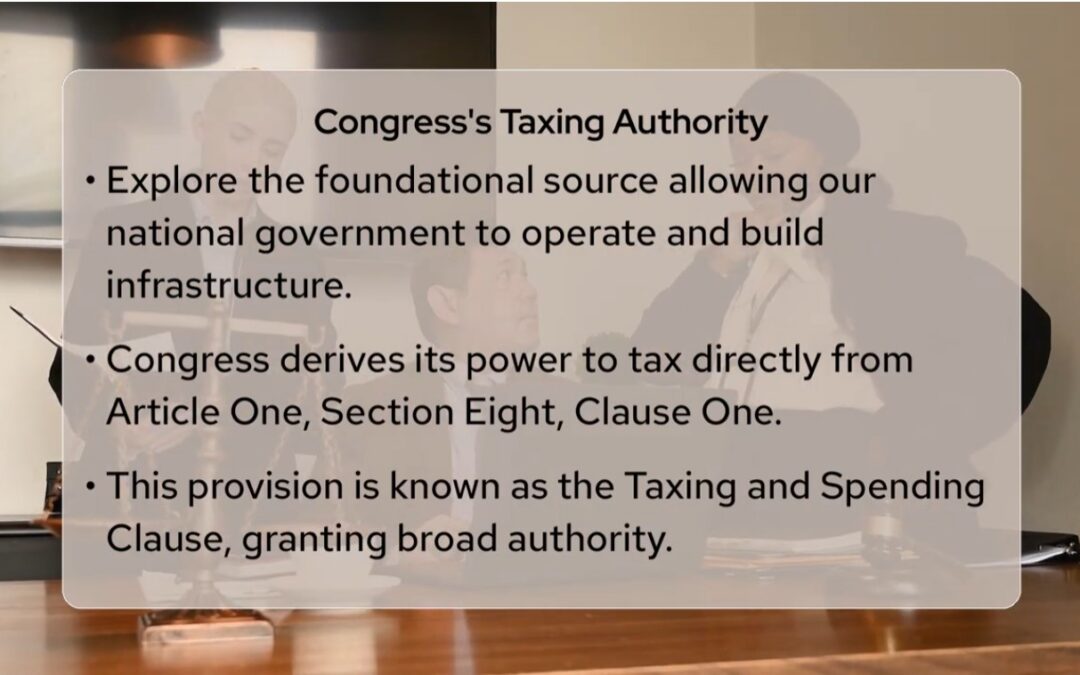
“The Constitution requires tax legislation to originate in the peoples’ House so Democrats will have the home court advantage for the fight for financial relief if they take control of the House of Representatives after this year’s midterm elections. My party must take this heaven-sent opportunity to press for tax relief for low- and middle-income Americans.
“The early 21st Century is [an] era of wretched excess. The monied elite own their own islands and the massive yachts that ferry them back and forth in luxury while most people struggle to feed their kids. This crisis is evocative of the Gilded Age of gross financial injustice in the late 19th and early 20th centuries. Pent up anger led to the economic reforms of the Populist Revolt, the Progressive Era and the New Deal.
“These reforms created a political coalition that lasted a full generation. Democrats now have the opportunity to unleash another round of progressive economic populism that will help people stand up and step out of the money pit and renew the allegiance of middle-class Americans to the party of Franklin Delano Roosevelt that lifted them out of a financial depression.”
Really? See what I mean? The basic “us vs. them” argument has been around for as long as there’ve been politicians, and the same tired rationales will perpetuate as long as there are… Democrats.
I can’t say for sure, since I don’t recall, but I’d hypothesize Bannon’s language doesn’t differ all that markedly from what liberals spouted in Ronald Reagan’s time. You know the Democrats’ refrain – lower tax rates benefit only the top earners and the rich has too much, and the poor struggles to feed their kids, and no one can buy a house because they’re too busy trying to get their hands on enough coin so their cats and dogs and little babies don’t starve to death.
Blah, blah, blah. It’s tiresome, isn’t it?
Bannon may have suggested that boosting taxes on the super-rich is a “no brainer”, but one might wonder if the idea was postulated by someone with no brain instead. Because money – and wealth – comes from somewhere, and the more that’s taken by the government means less for those in the private economy.
Government doesn’t create wealth. It merely confiscates accumulated value from a productive source and redistributes it to a (most likely) non-productive receiver. I’m not a genius, or a mathematician, but such a proposition doesn’t sound like common sense to me.
As always, the quandary doesn’t involve whether you can do something, it’s whether you should do it. Politically speaking, Democrats could possess the power to fix taxes the way they’d prefer at some future point. Here’s thinking the opportunity probably won’t arise while Donald Trump is president, but crazier – and stupider – things have happened before.
The passage of the One Big Beautiful Bill Act last year adjusted rates in many areas and completely eliminated taxes in others, a notion that’s generally popular among folks who work for a living. I’ve often surmised that young leftists can be ideologues until they start earning a paycheck and discover just how much of their earnings goes to Uncle Sam. And their state’s Uncle Sam. Or Abigail Spanberger in Virginia. She decrees like she’s a monarch.
Democrats seeking the 2028 party nomination for president need only take a five-minute course taught by Brad Bannon to commit to memory what they need to say on stage in the Democrat candidate debates. None of the current major contenders has anything new to offer to the discussion. It’s just the perfunctory Democrat class-envy nonsense over and over.
If this argument contained a sell-by date, it would’ve expired in 1776. Or it might’ve gone by the wayside in 1492. Perhaps America’s indigenous people objected to taxes too.
What is the reason why Democrats continue with this line of persuasion? Because they believe it buys them votes, not because taxing the well-to-do will result in novel greater revenues or a balanced federal budget.
Statistics, if lazy Democrats like Bannon bothered to check them, show the top taxpayer levels pay a greater percentage of the total taxes than they did prior to the One Big Beautiful Bill Act. You get that? The so-called “rich” are carrying a greater share of the load than they did before Trump was president.
These are the same concepts that emerge every time Congress manages to pass a tax cut. Reagan’s supply side tax rate reductions resulted in the greatest economic growth the country had seen in generations, raising take home pay for all earning levels. The wealthy did well, but so did everyone else. And this was when tax rates went down, not up.
So, if the Democrats’ blind assertion is that hiking tax rates makes sense economically, reality demonstrates that they’re wrong. Yet blue states are keeping up with wealth tax proposals which may prolong Democrats’ stay in power, but don’t make lives better. Hypothetically speaking, if rich people pay more, it won’t result in increased benefits for poor people.
Besides, there’s a good argument that wealthy individuals, acting in their own self-interest, provide advantages that can’t be seen. It’s simple, really.
I’ve always said, you can only do three things with money – you can spend it, save it, or invest it. Spending at all levels bolsters the economy, except when it results in inflation. Increased spending for basic essentials hurts the poor the most. Put it this way – you don’t get increased utility from paying more for bread or gasoline.
Spending for luxuries shows up on the positive side, too. If a rich gal buys a yacht, the building of it provided jobs for men and women in the yacht-manufacturing industry. Or for folks who staff cruise ships or high-end resorts. The extra dollars go directly to people who work with their hands.
By the same token, saving money provides a pool of capital for institutions to lend to borrowers. Have you seen, “It’s a Wonderful Life?” George Bailey understood how ordinary people acquired the means to pay for their own homes. Further, saving money helps citizens weather a storm of bad financial times. Call it a “nest egg”, or a “rainy day fund”.
Lastly, rich people investing their money provides capital for investors to start businesses or amass for retirement. Your 401K is pooled with other investors to grow over the course of time and act as retirement income.
George Washington understood the power of compounded interest. It accrues the wealth of nations.
No country ever taxed itself into prosperity. Governments spend money; they don’t invest it, and certainly never save it.
In conclusion, it could make political sense for Democrats to try to soak the wealthy with high taxes. Gullible low-information voters may be suckered into believing the wealthy need to “pay their fair share” or that extracting money from them “levels the playing field”. This simply isn’t true. Don’t fall for Bannon’s plea for class-envy. Work to enjoy the fruits of your own labor.
Jeff Rendall is editor and publisher of GolfintheUSA.com and has written about golf and politics for over a quarter of a century. A non-practicing attorney from California, he moved to the east coast three decades ago to pursue and combine his interests in all things American history and culture. Jeff has worked as an intern on Capitol Hill and in various capacities in grassroots organizing and conservative organizations and publications, including a nearly two-decade stint at ConservativeHQ.com. Column republishing or other inquiries: Rendall@msn.com .