By Jeffrey A. Rendall, Photos by Jeff and Shari Rendall
GolfintheUSA.com heads to Europe for a fun filled cruise to the southern Mediterranean
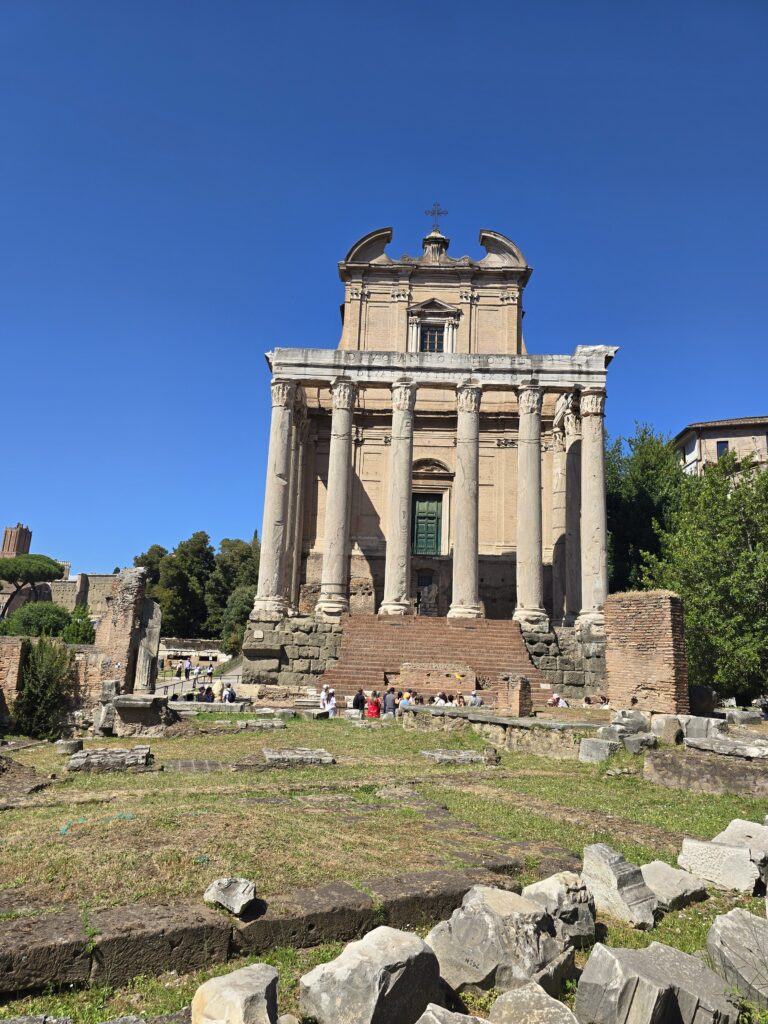 It takes guts to call a ship “Oasis of the Seas”, but then again, Royal Caribbean Cruise Line has a fleet of 30-something ships to name, so labeling one of them “Oasis” kind of goes with the territory.
As the first ship in the trailblazing Oasis class, Oasis of the Seas broke new ground for grand luxury liners. Prior to Oasis’s launch in late 2009, most people, myself included, probably envisioned cruising as being similar to what you might’ve found in the 20th century on TV shows like “The Love Boat”, with pretty standard shaped ships and luxurious though not over-the-top amenities aboard.
But Oasis of the seas changed cruising culture in more ways than one. Wikipedia described it:
“Oasis of the Seas is a cruise ship operated by Royal Caribbean International. She is the first of her class, the Oasis class, whose ships were the largest passenger ships in the world, until surpassed in 2023 by the Icon class. Her hull was laid down in November 2007 and she was completed and delivered to Royal Caribbean in October 2009. At the time of construction, Oasis of the Seas set a new capacity record of carrying over 6,000 passengers. She was joined by sister ships Allure of the Seas in December 2010, Harmony of the Seas in May 2016, Symphony of the Seas in April 2018, and Wonder of the Seas in March 2022, as well as Utopia of the Seas in July 2024.”
That’s a lot of “class”, don’t you think? Royal Caribbean has since announced that it’s ordered construction of a seventh Oasis Class ship, and one can only imagine what it will look like when it’s unveiled.
As indicated above, the Oasis Class is no longer the largest cruise ship in the world having been surpassed by the Icon Class, which currently includes three launched ships – Icon of the Seas, Star of the Seas and Legend of the Seas, and a fourth, Hero of the Seas, set to set sail sometime in 2027.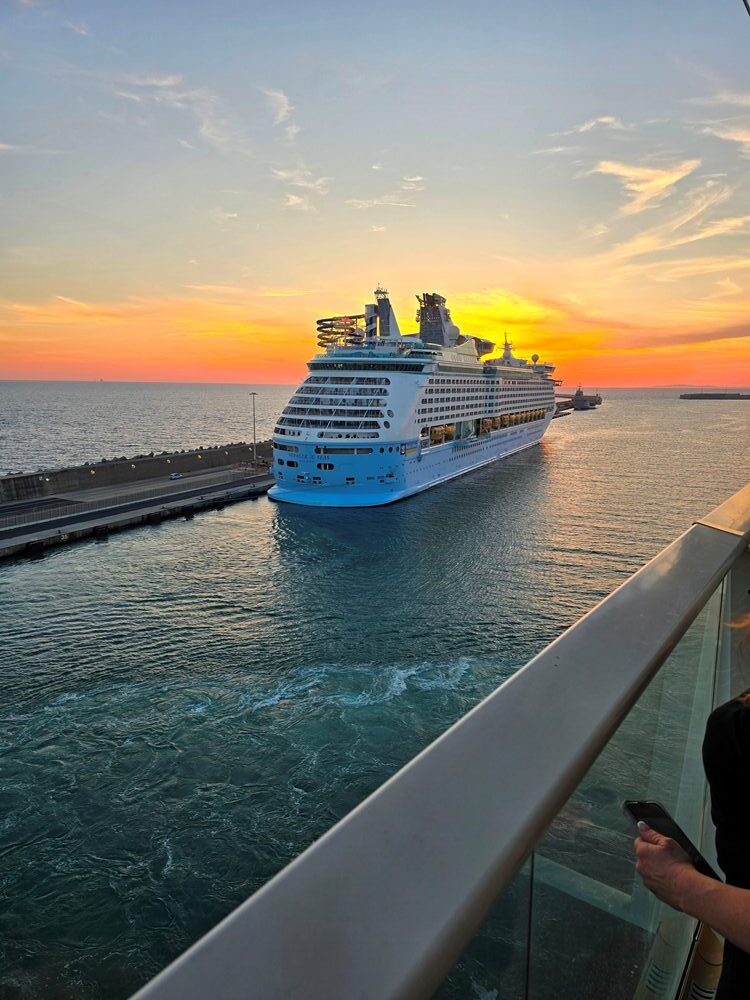
In an industry that measures size by tonnage, Oasis of the Seas comes in at roughly 226,838 tons. By comparison, the cursed White Star Line’s Titanic was 52,310 tons on its one and only voyage in 1912. Royal Caribbean’s Icon Class bested Oasis by about 10 percent, coming in at 250,800 gross tons per ship.
Does size matter? Some would suggest it does on cruise ships. There’s an ongoing debate among cruise enthusiasts — that Royal Caribbean’s mega-ships are too big, though not having sampled a full complement of them, I can’t fully weigh-in on the discussion. All I know is, I was awed by Oasis of the Seas when I first set foot on the floating paradise on embarkation day.
European Cruise Destinations: Rome – Rome wasn’t built in a day; it can’t be toured in a day, either
Visiting Europe for the first time? Suggestions to smooth the transition – Rome Part I
 I’d been on a few cruise ships prior to our first Royal Caribbean voyage on Oasis of the Seas. I hadn’t been on a cruise in over a decade and I’d formulated hard and fast opinions on the mode of vacationing, which engendered a quizzical look from myself when my wife unveiled my Christmas present for that holiday season a few years ago – “What, we’re going on a cruise? That’s nice, but really?”
Sweetening the proposal was the fact we were headed to Europe, which I’d never been to before. As a lifelong history buff and big fan of the movie Gladiator, I relished going to Rome.
And Rome was the embarkation stop for our cruise. Like most people, probably, we booked a flight from the east coast to Rome (through Charlotte, North Carolina) and left what we thought was plenty of time to see a little bit of the ancient city and then head to the cruise terminal for the sailing. Originally, we planned to fly to Rome on Thursday (arrive Friday) and go on a whirlwind tour of the city and still leave time to embark.
Which leads me to my first suggestion:
1. ALWAYS build in an extra day before you cruise departs, particularly if you have any interest in exploring the destination before you set sail.
Flying overnight on Thursday with an early arrival time on Friday would not have left time for a decent perusal of Rome. Not even close.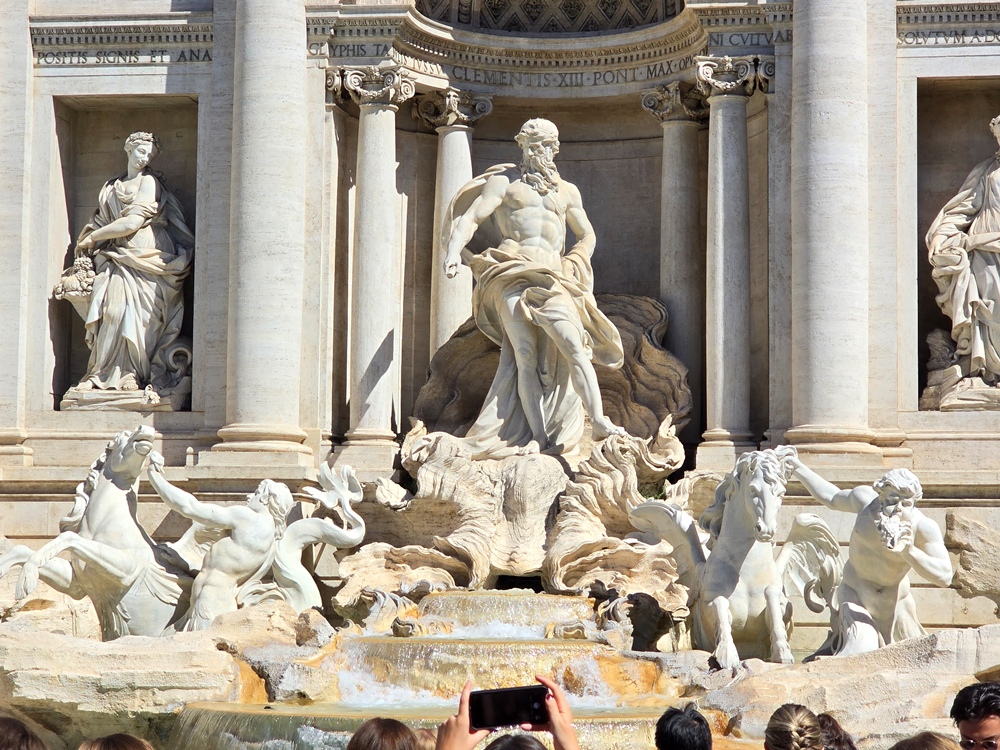
We did end up booking a flight on Wednesday to reach Rome on Thursday morning. As might be expected in the summer months, our flight to Charlotte, and then the flight from Charlotte to Rome, were both delayed. The Charlotte to Rome leg took off a little over three hours late due to thunderstorm activity in North Carolina. We almost didn’t get out at all, with the flight crew brushing up against maximum FAA hours restrictions when building in the nine-hour flight time to Italy.
We ended up arriving in Rome about noon local time. We’d booked an in-depth private tour with an experienced native Italian guide recommended by a friend, and she was kind enough to wait at the airport for our delayed arrival. But when you book a tour, you pay whether you go on the tour or not.
Because of our tardy airplane, it cut our first-day Rome excursion by about half. Our guide had booked us “skip the line” tickets at the Colosseum at 1:15, which didn’t leave much cushion to get there on time. She (Mikela) mentioned that the times aren’t flexible, either, you’re either there or you’re not.
Even the “skip the line” tickets still have security checkpoints since each ticket has an individual name and tour time. On such occasions, there’s no such thing as “skipping the line” completely.
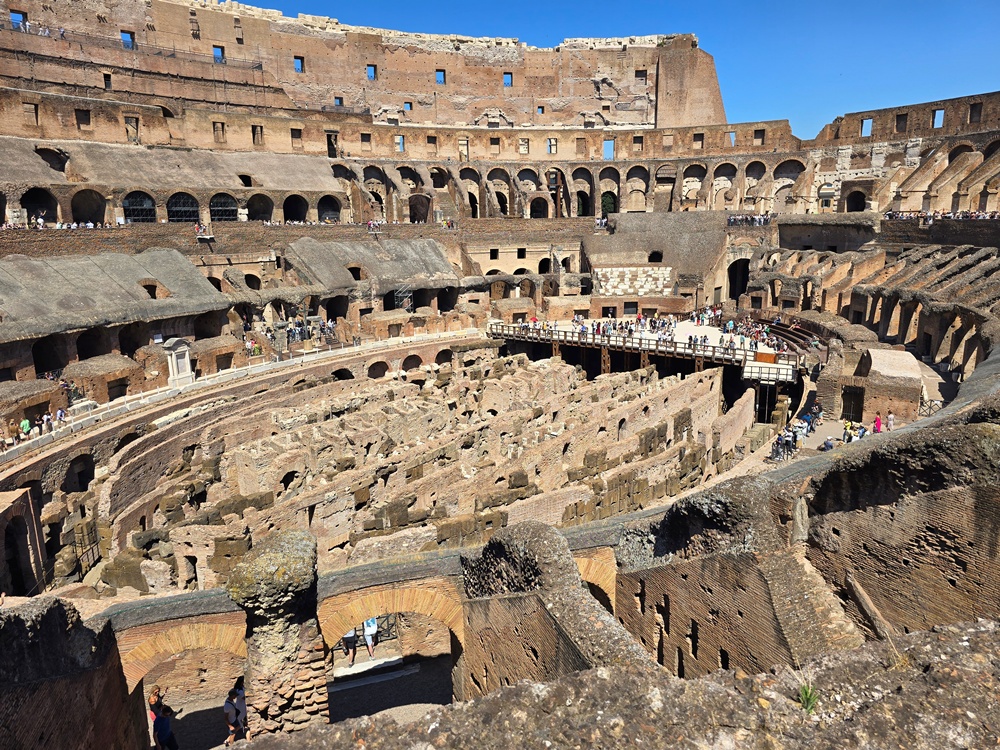 “I might have to cry”, Mikela said matter-of-factly, remarking that a little emotional dynamism might be needed to get us in to the most famous of Roman landmarks right off the bat. As it was, our Italian “limo” driver was told to make haste to get there. He didn’t disappoint. The ride from the airport (about a 45-minute drive) felt similar to a roller coaster, though not as smooth. It was more like a whitewater raft ride with rapids.
If we hadn’t booked the flight a day early, we would’ve missed Rome entirely. Don’t make the same mistake. Leave plenty of time. Building in two days before embarkation might even be smart thinking for future considerations.
2. All European cities require research and pre-planning to appreciate.
Rome may be the biggest example of the rule, but most everything in Rome demands planning – and purchasing tickets – ahead of time – to maximize your experience, especially if you’re visiting during a time-limited cruise itinerary like we were.
Think of Rome as you would a trip to Disneyworld or any American theme park. It’s going to cost a lot of money to go there and most everything of importance requires you to buy passes ahead of time.
We’d seen a number of YouTube videos prior to our European adventure, so we knew we’d need tickets for the “big” stuff. But we didn’t realize we’d have to buy them well in advance – or that the times were set. We understood that we’d need to purchase admission, but somehow figured we could stand in line at a “ticket booth” and then walk right in the gate.
Rome isn’t like that, particularly for the Colosseum and the Vatican. “Get there early” was the recommendation. Sometimes, during the busy months, early arrival might not be good enough. As a side note, the Colosseum ticket includes the Roman Forum, which is not exactly a separate admission but almost like a distinct tour site in itself.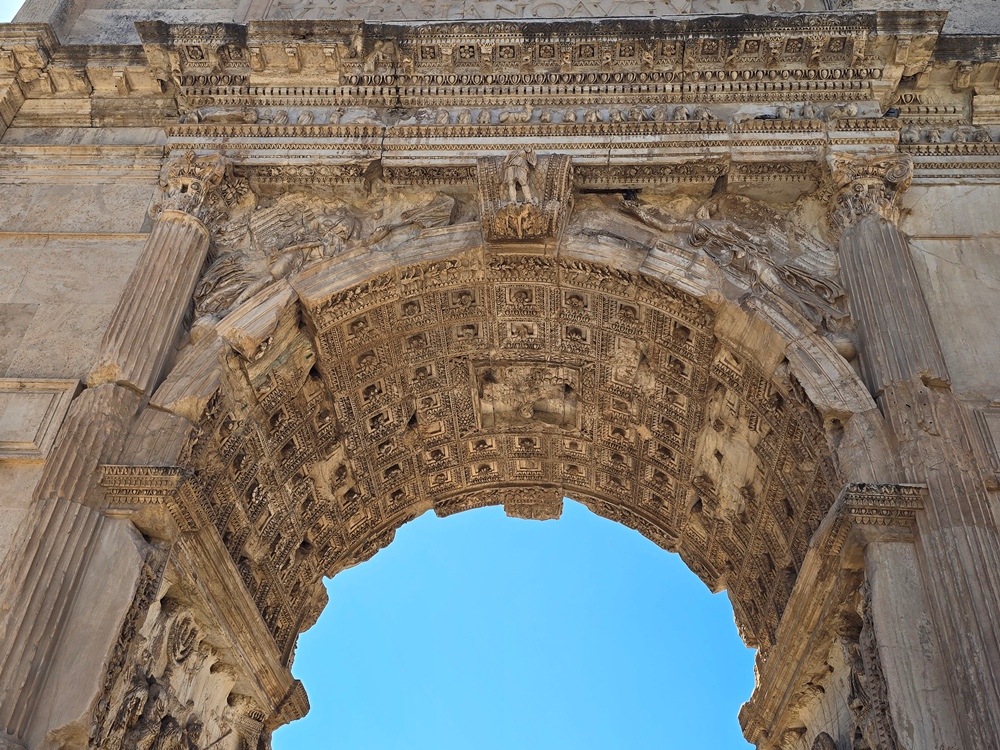
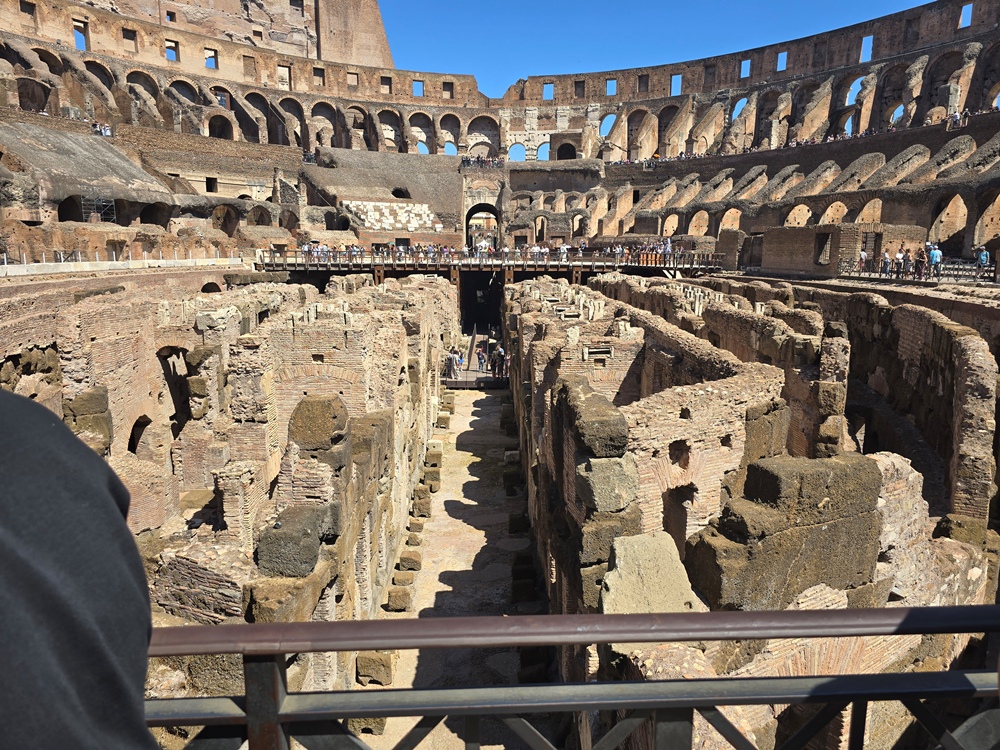
Also, at the Colosseum, we could not go onto the floor of the great arena. There were groups that could gain access, but our type of ticket didn’t allow for it. So we had to pretty much stay on the “main” level of the two-thousand-year-old building. Still plenty to see, but be aware that the rules are constantly shifting and there aren’t many exceptions.
3. Transportation in Rome
From our YouTube preview videos, we garnered that most of the city could be accessed simply through walking. Looking at a map of the place, you’ll notice that most distances are doable if you commit enough time and plan for plenty of water, etc.
A few caveats. First, the sidewalks are very narrow. Some of them are only wide enough for single-file walking and you don’t want to venture far into the street because European drivers… well, they’re not exactly courteous. Don’t take your life into your hands. Second, during the high-season months, it’ll be very hot. Some places don’t offer much (or any) shade. Water is a necessity.
We’d been told that visitors could drink from the various public “fountains” that dot the city. These are the same facilities that have provided water for Romans for hundreds if not thousands of years, and apparently, they’re sanitary and the water drinkable.
 We didn’t necessarily trust it. We brought our own.
We were also advised on the buses and/or subway system, and were told it’s a good way to go. We didn’t use them. Can’t help you there! But we wouldn’t hesitate to use them under different circumstances.
As part of our tour package, transportation was provided by private coach. It was a Mercedes van and our local driver knew all of the best spots to stop and park, if necessary. We didn’t have to plan for any of it. Looking back, “doing” Rome this way was very pricey but almost essential to be able to cram as much sightseeing into as small a time window as possible.
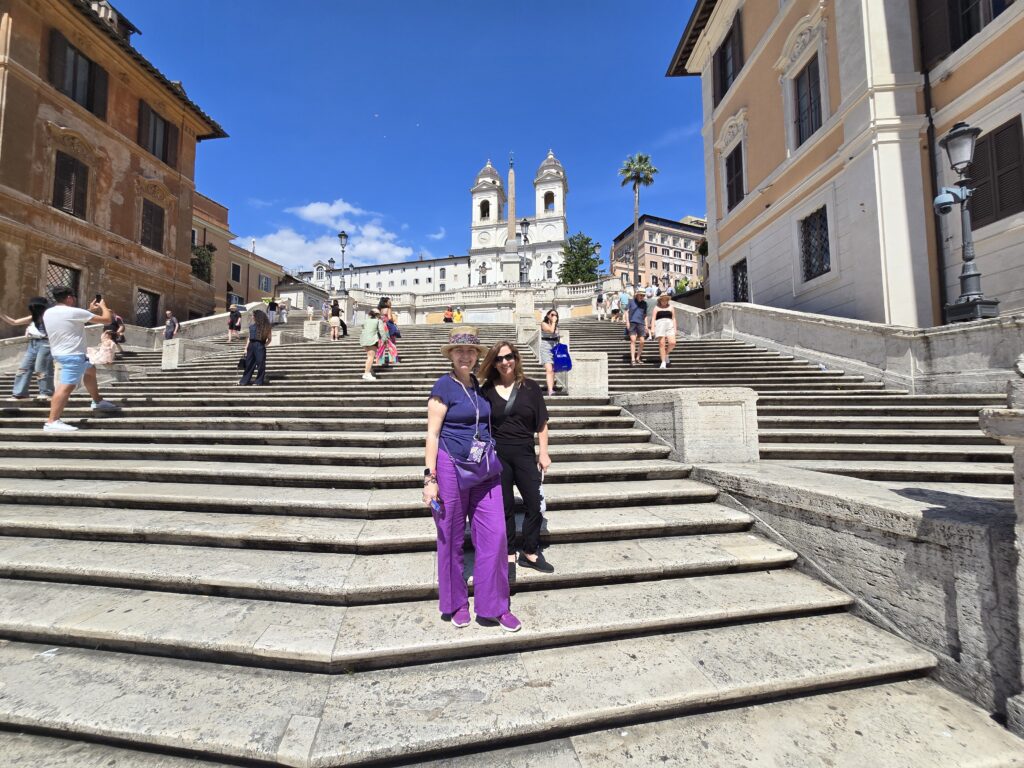
A few of the sites, such as the Trevi Fountain or the Spanish steps, we didn’t need tickets, but having a driver take us there not only saved us time, it spared us the need to locate parking, a bus stop, etc.
One other benefit – having come straight from the airport, we were able to leave our luggage in the “limo” and not have to worry about security. Pick pockets are notorious in Europe. Be vigilant and ever-mindful of the way you carry your “stuff” in European cities. Probably more so in Rome than many of the others.
Plus, don’t even think about renting a car in Rome. That would be my advice. If you visit there, you’ll note that pretty much every inch of curb space is taken by vehicles of various sizes. It’d almost be easier to find parking in New York City than it would be in Rome. Be prepared to hoof it – or spring for a guide and driver. There aren’t many alternatives.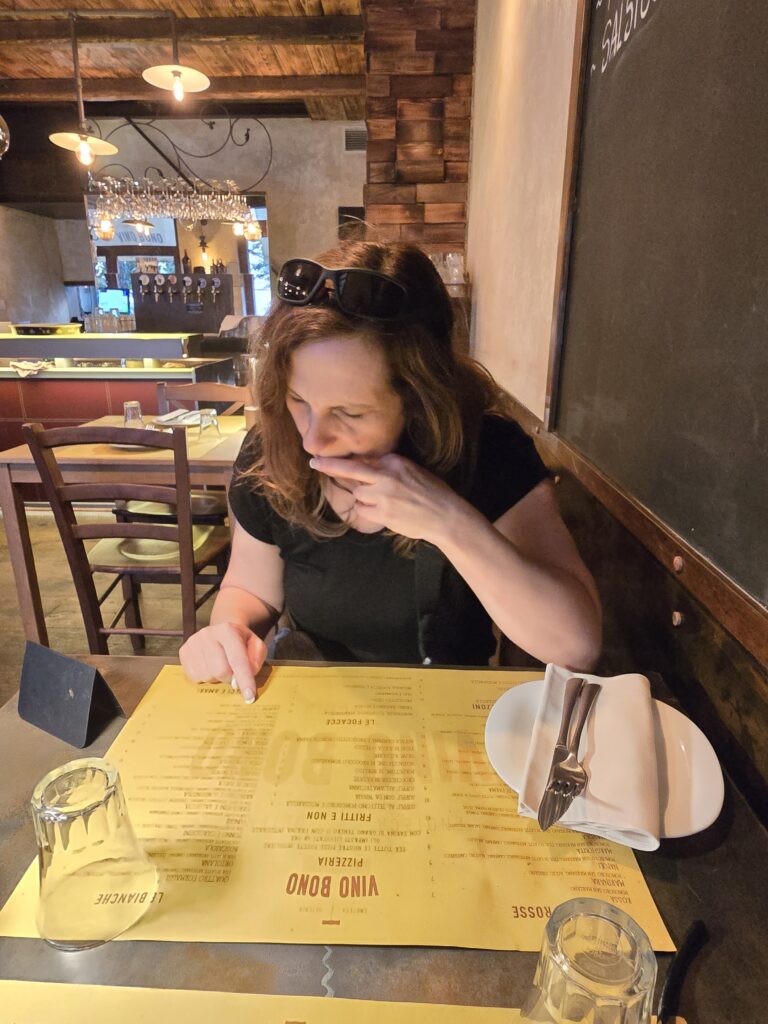
If time is money, and it definitely is in Europe, budget accordingly. What might seem expensive and a luxury becomes much less so when you get there. You can’t cut corners in Rome. Go there thinking you’ll need local knowledge to navigate and tour to your maximum enjoyment.
4. Eating in Rome – Lots of choices; but the cost includes time
It goes without saying that one of the reasons many, if not most, folks go to Rome is because of the cuisine there. The YouTube videos we viewed featured happy travelers ordering up  meals and drinks and desserts like crazy – and they loved every minute of it. Or said they did!
Our Rome tour guide asked us up front – do you want to build time into the day for meals?
Say what? Of course we wanted to eat! “Well, if we spend an hour for lunch, then we won’t be able to do x, y and z,” she explained. So, it came down to a choice between exploring more of the ancient Roman Forum or hanging out at a Roman open-air restaurant sampling the pasta dishes and/or pizza. Gourmet choices are available, too. How do these people stay so thin?
The answer is primarily because tourists are doing the eating. The locals don’t frequent the touristy spots because the “popular” restaurants are more expensive (about double the price, we discovered) and hopelessly crowded to the point where you’re sacrificing time to eat there.
We didn’t stay in the heart of Rome for our overnight stay, either. “Have dinner close to where you’re staying, it will be less expensive and probably be just as delicious.”
As a result, we avoided the multitude of chocolate shops and sidewalk cafes. Our driver found our hotel location and, once we’d figured out how to “check in” there, we just walked in the recommended direction and located a local restaurant where no one on the staff spoke any English and we were able to tell them what we wanted with a word or two of Italian and gestures in a game of charades. It was called “Vino Bono” Pizzaria, which is right next door to the “main” establishment, which didn’t open until eight. (Click here for the Facebook page)
If you visit Rome, you’ll discover that the restaurants don’t even open for the evening until at least seven p.m. It’d been about 24 hours since we’d had any kind of actual meal, so we asked if they’d consider serving us early. This wasn’t easy to do when nobody there spoke English.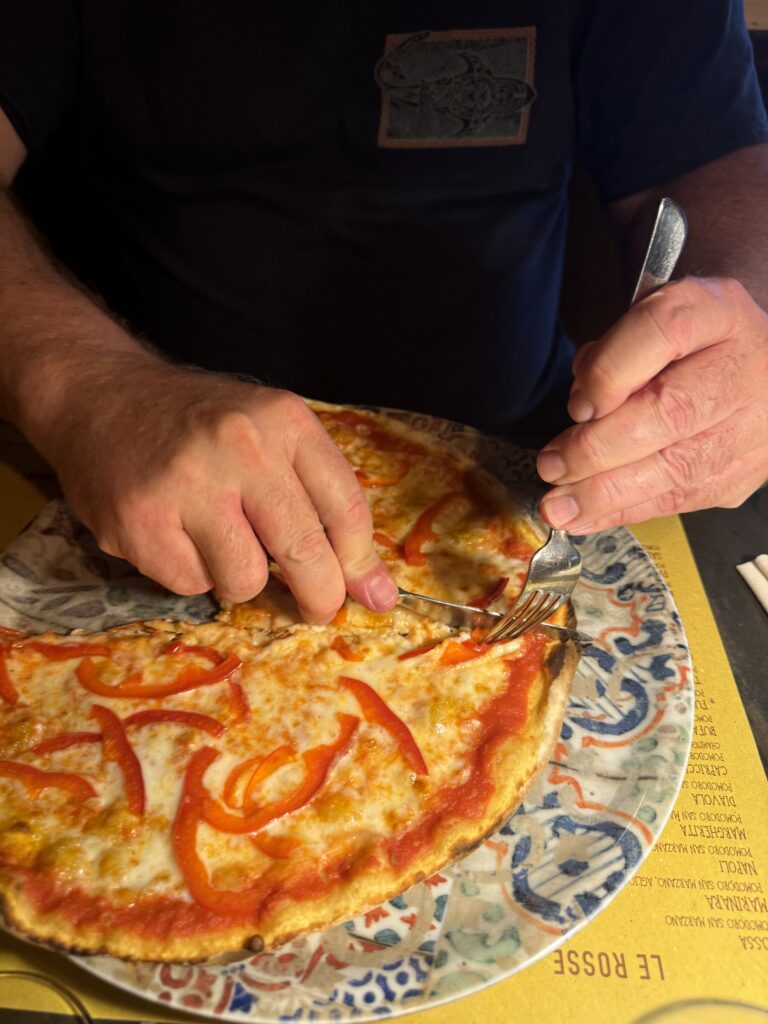
I somehow fashioned an explanation for “Pepperoni pizza” and told the waiter. We could see the pizza maker preparing the pizza. It took about ten minutes, and the pie they brought… it didn’t look anything like what you’d get at Papa John’s. That wasn’t necessarily a bad thing. It’s just not what we were expecting. A pleasant surprise? It was delicious. And filling.
We somehow ordered wine and were each served a glass of an Italian varietal. Red. Not even sure if they had white wines. But the wine was excellent. We didn’t know how much it costed, either, until the waiter brought the check, which luckily had numbers on it.
The final tally for the two pizzas plus two glasses of wine came to less than 20 Euros. Amazing! The experience alone was worth more than that.
Which brings me to our next observation:
5. You’ll save quite a bit by straying off the beaten (touristy) path
Our guide suggested, since we’d been almost a day without any “real” sleep, other than on the airplane, that we shut our tour down about six p.m. Rome time (six hours ahead of EDT).
Our driver’s path indicated that our hotel of choice was not located near the main hotel sites in Rome, instead steering towards what looked more like a business district. Our hotel, the “Luxury Boutique Hotel”, did not have a front desk like you’d expect at a stateside overnight place. We couldn’t find anyone to “check in” as well. There was a local who sat at a desk near the entrance, but he wasn’t affiliated with the hotel. And didn’t communicate in English, either.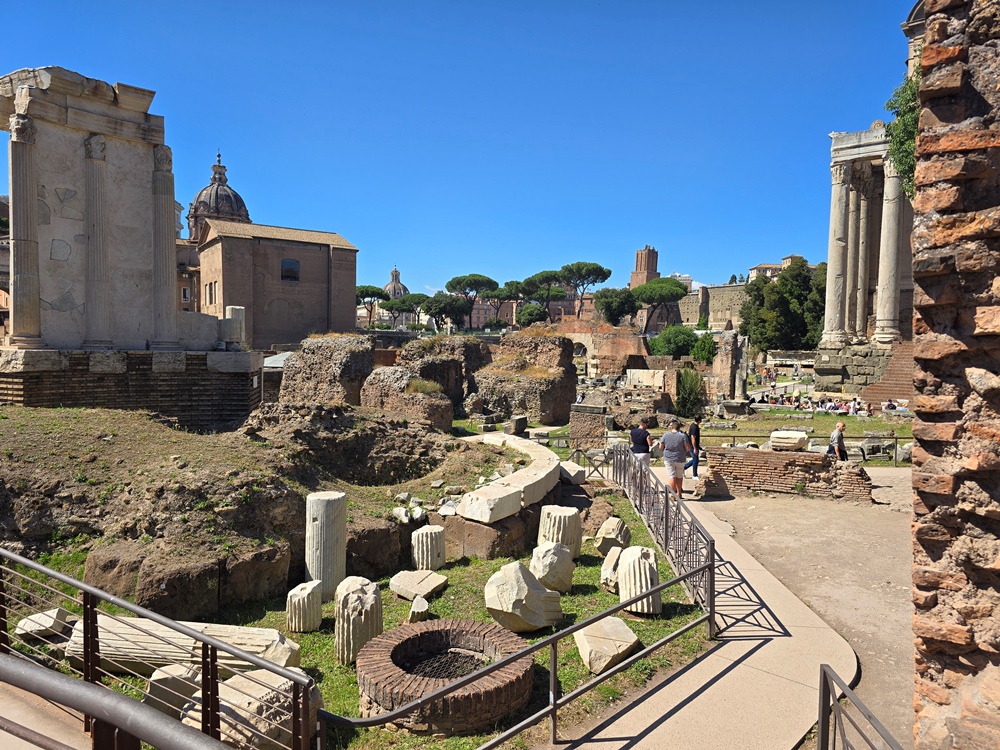
Luckily our tour guide stayed to make sure we were taken care of. She called a local telephone number that was on our documents and it took about 20 minutes for someone to show up. The lady who appeared had no “official” connection to the Luxury Boutique Hotel. The two communicated vigorously in Italian. Then the guide left and the hotel representative tried to explain what would happen from that point on.
Her 50-word English vocabulary wasn’t sufficient, however. So she spoke into her phone into Google translate – and we read the words on the screen. Another amazing invention!
We were kind of regretting not booking a more “traditional” local residence, but we managed to understand that breakfast would be included and would be delivered early the next day “on a cart”. A bed and breakfast?
With some trying, we figured out the TV, but then found that not a single channel was in a language other than Italian. No luck there. Not any news stations, either. So much for doing something other than soaking in the local color.
It kind of reminded me of the “I Love Lucy” Episode where the Ricardos and Mertzes visited Rome and the hotel elevator didn’t work.
Much of the building appeared to be private residences. Like an apartment building. “Real” people lived there. It was relatively quiet, and the bathroom facilities were recently redone. No problem there. The breakfast, which consisted of cereal and Italian pastries, was very good – and satisfying.
Lesson learned: If you’re open to staying away from the main tourist areas, you can save quite a bit of money and likely have experiences that you couldn’t get from traveling a more familiar road. Just be prepared to use Google translate and endure strange looks from people who wonder why you’re unfamiliar with paying practices in this part of the world. We’d wanted to leave a tip for the waiter at the restaurant, but there was no 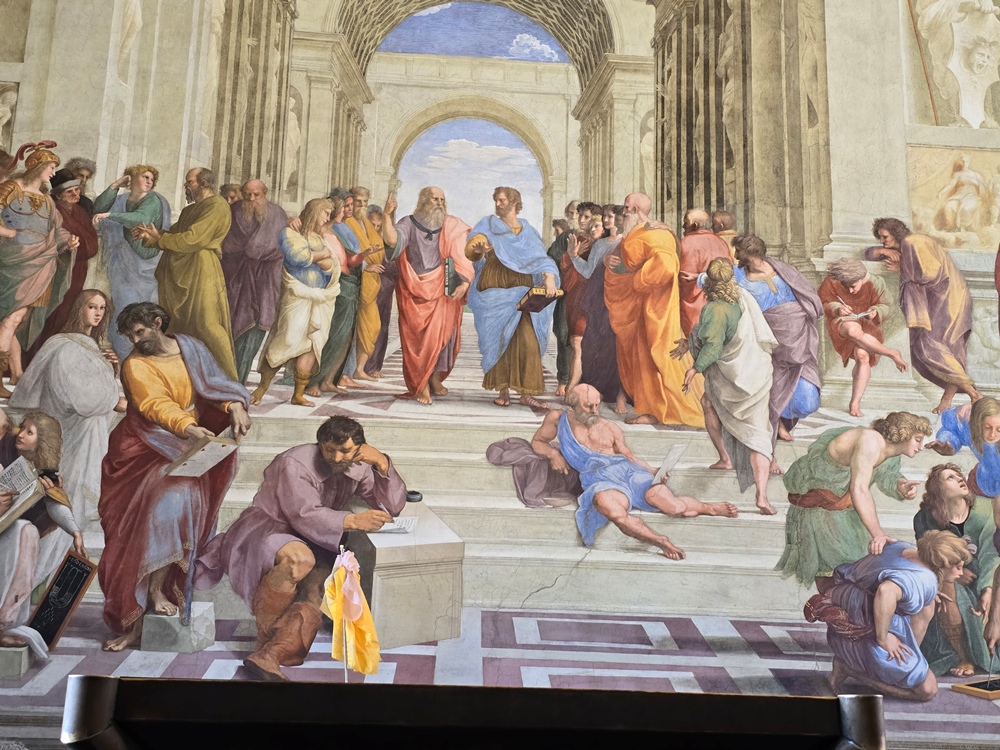 line on the credit card slip to do so. We left a few American dollars and called it an evening.
6. Rome in a nutshell
While it would be impossible to synopsize Rome itself, it’s quite doable to manage the generalities, as I’ve done in this section.
If the old saying is, “Rome wasn’t built in a day,”, then Rome cannot be toured in a single day, either. Not even close. Advanced planning and hiring a private tour guide will allow for doing a lot more on your Rome stay, though it will depend on what you hope to take advantage of.
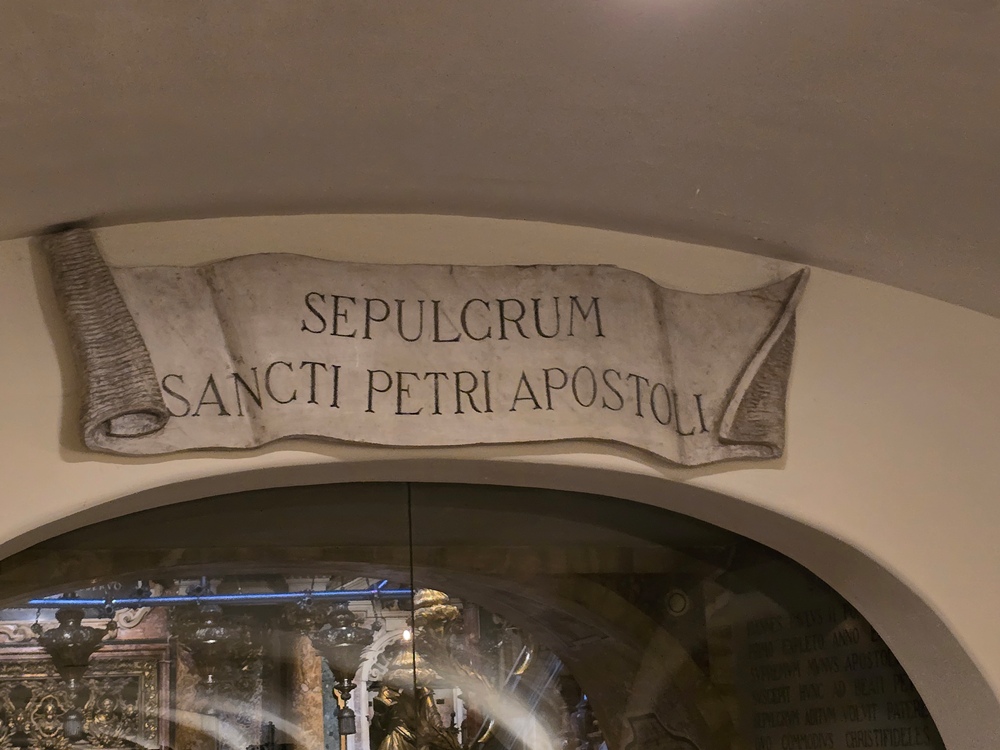
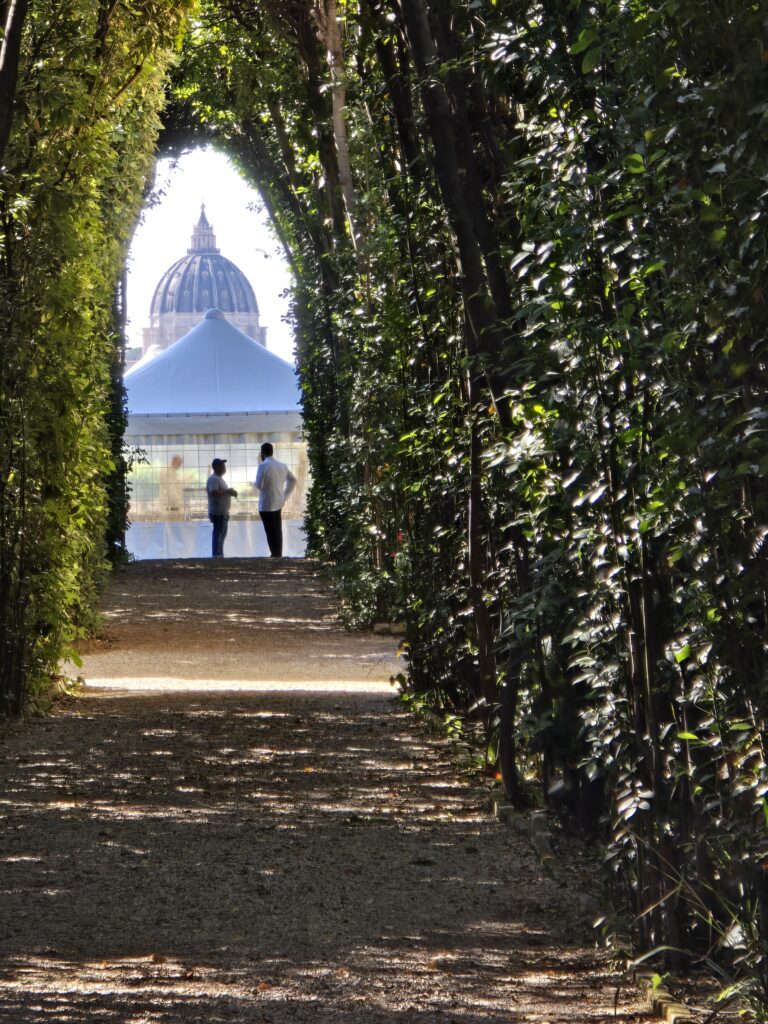
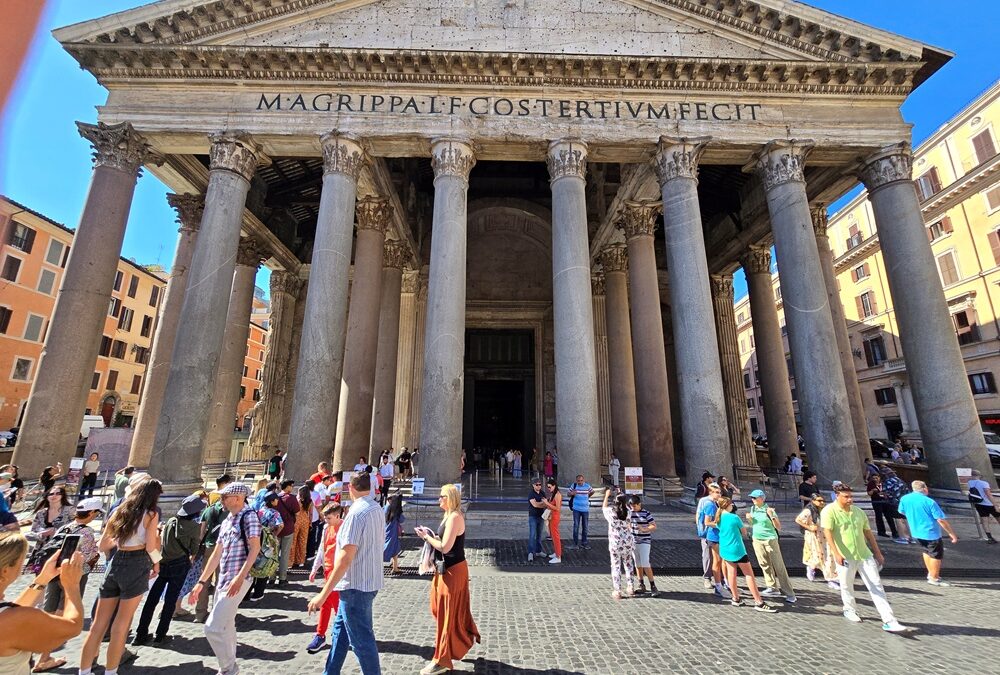
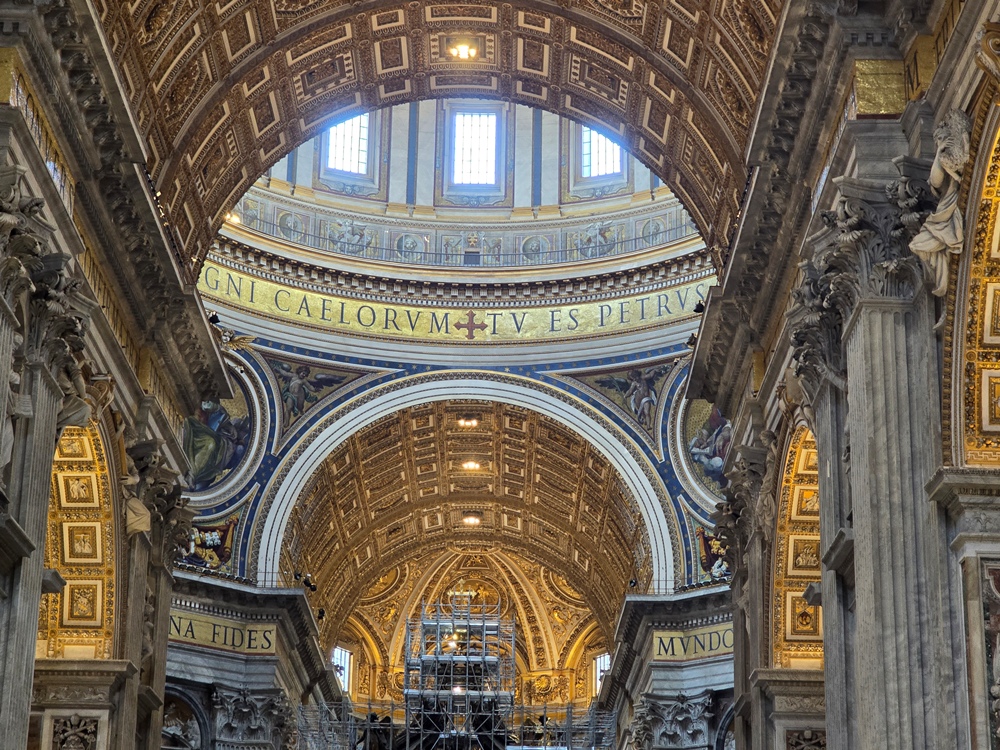
Our “off the beaten path” hotel provided breakfast. We didn’t build in time for lunch or even a gelato stop. We carried little snacks and bottled water. And powered through an amazing assortment of Rome sites, including the Colosseum, Roman Forum, the Pantheon, the Vatican, the Spanish Steps, Trevi Fountain and a number of less “headlining” sites that our guide pointed out.
There’s a ton of history and culture there. We got a little sample of much of it, leaving a deeper exploration for a future visit – or visits.
We didn’t take in Rome at night, which we’ve heard is spectacular. But we did what the available time allowed for. Discuss the trip to Rome with your group and cut by process of elimination.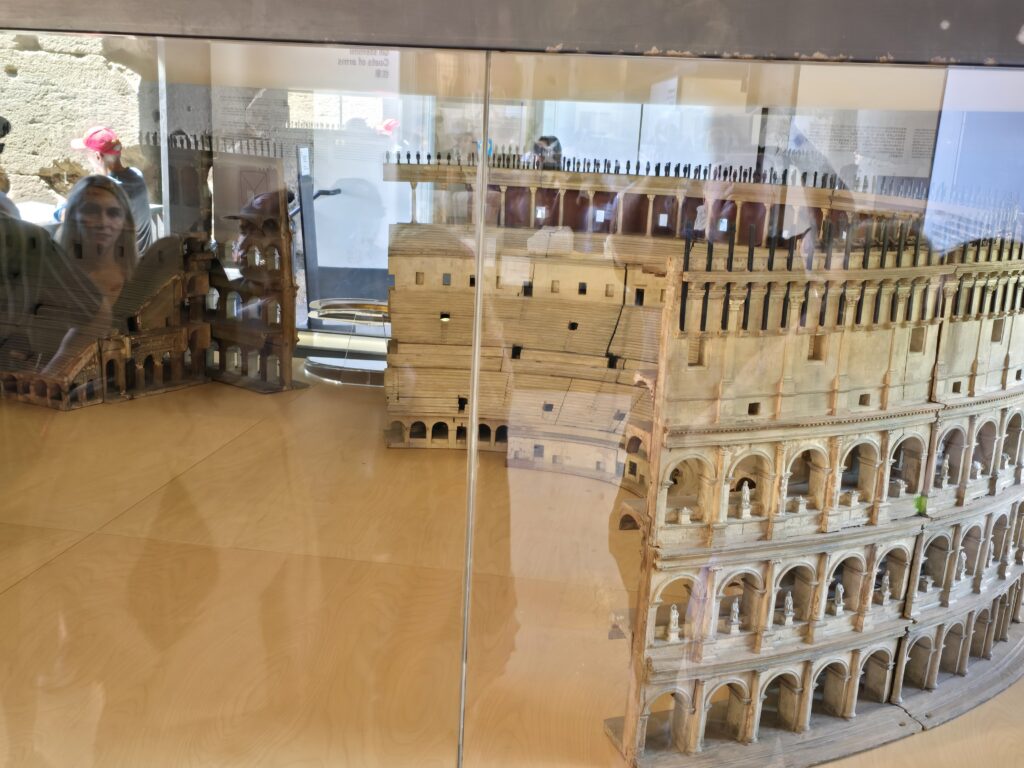
One note — Royal Caribbean, and I assume other cruise lines as well, offer excursions in Rome. I don’t know for sure, but I’m guessing, that you’ll spend a reasonable amount of your time on a bus and there very well could be a “sales presentation” element to your itinerary. This will make your time available even briefer.
Private tours, if you’ve got the budget, seem to be the way to go. We found our tour guide through word-of-mouth. But we went the cruise route at other stops. Go into it educated as to the difference.
Next up: GolfintheUSA.com visits Pompei (and Naples) – Amalfi Coast, Vesuvius and Sorrento