By Jeffrey A. Rendall
Republicans must guard against overconfidence heading into the fall midterm campaign
I think we can agree, optimism is a good thing?
You wouldn’t want your team’s coach to be less than assured of his squad’s proficiency heading into a grudge match against a hated rival, would you? Similarly, conservatives wouldn’t relish having a Republican party chairman who took a glass-half-empty approach to the coming elections, either.
Yet, as I have opined a number of times, Republicans most certainly must guard against the potentially single most self-destructive party-wide quality heading into this year’s campaign for the 2026 federal midterm elections — that being overconfidence. Carrying too much chutzpa into the next couple months could be highly detrimental to the overall effort, because a lack of transparency could disguise what really must be done.
Primarily, that’s the need to pass a course on how to “relate” to the average American voter.
Congressional Republicans are displaying their characteristic cautious reluctance to propose and pass popular but controversial (to Democrats and the media) measures to improve Americans’ lives. Republicans notoriously lack courage for taking the final step to make laws or pass budgets, the potential negative consequences preventing them from taking risks.
“Give them a reason to vote for you.” The common-sense crowd shouts it at their TV screens. This admonition hasn’t done much good in practice, yet the party poohbahs appear ready to claim a win before the campaign even gets started.
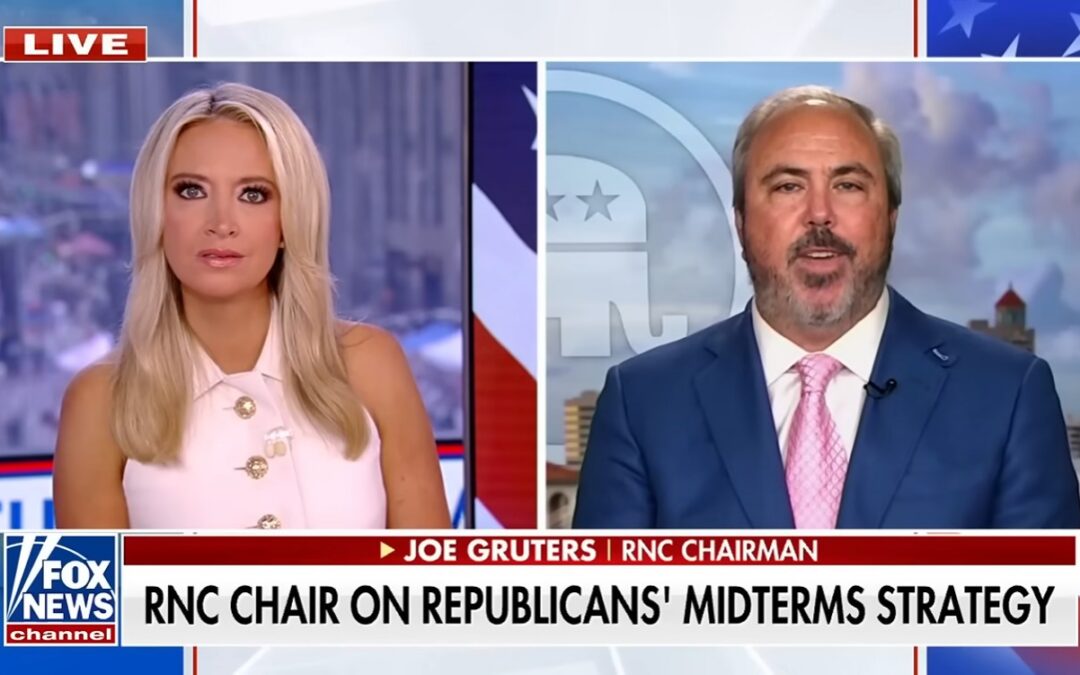
In an article titled, “RNC chairman predicts GOP will pick up seats in midterm elections: ‘Bet on us’”, Rena Rowe reported at the Washington Examiner last week:
“Republican National Committee Chairman Joe Gruters said he believes Republicans will defy historical trends and maintain their congressional majorities in the 2026 midterm elections.
“’Bet on us because we’re going to win. We’re going to defy history,’ Gruters said during a[n] … interview on Fox News, expressing confidence that Republicans will retain control of the Senate and House despite a political environment that has historically favored the party out of power. ‘We have the candidates that we’ve recruited,’ he added. ‘We have the resources, most cash on the hand in the history of the party ever, and then we have the best showman in the world, Donald J. Trump.’
“Gruters’s comments come as Republicans enter the final stretch before the midterm elections with narrow majorities in both chambers and Democrats aiming to reclaim control of the House and Senate…”
Bet on today’s Republicans? Like with real money? How many smart gamblers are lining up to take the chairman’s advisement?
I wish I had Gruters’ confidence, but many a baseball manager or football head coach has likewise tried firing up his players before taking the field by telling them how much faith he had in them to overcome insurmountable odds barring the way to peak performance.
The 1980 U.S. Olympic Hockey Team achieved sports immortality in part because Coach Herb Brooks delivered a pep talk before the young men took on the Soviet Red Army Team, words that made the skaters believe they could do the impossible, if only that day in that game.
Gruters’ mission is to instill his party’s candidates and voters with a comparable level of conviction this year. The RNC Chairman laid out the objective facts – advantages in candidate quality, fundraising, redistricting, etc. – and suggested the respective pieces fit neatly together to present a comprehensive picture. If a viewer knew nothing about human nature or the political situation in the country, he or she may very well have been swayed by Gruters’ highly expectant arguments.
But those of us who’ve been through many American political campaign seasons know better than to brag first and wait for the results to corroborate your assertions. Unfortunately, reality doesn’t often work that way, unless you’re Donald Trump and have willed yourself to triumphs against formidable barriers.
Polls paint a different, slightly less optimistic outlook for Republicans. Democrats aren’t well-liked either, which figures into the calculus somewhere along the line.
I’d say, based on the objective factors, Republicans should be competitive in November. The party has done well under President Donald Trump in terms of raising the funds they’ll need to ensure Republican candidates aren’t lacking for green fuel to power their machines. But we all know money can’t buy love in the voters’ hearts, either.
Democrats have all-but surrendered the support of formerly loyal groups of party backers, but they have made up for the shortfall by recruiting others, namely single women and dominating with college degree holders, the ones most inclined to buy-in to the Democrats’ lofty rhetoric about “helping the poor” or “guaranteeing a woman’s reproductive choices”, or “saving the planet from the existential threat of climate change.”
What is an existential threat, anyway?
Democrats have lost a grip on working class white voters because the leftists’ arrogance and lack of foresight blinded them to the damage they’d caused to their party’s reputation with union members and practical people. This downward trend began well before the current movement towards socialism that’s so evident in today’s Democrats, both the “Chucky” Schumer-like establishmentarians and the Bernie Sanders-vintage kooks alike.
At the same time, as last month’s primary results demonstrated in a few states, enthusiasm for the socialism/communism influence of Democratic Socialists is particularly low among black voters. This key Democrat party constituency is vital to Democrat success in those states with appreciable black voting blocs.
Will Republicans get more of these ballots because of the unsolicited and invasive DSA influence? Time will tell.
In his obvious enthusiasm, Gruters perhaps ignores the fact presidents have typically fared poorly in midterm matchups primarily because the elections are almost solely base-centered votes that rise and fall according to the popularity of the president’s agenda, not to mention his personal/leadership appeal.
Trump won two (maybe three?) presidential elections mostly due to his outsider MAGA agenda, which combined a smattering of tough border enforcement, traditional conservative-oriented laissez fare economics, traditionalist social causes and populist, America-First patriotism.
Think immigration, tariffs and foreign policy here.
These are great things, but they don’t necessarily translate well to congressional and senate campaigns that contain a heavy dose of the president’s agenda but also include Congress’s performance record, leadership and local factors in addition. Republican leaders in the senate and at the national party count on conservatives overlooking the fact Trump’s agenda has not been closely adhered to on Capitol Hill.
They’re wrong. If this is a base election, which it is, then keeping the “base” satisfied is the highest priority. Republicans should’ve completed a number of things by now, not limited to, passing the SAVE America Act, making progress towards “affordability” of healthcare, subsequent measures to assure immigration enforcement, and, last but not least, more tax relief in another reconciliation bill.
Instead, we hear crickets chirping in Congress, with Democrats standing and jeering on the sidelines taunting Republicans as though they’re powerless and agenda-less.
Remember, Donald Trump was aided in his 2016 campaign by the looming presence of a Supreme Court vacancy (after Justice Antonin Scalia’s death and resistance to holding confirmation hearings by then-Majority Leader Mitch McConnell, the best thing the Kentuckian ever did), but Republicans won’t be as fortunate to use judicial vacancies or administration confirmations as a crutch this year. Unless one suddenly emerges.
Also, as previously noted, President Trump hasn’t done the GOP message shapers any favors by continuing to turn a deaf ear to those who think he should be addressing the gasoline price and inflation issues with something more than repeatedly boasting, “It’s the greatest economy we’ve ever had.” It’s empty rhetoric to those who see a big portion of their family budgets being eaten away by high gasoline levies.
Food prices are also high. There’s no getting around it. Democrats will definitely make as much hay as they’re able on the subject, purposely omitting that they don’t have solutions outside of more government economic intervention and deficit spending.
And, of course, higher taxes on the productive people in America.
Republicans should be speaking to those who aren’t doing well rather than crowing about how great things are. That’s the key to everything in 2026.
No one says Republicans should act bearish and distraught on the party’s chances to do well in this year’s midterm elections, but they must be aware of the tone they’re setting, knowing whatever they say will be construed negatively in the media. With two months to go until the November elections, time is running short to perfect their message. Republicans must do better.
Jeff Rendall is editor and publisher of GolfintheUSA.com and has written about golf and politics for over a quarter of a century. A non-practicing attorney from California, he moved to the east coast three decades ago to pursue and combine his interests in all things American history and culture. Jeff has worked as an intern on Capitol Hill and in various capacities in grassroots organizing and conservative organizations and publications, including a nearly two-decade stint at ConservativeHQ.com. Column republishing or other inquiries: Rendall@msn.com .