Trump’s economic ideas aren’t new, but he puts a new twist on tried-and-true concepts
If it’s said that history repeats itself, one can only hope historic lessons replicate as readily.
As the nation nears the 250th anniversary of the adoption of the Declaration of Independence, it goes without saying there’s been a lot of focus on the founding of our great republic, the United States of America, of late. Much of the establishment media’s attention has been on President Donald Trump and the activities and commemorations he’s planned to observe the vaunted occasion.
July 4, 2026, will also serve as the bicentennial of the passing of Thomas Jefferson and John Adams, two of the men who mightily contributed to the creation of the American experiment. Without the Virginia intellectual and Massachusetts firebrand, we may never have become a “we” at all.
One important founder who receives somewhat less credit in our times is Alexander Hamilton, the New Yorker whose fiscal philosophies and theories helped the young nation grow in its earliest days. Hamilton was tragically killed in a duel, of all things, which may explain why he’s lesser remembered than some of the others by posterity.
But Hamilton’s thinking on foreign trade is very relevant, even today. President Donald Trump appears to have absorbed Hamilton’s teachings well.
In an article titled, “Scott Bessent: Hamilton Inspires Trump’s Economic Statecraft”, Treasury Secretary Scott Bessent wrote at the Wall Street Journal last week:
“Our founders scarcely could have foreseen the world we inhabit today: the industries we have built, the technologies we have invented, the prosperity we have created and the power we have attained. But they did understand something far more enduring: that the fortunes of a nation are shaped by the energies of its people. Those energies transformed a small republic on the edge of a continent into the most prosperous nation in the long sweep of human civilization…
“Trading partners of the U.S. should expect a nation committed to strong alliances and productive economic relationships, a nation that welcomes fair competition, rewards investment, and believes in open commerce. But they should also expect a nation that is now more aware of its interests—and more prepared to protect them.
“These are reasonable expectations for any nation. They are necessary and essential for the U.S. because we have been, and will remain, the most important economic partner in the world. But we are now a partner with higher standards and greater expectations. We are a partner that has regained knowledge of the value that we offer—and the will to defend it.”
Yes indeed. One of the offshoots of electing Donald Trump president in 2016 was he arrived in the White House with the worldview he’d devised through decades of dwelling in the dog-eat-dog reality of international business, where finishing second equated to getting nothing. Trump may have gained fame through his celebrity and media wherewithal, but it was his experience in conference rooms and offices that would prove most useful to the American economy.
My dad often talks about how every president should have a business background, a resume that few contemporary politicians possess. Instead, today’s candidates are typically folks (well-meaning and otherwise) who excel at political marketing and campaigning. Dumbed down a bit further, politicians are great at selling themselves. This is particularly true in the Democrat party, where office seekers prove very adept at brainwashing low-information voters with what they want to hear and then, once in office, make a hard turn towards accumulating power using any means possible.
Democrats often boast of backing the principles Bessent outlined in his article, but rarely follow-up on their political vows. They use terms like “economic security”, which is simply code for redistribution, namely – taking from the industrious people and giving the confiscated dollars to the least productive. Or, put another way, they sprinkle goodies on those who vote Democrats into office.
Along the way, Democrats have added any number of destructive leftist causes to their repertoire of governing agendas, doing whatever they must to further the interests of racial groups, environmentalists, LGBTQIA+++ human beings and abortion-promoting single-issue feminist screechers. Among others.
This is not a conclusive list, mind you. It’s just what Democrats figure will put them in the positions to do the most damage to the Trump MAGA agenda.
Bessent looks back to history to support his theories, too. The Treasury Secretary cited Alexander Hamilton’s philosophy of national proficiency as the basis for what President Trump is trying to accomplish now. America tolerated less favorable conditions to foreign trade partners in times past, but the world has changed.
Instead of simply accepting a space in the room to monitor the workings of trade adversaries, America now wants to preside at the table.
More than anything, Trump seeks to represent the interests of Americans abroad. Whereas Barack Obama spoke of him and us being “citizens of the world”, Trump prefers highlighting America’s exceptionalism and unique place on the globe. America under Trump is hardly one of many; this country wants to lead, and by promoting domestic prosperity, the nation’s trading partners will rise, too.
America is open for business, but it’s not open for naked abuse. President Trump has said the country will no longer allow foreigners, particularly China, to purchase vast tracts of farmland near U.S. military bases. And foreign investors will no longer be permitted to exploit real estate as investments, driving prices up and forcing American consumers out of the market.
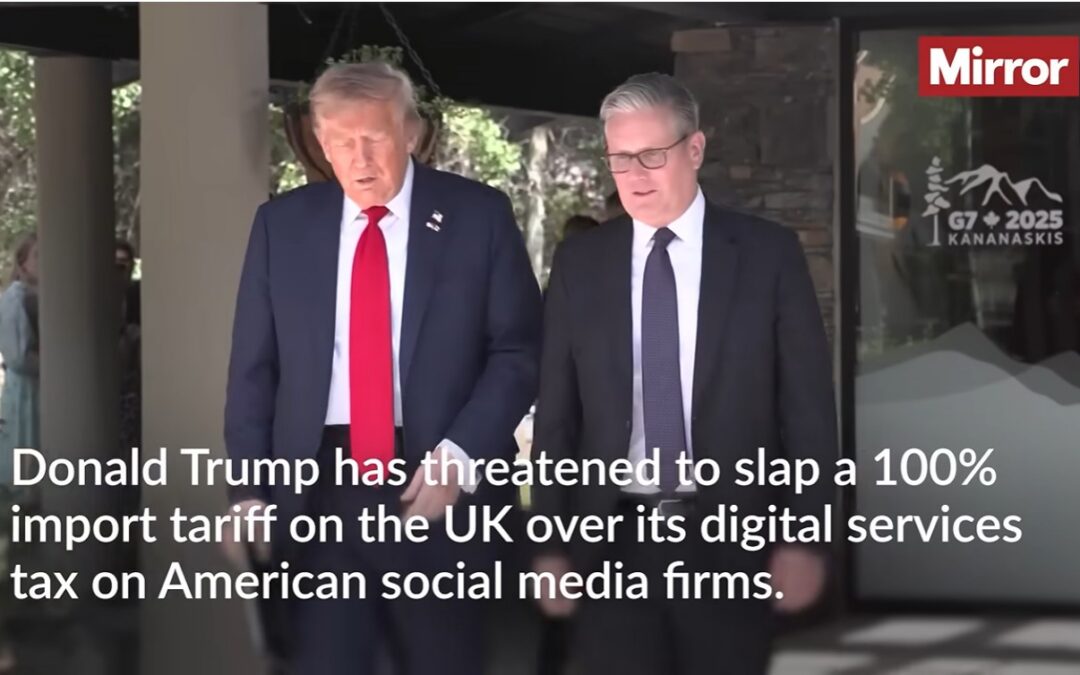
Similar rationales propel the administration’s thinking on tariffs. More than merely a means to collect revenue, Trump levies tariffs to improve the nation’s negotiating position vis-à-vis its competitors. Recall how the president recently hinted he’d call for a 100 percent tariff on French Wines? Whether he was serious or not, he certainly attracted attention to the French exporters’ unfair trade practices.
Trump’s America First economic principles closely parallel those of the Founders, a group of forward-thinkers who understood America’s place in the world. The twenty-first century economy is much different than it was two-hundred-and-fifty years ago, but the eternal concepts aren’t far removed. The Founders knew America’s fledgling industries would require help to thrive and compete, especially with those of Great Britain and France. Tariffs were a means to level the playing field.
Is today really so dissimilar? Economists say tariffs hurt consumers before they punish foreign producers. They also suggest high tariffs motivate other nations to boost their own rates. This is true in the abstract, but Trump simply seeks to ensure fairness, not to blatantly provide America a clear advantage.
President Trump is also a solid believer in energy production. The U.S. has the natural resources, and this nation can use them responsibly, which not only benefits the every day consumer, but also keeps the environment cleaner. It’s a no-brainer.
Speaking of energy, Trump did something last week that was somewhat more akin to President senile Joe Biden’s modus operandi than that of Alexander Hamilton’s – or any of the other Founding Fathers.
Simply put, Trump accused America’s oil companies of “gouging” because gasoline prices have not dropped as fast as world oil tolls have deflated. By suggesting energy companies were greedy and taking unfair advantage of American consumers, it sounded suspiciously like something his Democrat predecessor used to do.
One understands the urgency Trump feels to see lower rates at the gas pump, but ordering the Department of Justice to officially delve into the matter?
Or is this just history repeating itself in a way conservatives wouldn’t necessarily appreciate?
Either way, Trump appears to think he could manipulate gas prices just by his say so, or at least drive them lower by promising to use the force of government to persuade oil executives to move faster and ignore market forces.
Trump should home in on ensuring that America’s competitors fear our economic might, not take off after private business just because it looks as though too much money is being made in certain sectors.
Few conservatives would quibble with Donald Trump’s advocacy for a strong America, or argue with his means for ensuring fair trade and insistence on citizens of the United States being given preferential treatment in the world economic game. The Founding Fathers taught us a valuable lesson: when it comes to putting America First, there’s no rationale for holding back.
Let’s hope history keeps repeating itself.
Jeff Rendall is editor and publisher of GolfintheUSA.com and has written about golf and politics for over a quarter of a century. A non-practicing attorney from California, he moved to the east coast three decades ago to pursue and combine his interests in all things American history and culture. Jeff has worked as an intern on Capitol Hill and in various capacities in grassroots organizing and conservative organizations and publications, including a nearly two-decade stint at ConservativeHQ.com. Column republishing or other inquiries: Rendall@msn.com .