

By Jeffrey A. Rendall
Change is coming to the U.S. senate and, for the most part, conservatives should be glad
“You asked for it, you got it, Toyota”.
I recall using the phrase often in my youth, the familiar 1970s advertising campaign slogan from the Japanese carmaker serving as a pithy means of driving home a point to someone else, just like saying, “You wanted it, you live with it.”
Or something like that.
Most (or some) conservatives have been reminded of the relevance of the aphorism lately, as many Donald J. Trump backers and opponents of the political status quo who’d hoped  and prayed for a rightward shift in the ideological makeup of the senate appear to be getting what they’ve longed for – a partial switchover of GOP personnel in the upper chamber.
Out with the old, in with the new could be the new mantra. Or, “Be careful what you wish for, you might just get it”.
Like it or not, change is coming to Washington next year. Some of the new blood is due to taking out stodgy old establishmentarians in state Republican primaries, some from retirements and, as was the case most recently, illness and death. Kentucky hanger-on Senator Mitch McConnel seems to be on the mend from a recent fall (and other assorted maladies), but Senator Lindsey Graham’s now-permanent absence from his job wasn’t something anyone could plan for.
Did we ask for this? Doesn’t matter. We got it, one way or another. In a newsletter piece titled, “Illness, death, and turmoil change face of GOP Senate”, Byron York wrote at the Washington Examiner:
“…Graham’s death comes at a wrenching moment for the Republican Party in the Senate. That is because, beyond Graham, a number of leaders who played key roles in the events of the last decade and beyond, who shaped the Senate as we know it today, are leaving, the result of illness, age, and the political turmoil of the Trump years. Lawmakers normally exit when they retire or lose reelection. This year, there’s more than that going on.
“…Sen. Thom Tillis (R-NC) is also leaving, by choice but also under pressure from Trump. Other GOP senators are leaving, too, more or less of their own accord. Retiring are Sens. Joni Ernst (R-IA), Cynthia Lummis (R-WY), Steve Daines (R-MT), and Alan Armstrong (R-OK), who has served as the placekeeper for Markwayne Mullin. Sen. Tommy Tuberville (R-AL) is at the end of his term and is running for governor of Alabama, and Sen. Marsha Blackburn (R-TN), who is in the middle of her term, is running for governor of Tennessee and will leave the Senate if she wins.
“Put it all together, and that is 10 Republicans guaranteed to leave the Senate before any votes are cast in November. If Blackburn wins, there will be 11. That’s a very large number from one party, more than any year in recent memory. And with the death of Graham, and the departures of McConnell and, to a lesser extent, Cornyn, lawmakers who guided the party for many years will no longer be on Capitol Hill. There’s a really big change coming, no matter who wins in November.”
Yes, this is true. If the series Game of Thrones was renowned for its “Winter is coming” theme, then the Republican senate in the latter years of President Trump’s second term should be notable for a “Change is coming” premise instead.
Prior to the above cited passage, York highlighted the death of Senator Lindsey Graham and the illness of Mitch McConnel as examples of change that wasn’t necessarily foreseeable. The primary ousting of Senators John Cornyn and Bill Cassidy happened because voters in their states decided they’d had enough of being told by establishmentarians that things would get better only to endure betrayal after betrayal to the overall cause of limited government.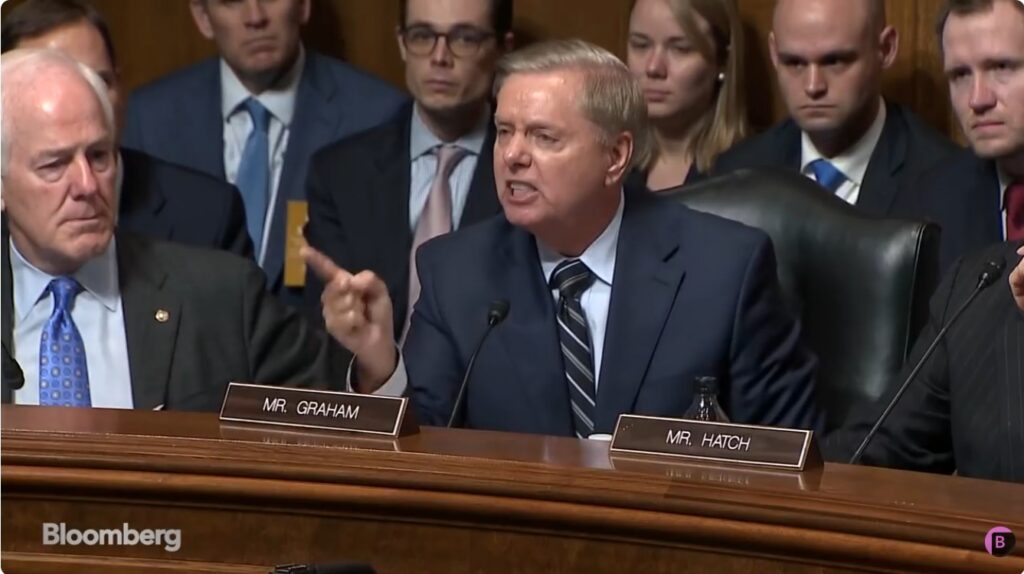
Democrats are living with their own brand of change in various capacities, but the Democratic Socialists’ revolution that’s collected several scalps in the House hasn’t claimed its first Democrat senate victim as of yet. A number of Democrats have hinted they’d be open to replacing “Chucky” Schumer as party leader if they win a majority in the chamber, but thus far these are only rumors.
In the senate on the GOP side, change is coming. Brace yourself.
But did we ask for it? Not in all cases. Conservatives have advocated for term limits for years, but we’ve also discovered that, like with cancer-fighting treatments, as many good cells are eradicated as bad ones in the process. When we’ve come across a boat-rocking conservative in the senate, conservatives haven’t clamored for a new politician to replace him or her.
Senator Rand Paul hasn’t always cooperated with Trump, but as far as I know, there isn’t a groundswell to force Ron Paul’s son to pack for an exit.
A lot of good Republican senators have gotten fed up with the glacially slow pace of legislation in the upper chamber and voluntarily left of their own accord. Oklahoma’s Tom Coburn and South Carolina’s Jim DeMint immediately come to mind. But it was widely whispered that Marco Rubio considered doing something more productive with his time than sit around in the senate and listen the Democrats demagogue a host of issues.
But this was prior to Rubio being named President Trump’s Secretary of State.
Change works both ways. But here’s thinking in most of the cases a fresh perspective would turn out better than the old one, unless Democrats are able to win the open seat contests.
North Carolina’s Thom Tillis isn’t good for much more than his vote to keep Republicans in the senate majority these days. Tillis has always been an eccentric contrarian, but his opposition to the SAVE AMERICA Act makes absolutely no sense. Ditto for his renewed fondness for the Jeffrey Epstein scandal, as though the salacious garbage topic hasn’t been beaten to a pulp with conjecture and absurd speculation already.
Good riddance, Thom. We asked for Tillis’s removal, and we got it, though Democrats are currently favored to win his North Carolina seat in November. As would be expected, Democrat Roy Cooper has lied through his teeth portraying himself as a “moderate”, as though anyone but a liberal would object to keeping bathrooms segregated by gender. Liar.  Cheat. He’s like a male version of Virginia’s Abigail Spanberger, using the “affordability” issue as a crutch to fool the gullible low-information voter types.
The late Senator Lindsey Graham famously remained opposed to Donald Trump’s presidential candidacy through the 2016 election, though Lindsey woke up after Trump won the presidency, and eventually became one of the Republican commander-in-chief’s most ardent allies.
Graham’s sister, Darline Graham Nordone, was appointed by her state’s governor to serve the remainder of her dearly departed brother’s term, but will be bowing to the winner of this year’s general election. There won’t be a Graham in the senate after 2026. Change? Good… or not?
Here’s thinking the evolution of the Republican senate caucus will be a positive development, primarily because it appears the new breed of GOP candidates is more conservative than their predecessors, but also willing to “mix it up” with Democrats on matters the MAGA base cares about.
In other words, it’s less likely the new Republicans will turn out to be closer to Mitt Romney’s wishy-washy personality than Ted Cruz in orientation. They (again, probably) are considerably greater principled and grounded in their beliefs than the establishmentarians of old.
Likewise, conservatives have been waiting a long time for Mitch McConnell to leave the senate, though it’s doubtful many were hoping the Kentuckian’s demise was due to his permanent incapacity… or worse. We love seeing the Republicans improve their ways, but we’re not morbid.
Change for change’s sake isn’t necessarily guaranteed, though Donald Trump’s command of the issues and non-stop advocacy for the American people won’t be lost on the newcomers. With about twenty percent of the GOP caucus assured to be freshman come next year, the remnants of the Majority Leader South Dakota Senator John Thune-led senate will be forced to pay greater heed to the desires of the party’s voters.
I doubt conservatives will miss seeing the former senators on the Sunday morning talking-head news shows, put it that way.
It looks as though most of the current Republican senate leaders will return next year regardless of what happens four months from now. Thune hasn’t been catastrophic, but his willingness to take “no” for an answer on the SAVE AMERICA Act won’t endear him to conservatives.
So yes, change is upon us. We should embrace it.
Jeff Rendall is editor and publisher of GolfintheUSA.com and has written about golf and politics for over a quarter of a century. A non-practicing attorney from California, he moved to the east coast three decades ago to pursue and combine his interests in all things American history and culture. Jeff has worked as an intern on Capitol Hill and in various capacities in grassroots organizing and conservative organizations and publications, including a nearly two-decade stint at ConservativeHQ.com. Column republishing or other inquiries: Rendall@msn.com .