By Jeffrey A. Rendall
In 2026, Republicans neglected one particular group that usually supplies a ton of votes
Which side is your bread buttered on?
The Cambridge Dictionary defines the idiom: “to understand what will help you or bring you advantages or profit, so you can act according to this.”
In the most recent elections, Republicans forgot what side their bread was buttered on. Much has been written about how, last decade, Donald Trump assembled a coalition of traditional conservatives together with non-college educated working class voters and some conservative-oriented minority groups and entrepreneurs to build a political winner, permitting him to prevail in at least two national elections and nearly pull off a third victory in the controversial 2020 election.
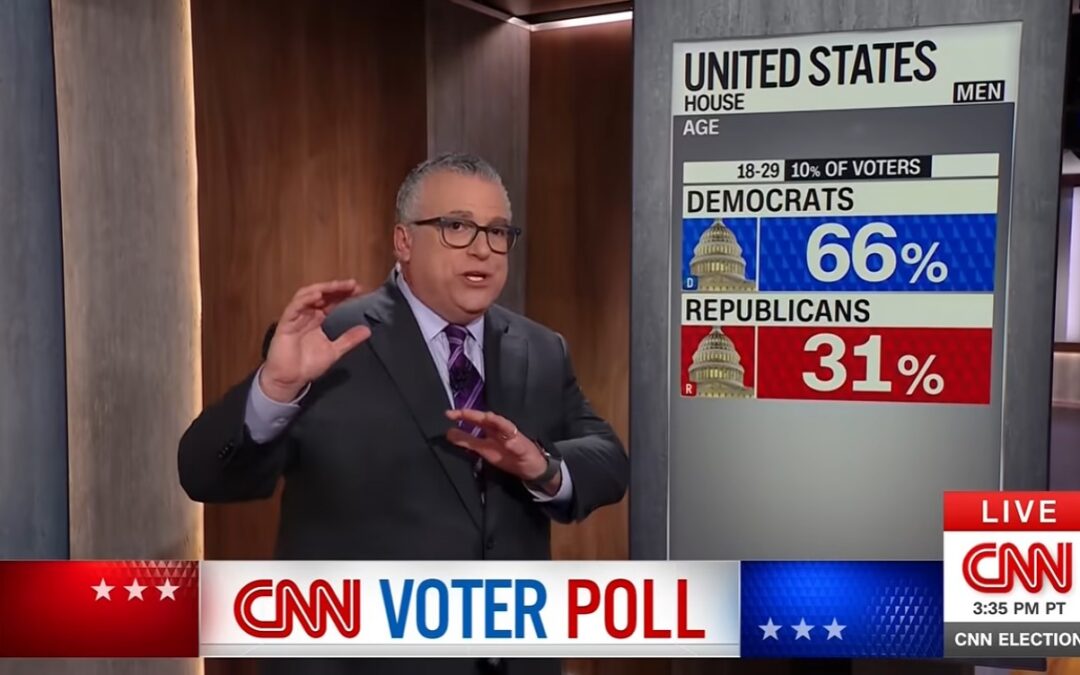
Trump and his Republican colleagues overlooked key elements of the MAGA coalition in 2026, however, as exit polling showed Republican support plummeted among young males. Without young men backing Republican candidates up and down the ballot, Democrats practically destroyed the GOP across the nation.
Why did men (young and otherwise) suddenly jump the Republican ship? The possible explanations are many. How to bring them back into the GOP tent will be the mission for the next round of elections. It won’t be easy. The first step is to assess what went wrong and make sure it doesn’t keep happening.
In an article titled, “Joe Rogan slams Trump, says MAGA betrayed ‘podcast bros’”, Robby Soave wrote at The Hill last week:
“…I’ve noticed many conservatives correctly pointing out that tariffs, the war and overzealous immigration enforcement are what hurt the GOP. The problem is, every conservative I talk to seems to like one of those things and not the other two, and so ends up making excuses. If you like the tariffs, you blame the war and ICE. If you think the war is necessary, you blame tariffs and ICE. If you agree with mass deportations, you blame tariffs and the war. But really, it was all three of those things, and also affordability, which become a very serious and under-scrutinized issue for young men in particular. The right is quickly losing this demographic again, because of a betrayal of core promises. …
“If I were advising the Republican Party on how to win back young men, I would be laser focused on guaranteeing them a middle-class life. And I would do that but implementing not big government handouts but free market reforms: income and property tax reductions for everyone, not just older Americans, tipped workers or other highly specific groups; licensing, zoning and regulatory reform; school choice, etc.
“So to Trump and his party, I say this: Take Joe Rogan’s warning seriously, and make the economy work for the people who voted you in to power two years ago.”
I hate to admit it, but I’m not sure I could have stated it better myself. Statistics show Republicans suffered a dramatic drop in support from the demographic Charlie Kirk spoke to – young men and people just making their way in the world.
Losing Kirk was a huge blow to the GOP messaging operation — probably more than anyone realized until the past few weeks.
Losing the backing of young men in 2026 made all the difference. While support for the GOP was down drastically among Hispanics and white married women as well, no other definable group left the Republicans the way young men did. These are the ones who listen to podcasters like Joe Rogan.
Quite simply put, young men expected more. And they didn’t get it. What happened?
Regarding immigration enforcement, I don’t think Trump and the Republicans began losing crucial elements of his base by making good on the key tenets of his campaign promises. Conservatives wanted – and demanded – that immigration law be prioritized to mean something if the United States was to survive as a republic centered on representative democracy.
As it’s been said many times, if a country doesn’t have definable borders, the people within those borders don’t have a country. You can’t have one without the other, and laws defining the limits of those boundaries are absolutely essential. So, I believe, Trump’s emphasis on immigration enforcement and deportations of the worst illegal alien offenders was highly defensible.
Where the federal authorities crossed the line was failing to set systemwide rules of engagement for the greater mission of rooting out the perpetrators. It should have been realized beforehand that any use of lethal force would not receive fair treatment in the establishment media. If a kook ended up dying, the officers wouldn’t be depicted in a positive light no matter what transpired beforehand to generate the stories.
Yes, Fox News could be counted on to present a clearer picture of what took place and the officer’s possible state of mind… well, he’d be given the benefit of the doubt. Like sure, ‘there was a self-defense argument there and the ICE agent acted reasonably under the circumstances.’
Yes, we’re talking about rational people here in a universe that makes sense. The good guys wore the uniforms and the badges and the leftist lesbians screeching at them were probably going to run them over if the officers didn’t stop them, right?
We heard the argument for weeks.
But Facebook (among others) exploded with Marxist freaks (aka, Democrats) firing on all proverbial cylinders decrying the loss of life and they succeeded handsomely in suggesting that all immigration enforcement was bad if there wasn’t a policy in place to protect “legitimate protest”, free speech, and the bodily integrity of the protesters.
When this occurred, the self-defense argument was pushed way to the side. Videos portraying agents using deadly force against seemingly non-threatening (in a life sense) individuals struck a blow to the chest of those seeking to shore-up or reinforce the law enforcement/deport-‘em-all side. The Trump administration lost the moral imperative when the protesters died. The fact there wasn’t greater emphasis on the post-incident public relations effort didn’t help the situation.
What was Teddy Roosevelt’s mantra? “Speak softly and carry a big stick”? There should’ve been a department-wide movement to soften the tone of the issue from that point on. They should have realized that they were losing the battle to control public opinion and worked to do something about it, starting with admitting that they screwed up in those cases.
Contrition goes a long way with Americans who notice that one side has guns and the other side (mostly) just has signs and annoying voices. Did anyone remember the George Floyd riots and what happened to Derek Chauvin? The police had darn good arguments for doing what they did in Minneapolis, and Floyd was dying of fentanyl poisoning. But it wasn’t what the public saw. Or wanted to see.
Take it from someone who lived in Southern California during the Rodney King furor in the early 1990’s. A video presentation of four cops wielding nightsticks beating a black man on the ground was all the Marxist reactionaries needed to turn the tide against the good guys. The same went for OJ Simpson a few years later.
Trump and his message-shapers failed to account for how leftists really think and the way they manipulate images to “sell” the low-information crowd on a twisted narrative. That was just one way Republicans mishandled the messaging before this year’s elections.
The policy goals didn’t need to change but the leaders needed to acknowledge that the public relations campaign was being lost before it was too late. And in politics, the public relations fight is just about all that matters, sorry to say.
The same goes for so-called “affordability” and the closely related causes of inflation, gas and food prices.
For months, I predicted that voters would react to upward spasms of easily noticeable prices such as on food and gasoline, and the 2026 results proved it. The Democrats milked the “affordability” issue to its greatest extent and won many, many close elections. No region of the country was immune from the Democrats’ onslaught, though red Florida absorbed far fewer hits than other traditionally conservative territories.
It almost made me chuckle to think back on how Republicans thought they had a chance to retain the majority in the House and even pick up a few senate seats, including open contests in Michigan and Minnesota.
As soon as the numbers began rolling in on Election Night, I realized none of it would happen. Young men expressed their displeasure with Trump and Republicans at the ballot box. Or they simply stayed away entirely. Without young men, the GOPers had no chance.
It seems clear the best way to bring young men back to the GOP is to do what Soave suggested, which is do everything possible to make middle class living doable again. It won’t be achieved by empty promises, lofty policy stretches and more endless guarantees of war victories overseas.
Simply put, Trump needs to speak to the average folks again. Can he do it?
Jeff Rendall is editor and publisher of GolfintheUSA.com and has written about golf and politics for over a quarter of a century. A non-practicing attorney from California, he moved to the east coast three decades ago to pursue and combine his interests in all things American history and culture. Jeff has worked as an intern on Capitol Hill and in various capacities in grassroots organizing and conservative organizations and publications, including a nearly two-decade stint at ConservativeHQ.com. Column republishing or other inquiries: Rendall@msn.com .