
By Jeffrey A. Rendall
If you think this is the most important election of our lifetimes, look to the past for context
Where will this year’s federal midterm elections figure in the broader framework of history?
There’s no doubt, pundits and establishment media commentators have devoted a great deal of time to talking about how history works against Republicans this year, and that was before the Iran War dragged on, and gasoline and diesel prices hit levels rarely (or never) seen before by average consumers.
Naturally, the “it’s always something” mindset creeps in at some point, and there’s hardly ever been a time when Americans have felt unquestionably content about a president at the halfway mark of his second term. The pessimistic, glass half-empty viewpoint gets a workout at this stage of the political cycle, whenever conditions match the public mood.
But isn’t a little perspective called for? The danger’s been far more critical at many stages in time. That’s history, for you. In a thought-provoking opinion piece titled, “Keep the midterms in perspective”, Michael McKenna wrote at The Washington Times last week:
“The reality is that elections, especially in the United States, tend to be conducted within a very narrow range of philosophical and intellectual preferences. They also tend to reflect and collect sentiments that already exist in the populace. That means they rarely surprise with a sudden lurch to the left or right. In the course of this election season, for example, both sides have run campaigns that have been, for the most part, bereft of meaningful policy preferences. That is because, although the electorate in the United States may be more polarized than usual, it is polarized within a very narrow band of the political spectrum.
“In other words, despite the number of people on the margins, there is considerable agreement on the fundamentals of our society. Finally, it is important to understand what elections are and what they are not. They are hardly ever a veiled or obvious demand for truly fundamental change. They are rarely a prelude to social disintegration, except for that one time. They are not aspirational statements about our lives. They have nothing to do with your personal salvation.
“They are simply the way we select those who will rule over us for a very limited period. … The system is specifically designed to minimize the importance of any specific election.”
Far be it from me to disagree with a reasoned “Calm down, it’ll be fine”-type pitch from a political pro like Michael McKenna, but the urgency of this particular election – and the previous ones from this century, more or less – have brought about rather drastic changes to American society that have had very real effects on Americans.
The fate of our heads doesn’t necessarily lie in the balance this year, but our wallets and cultural well-being is definitely on the line.
McKenna’s piece refers back in time to a battle between the forces of European Christendom and the Ottomans in the 16th century to demonstrate that the stakes could be much, much higher for humankind than they are in this election, but I’m not sure the Austrians in Vienna understood the stakes to any greater degree than conservatives and common sense folks grasp the possibilities for the future of the United States now.
Yes, the Austrians knew they were waging a life-or-death fight to save themselves and their kind from a foreign Turkish invader (who happened to be Muslim) from the east that wasn’t interested in compromise or diplomatic niceties to dampen their pursuit of conquest.
And Democrats aren’t interested in “compromise” or to confine themselves the general limited government philosophy of the Constitution. The entire modern Democrat strategy is to seize as much political power as they’re able to sink their claws into and use it to codify leftist government takeover of just about everything, including societal norms.
The back-and-forth over gender identity this past decade or so demonstrated how Democrats will do anything necessary to compel you to conform to their thought conclusions. And the same goes for issues such as the environment (“climate change”), government social program reach (“Medicare for All”), Immigration (Open Borders and abolish all enforcement of Immigration Law) and, of course, abortion (change the size of the Supreme Court until there’s a leftist majority that deems a woman’s “right” to terminate her unborn child is absolute).
These are foundational issues we’re talking about. Add the ominous influence of the anti-Israel Muslim haters (like Abdul El-Sayed) to the equation, and the situation becomes all the more exigent.
As I’ve repeatedly argued, a Democrat recapture of Congress in this year’s election won’t necessarily result in Democrats imposing their will on the American population, but they will be placed in a position to defeat most of the remaining aspects of the Trump agenda and then move on to pursuing much, much, more destruction to the American way of life by somehow getting another Democrat elected president in two years.
If the one-term fiasco of Senile Joe Biden was bad, just imagine what today’s mix of liberal Democrats and socialist/communist Democrat Socialists would come up with. “The One” Barack Obama cracked open the door to full government control of healthcare, among other things, and the current group of Democrats would kick it wide open with a post-Trump Republican party in poor position to resist.
Let’s just observe that there isn’t a strong advocate for spending restraint in the upper echelons of power today. If Democrats assumed the levers once again, imagine the taxes they’d impose, regulations they’d write and bureaucracies they’d implant that would be nearly impossible to undo.
Would it be life or death as it was for the Austrians vs. the Ottomans in the late 1520’s? Not necessarily in that sense, but there would almost certainly be additional restrictions on the citizens’ Second Amendment right to bear arms, among other detrimental moves. That’s the only way Democrats could advance the slow creep of socialism without fearing a backlash from the People.
Besides, even if a “Blue Wave” were to materialize, this doesn’t mean it will be all bad news, all the time for Republicans in a couple weeks. Even a wave has its breaking point.
The fact many of the Democrat candidates in state and district races are so awful and unacceptable could/should help Republicans endure in those respective contests. It shouldn’t be forgotten that Democrats – and especially their policies – are not popular either. In Michigan, for example, Abdul El-Sayed’s name on ballots should provide sufficient motivation for common sense Michiganders to come out to vote against him.
Being intricately connected to the Muslim Brotherhood would work against just about anyone who lives outside of Rep. Rashida Tlaib’s sphere of influence, but will the word get out in time?
Similarly, the fact Democrat James Talarico is too “weird” for Texas will be a factor, and the Minnesota open-seat Democrat is another candidate – Peggy Flanagan — with socialist connections against Republican Michele Tafoya. Minnesotans are heartily sick of Democrat fraud in the Gopher State. It’s not just Republicans who are outraged about the Democrats’ excesses in coddling immigrant populations that took advantage of Americans’ tolerance and generosity.
Are there enough disgruntled mid-westerners to flip a seat to the GOP? We will find out.
It seems evident the election will turn on President Trump’s approval rating – but Trump’s unpopularity will be counterbalanced by that of the individual Democrat candidates in a number of races. In many situations, it’s a pick your poison scenario. Though I don’t see conservatives and Republicans sitting out this year just because the president hasn’t managed his message operation very well.
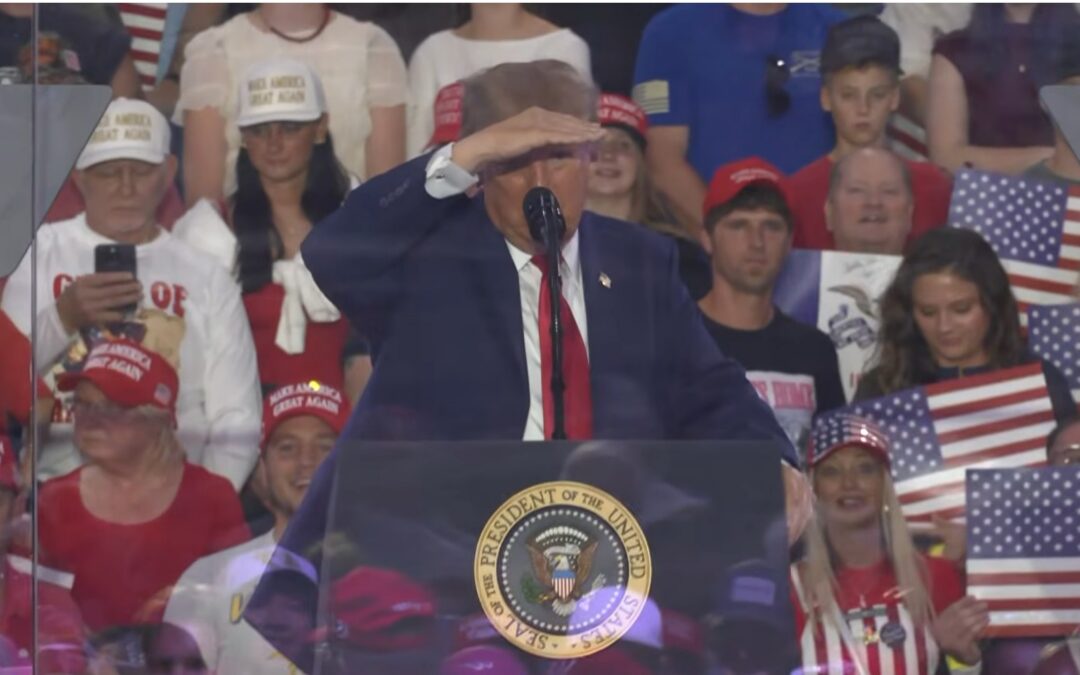
In terms of stumping for Republican candidates, President Trump has done everything within his power to try and generate enthusiasm and turnout for the party. Self-identified MAGA Republicans are still with Trump, but the numbers from other groups is troubling. Independent voters aren’t wild about Democrats either.
With a little over a week to go, Democrats seem confident they’ll sweep Republicans out like so many dust bunnies under a neglected bedroom dresser. Liberals expect this year to be like 2006, but there’s no indication the public feels the same way. And, as I pointed out, Republicans should do better in certain contests because the Democrats running in them are so repulsive.
This election may not compare to the Ottomans pounding on the gates of Vienna – but the enemies must be turned away just the same. Republicans rely on enough Americans recognizing the big picture to add the perspective they need. No one wants to see the Democrats take over again. Like usual, November will prove to be a very fateful month in American history, one way or another.
Jeff Rendall is editor and publisher of GolfintheUSA.com and has written about golf and politics for over a quarter of a century. A non-practicing attorney from California, he moved to the east coast three decades ago to pursue and combine his interests in all things American history and culture. Jeff has worked as an intern on Capitol Hill and in various capacities in grassroots organizing and conservative organizations and publications, including a nearly two-decade stint at ConservativeHQ.com. Column republishing or other inquiries: Rendall@msn.com .