By Jeffrey A. Rendall
Will voters base candidate choices on the uneven Iran War, or look to kitchen table issues?
Whenever a president commits the United States military to a mission, there will be political consequences.
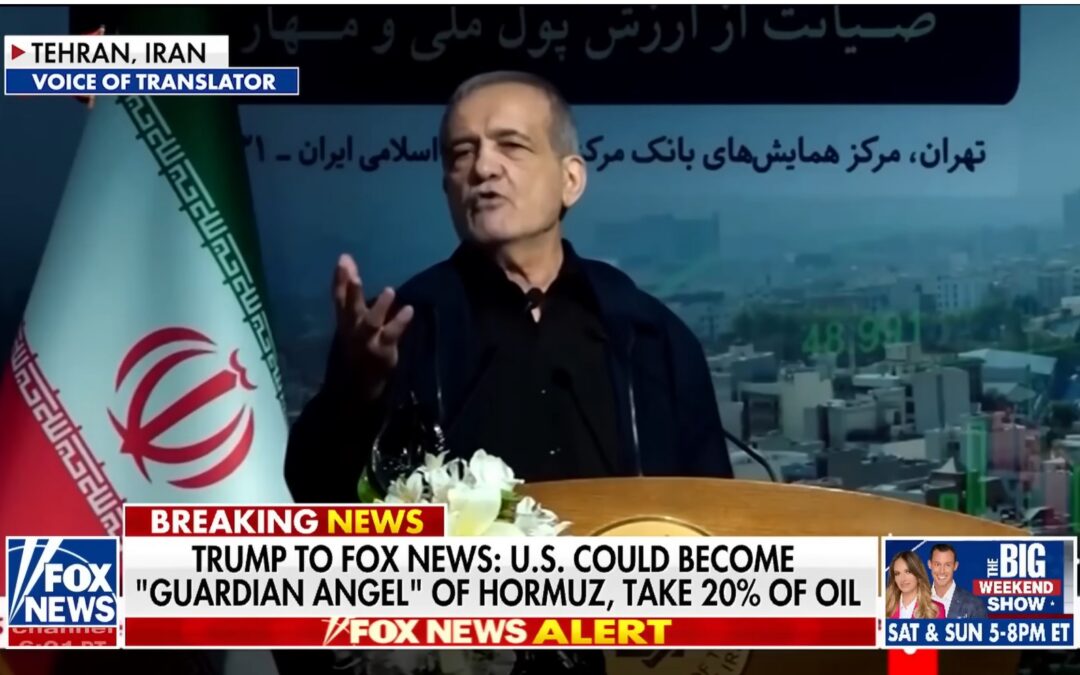
The Iran “War”, if you can actually call it a “war”, lingers on with both President Donald Trump and Iranian leaders trading contradictory proclamations as to the accurate state of the conflict, Trump attempting to calm fears of possible further escalation and the opposing Iranian mouthpieces stepping up their propaganda campaign to make it appear as though there’s still life left in their nearly comatose “revolution”.
Then there’s Israel, who Trump believes will abide by any agreement he makes, yet our most reliable Middle East ally most definitely marches to its own drummer.
The Iranian leadership talks as though they have the military means at their disposal to fight back and potentially win a shooting confrontation with the United States. The facts on the ground suggest it isn’t nearly that cut and dried. Yet the bellicose pronouncements never cease.
Polls seem to indicate the American public views the dealings in Iran negatively. Here’s thinking the average person truly isn’t engaged in the day-to-day back-and-forth of the establishment newsmakers who try to first make heads or tails of what’s going on and then put a spin on something that isn’t actually “news” at all.
With the federal midterm elections drawing closer by the day, one wonders how the overseas events will shape voter attitudes – and whether Republicans will suffer their own electoral penalties as a result in early November.
In an article titled, “Can Trump’s Iran deal help Republicans in midterm elections?”, the always perceptive W. James Antle III wrote at the Washington Examiner recently:
“The midterm elections were already a contest between terrible national conditions for Republicans and a somewhat more favorable congressional map.
“What if Republicans could marginally improve those national conditions before November? The economy is still growing. The stock market has been doing well. The jobs numbers are respectable, at times beating expectations, though they have been met with some public skepticism after recent downward revisions. Ending the war and improving inflation could help Republicans.
“But it is worth noting that the electorate wasn’t happy about the cost of living before the Iran war and when the rate of inflation was rising more slowly. Democratic candidates, including at least one socialist, won the 2025 elections by talking about affordability. And even if the overall numbers improve, public perceptions of the economy could become locked in sometime this summer, ahead of the elections.”
Naturally, one wonders when those attitudes will be permanently “locked in”. It probably wouldn’t be one specific date or time, but a general feeling that persists over a matter of weeks. Or months.
Anyone who’s applied for a mortgage understands that there’s a contractual moment where the interest rate won’t change after it’s “locked in”. Public opinion is much more malleable. Kind of like George Carlin’s comedic routine comparing baseball to football – in football, each quarter has a cutoff point, whereas in baseball (paraphrasing): “We just don’t know when it’s going to end.”
Well, in American politics, conditions are much more like baseball than football at present.
You don’t have to be a so-called foreign policy expert or a member of the Political Science faculty at a liberal university to see how the Iranians are performing a waiting game to determine how long they can drag out the nonsense in order to influence American public opinion. The remnants of the mullahs may be patently unrealistic, but they aren’t stupid. They understand that their only hope for survival rests with U.S. voters becoming so frustrated with the unresolved “war” that they’ll vote Republicans out of office.
The Iranians can’t touch President Donald Trump, but they can yank his political support rug out from under him. Trump may claim he has virtually unlimited power to do basically whatever he wants with the war, but I doubt most Americans view it that way. If nothing else, Trump is bound by the invisible bounds of ethics and, in the United States, the power of impeachment.
The president’s already been through the constitutional process twice. Democrats are itching to make the third time the charm. We can’t see what the future holds, but, as I’ve argued a lot lately, Trump isn’t managing his political PR operation very effectively.
The administration’s Iran War messaging is a confusing mess. Trump has backed himself into a virtual corner – he’s damned if he waits it out and just as damned if he sends in the military to inflict more injury on the stubborn and ideologically uncompromising enemy.
It’s hard to see how the ongoing situation in Iran could end up being a benefit to the GOP’s campaign effort unless gasoline bills drop so precipitously that the entire economy improves because of it. Voters expect fees to fall from where they are now. Competitive vendors will reduce their prices if it costs them less to ship and receive goods and materials.
Because inflation remains higher than the decisionmakers would prefer, there won’t be relief on interest rates, either. Home prices will stay elevated, but borrowers won’t be able to afford the higher asking prices because of the exorbitant cost of borrowing. It’s a tortured circle.
Let’s face it, the Iran War provides an even more convenient excuse for Trump’s haters to try and rip another pound of flesh, even if they’re merely reusing the same tired arguments they’ve employed for decades going back to the Gulf War and the post-9/11/01 period.
Can’t you just hear it now? They’ll gripe, “War of choice”, and, “Prices are high because Trump chose to bomb Iran and now, the Middle East is a mess. Again!”
Public opinion ebbs and flows, but attitudes aren’t likely to improve quickly. There’s no single event that could drastically alter voter impressions in a short time frame. Gas prices coming down recently will certainly help, but the feelings will take longer to become more positive and optimistic.
I’m not a pollster, but if I were the Trump people, I’d pay special attention to the right track/wrong track numbers and determine the trends. The same goes with the GOP’s campaign brains, since they’ll need to target their messaging towards the incredibly thin slice of the voter pie that’s still open to reforming their opinions and appear to be convincible.
Democrats figure all they’ll need to do is keep assaulting Trump’s decision-making and basically ignore – or at least keep their distance from – their individual opponents in races. Since Democrats are still divided on who will be their next leader, don’t expect to see Kamala Harris making campaign appearances for other Democrats, either.
Meanwhile, Barack Obama will take a break from promoting his new (hideous) eyesore of a presidential library and he’ll make the rounds talking about how his Iran deal would’ve alleviated the need to bomb the rogue country in the first place. It’s a reformulated narrative not supported by facts, but it sounds pleasant, doesn’t it?
Republicans can take some solace in the fact they’ll be able to draw new district lines in certain states, and the contested numbers of House races isn’t large to begin with. In addition, Democrats would need a minor miracle to pick up enough Senate seats to deny vice president JD Vance his tiebreaking vote in the upper chamber.
The left’s furor over immigration enforcement hasn’t attracted much attention recently, and cultural issues have been superseded in importance by Iran, and, fuel prices. Democrats would rather talk about Zohran Mamdani presiding over the New York Knicks’ NBA championship celebration than change the subject back to the issues where Trump and Republicans could have an advantage.
Democrats also won’t give credit easily should the Iran War be resolved in a way that brings calm to the volatile Middle East region. Nor would they be anxious to acknowledge a downward trend for gas prices, or if inflation draws closer to the FED’s target range.
Americans don’t have long attention spans for events, but they do understand whether they have confidence in presidents and congresspeople to pass policies that will benefit them. Democrats won’t help Republicans sell the war effort, and they surely won’t offer assistance to President Trump, either. Time will tell. This fall will be interesting to watch.
Jeff Rendall is editor and publisher of GolfintheUSA.com and has written about golf and politics for over a quarter of a century. A non-practicing attorney from California, he moved to the east coast three decades ago to pursue and combine his interests in all things American history and culture. Jeff has worked as an intern on Capitol Hill and in various capacities in grassroots organizing and conservative organizations and publications, including a nearly two-decade stint at ConservativeHQ.com. Column republishing or other inquiries: Rendall@msn.com .