
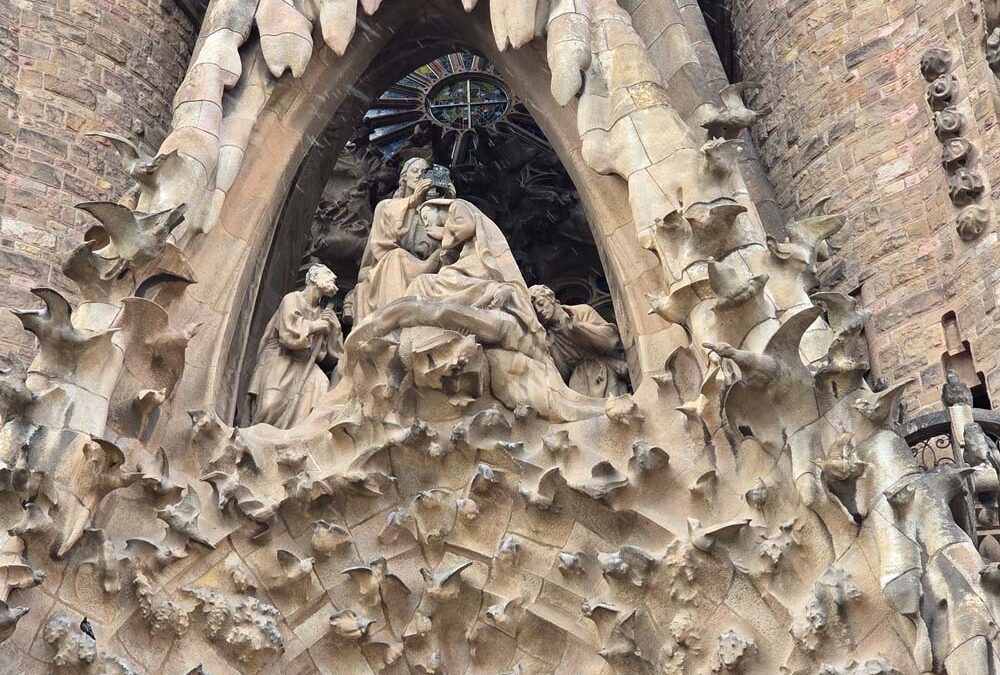
By Jeffrey A. Rendall; Photos by Jeff Rendall and Shari Rendall
Yes, the Olympics were In Barcelona in 1992. Be prepared to see much more.
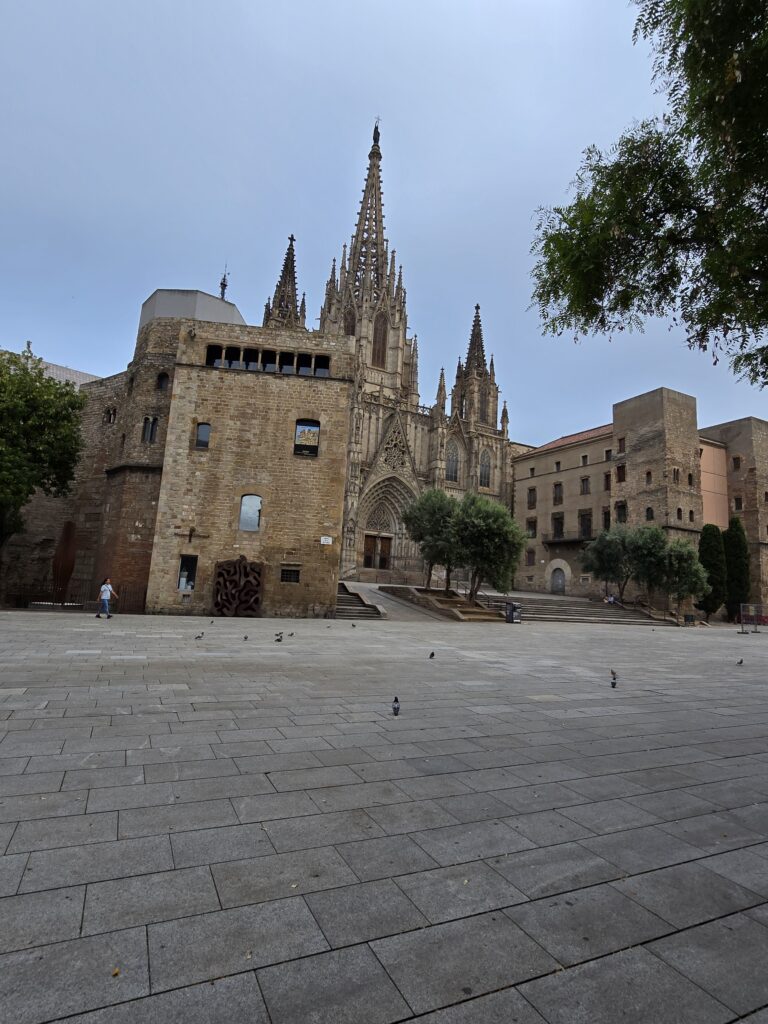
The Gothic Quarter has a very distinctive Cathedral
Barcelona? You mean the place where the 1992 summer Olympic Games were held?
Such was the reaction I had when my wife mentioned our cruise ship would stop for a day in the Spanish city on the northeastern coast of Spain. We’d just traveled across the Mediterranean and enjoyed an at-sea day on Oasis of the Seas whereby we explored the ship, enjoyed an excellent lunch at El Loco Fresh and took advantage, for the first time, of the milkshakes (at Johnny Rocket’s) that are included in the Refreshment beverage package.
Seeing as this was our first cruise in well over a decade, we’d debated what kind of beverage package to purchase in advance. I didn’t think I could drink enough alcoholic beverages to make the Deluxe package worth it, so we opted for purchasing the Refreshment package for me and settled for the specialty coffee card and package of bottled water for Shari.
If you are in a similar situation and kind of just getting back into cruising, it would probably be beneficial to view any number of YouTube videos on the subject, because assessing which package is right for you ranges from nothing and just hoping the included beverages would be sufficient, or splurging for the all-you-can-drink Deluxe package.
1. Keep in mind that Barcelona is not walkable if you want a range of activities in the Spanish city.
We arrived in Barcelona about dawn on the fourth day of our cruise. Never having been there – or to Spain in general – we weren’t sure what to expect. Some folks who visited Barcelona previously suggested we’d be just fine getting around by taxi and walking. It turns out that we arrived at our tour gathering spot over an hour before it was due to meet, the mix-up due to a difference between ship’s time and the local port time.
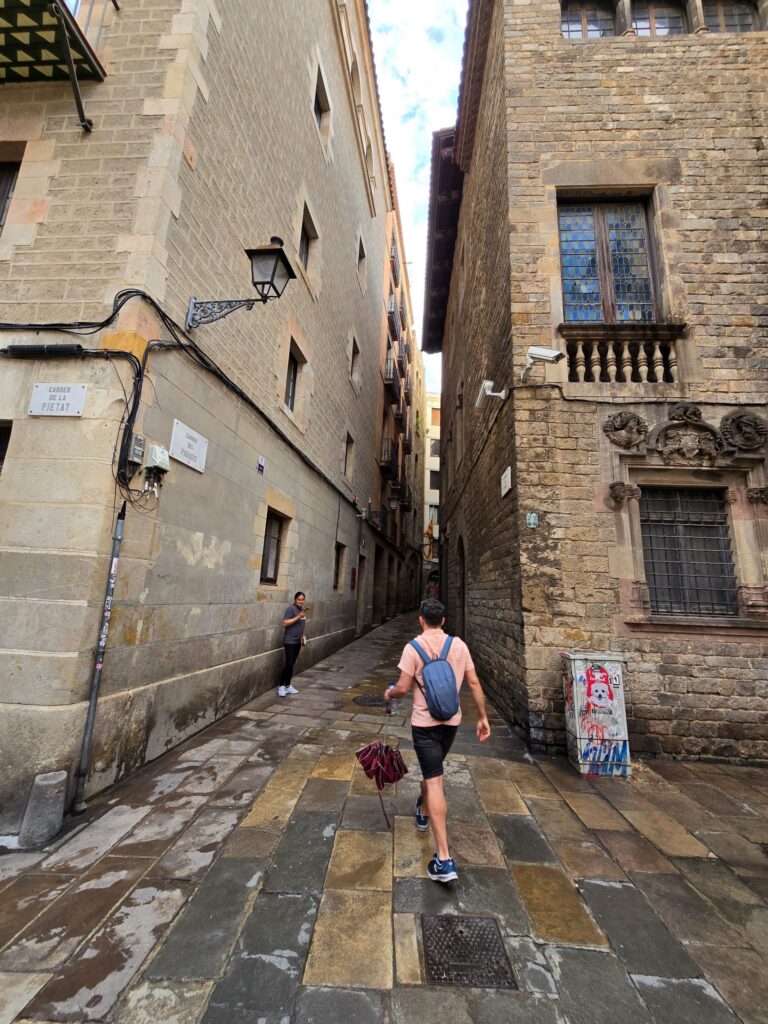
Narrow streets and alleys are the norm in the Gothic Quarter.
Always check what the local time is (in comparison to ship time). It’s a good thing to keep in mind.
We’d taken a taxi from the cruise port and was a bit surprised that there wasn’t a large crowd of disembarked passengers waiting for excursions like there had been in Naples. Like with Naples and the Amalfi Coast and Pompeii two days previous, we went through an independent excursion company, Viator, for Barcelona, which was some cheaper and we reasoned, less crowded than some of the ship’s offerings.
The tour group was to meet near the Hotel Colon. So we were dropped off at the hotel, not knowing who or where to rendezvous with the guide. The name of our tour was, “Barcelona in a Day Tour: Sagrada Familia, Park Guell & Old Town.” The cost was USD $278.90 for two.
Barcelona appeared to be a sleepy city at the early hour, which contrasted greatly with its reputation as a bustling center of nightlife. Since there were few people around, we had the run of the place to ourselves for a time. There was a Starbucks a few blocks from the hotel and thought that might be a good place to get something to “wake us up,” not having had much for breakfast prior to leaving the ship.
This part of Barcelona had construction on the streets and we spotted a few homeless persons, the first such folks we’d seen in Europe thus far, though we hadn’t walked around in Naples, which looked older and less modern than Barcelona. There were porta potties on the street, though the smell emanating from them could be detected about a block away. Not pleasant.
There was a Cathedral near the hotel, and I initially thought it might have been the Sagrada Familia, but it wasn’t. The architecture was Gothic and very old-style pleasing. It was a Sunday morning and the church bells rang, but we didn’t see many locals entering the church. The calm, quiet atmosphere was due to it being Sunday, which turned out to be a bit of a bummer for us because we later found that much of Barcelona was closed on a Sunday morning.
When the tour did get started, the Viator guide explained that we’d first be walking around the Gothic Quarter, which was in the oldest part of the city and dated back to Roman times. The ancient wall boundary of the  city was still visible. One grasped the vast expanses of the Roman Empire when a Spanish city such as this was part of the original Rome, though Barcelona was some “younger” than Rome itself.
A heavy rainstorm blew through, which delayed our tour a bit. The guide, we’ll call him Fernando, explained that it had been very dry lately and they needed the rain. This was little consolation as the rain lasted long enough where several of our fellow tour companions searched for umbrellas to buy.
Fernando said the morning portion of the tour was a walking tour and we’d be covering over two miles of ground. The walking pace was fairly brisk and Fernando explained historical significance as we went along, both the ancient parts and more modern connection to the pre-WWII Spanish Civil War where some parts of the city were bombed.
I’m confident the historical context of the Gothic Quarter was well-explained, but I’ll let Wikipedia do the rehash:
“The Gothic Quarter (Catalan: Barri Gòtic [ˈbari ˈɣɔtik] or El Gòtic; Spanish: Barrio Gótico) is the historic centre of the old city of Barcelona. It stretches from La Rambla to Via Laietana, and from the Mediterranean seafront to the Ronda de Sant Pere. It is a part of Ciutat Vella district.
“The quarter encompasses the oldest parts of the city of Barcelona, and includes the remains of the city’s Roman wall and several notable medieval landmarks. Much of the present-day fabric of the quarter, however, dates to the 19th and early 20th centuries. El Call, the medieval Jewish quarter, is located within this area, along with the former Sinagoga Major.
“The Barri Gòtic retains a labyrinthine street plan, with many small streets opening out into squares. Most of the quarter is closed to regular traffic although open to service vehicles and taxis.”
That’s right. No traffic. And “labyrinthine” is a good way to describe it, with many a twist and turn along the journey.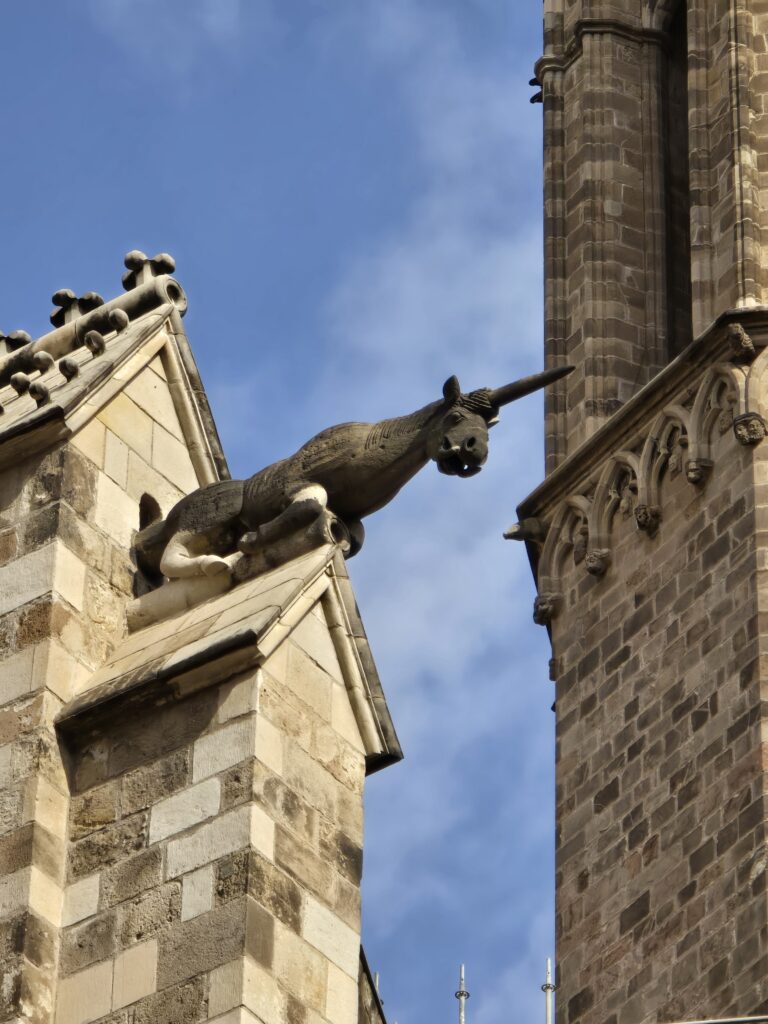
Fernando explained that it was a very expensive part of the city to live, with several buildings featuring apartments intermittently located between older buildings and a government center. Barcelona was very Spanish, but owed allegiance to different parts of Spain. The pace of the tour didn’t allow for “soaking in” the details of the history, but it was enjoyable and who would fail to appreciate the beauty of this city?
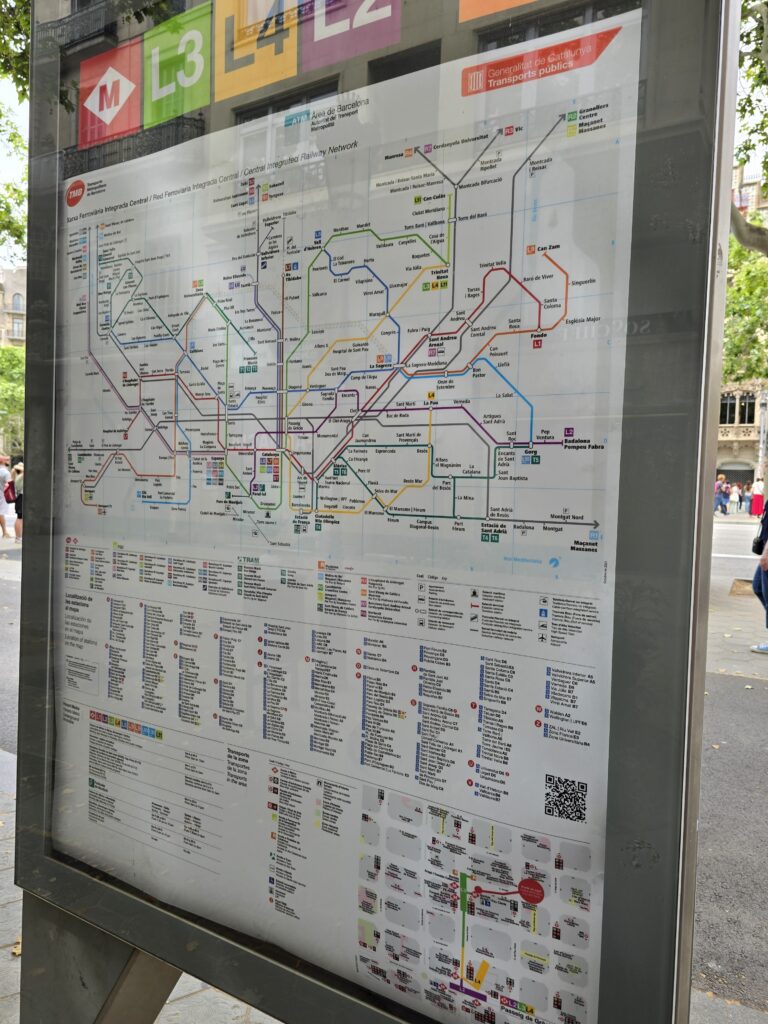
Fernando explained that the public transportation system in Barcelona was excellent, and there were a number of buses visible even on a Sunday morning. “I don’t own a car” he elaborated. There were a number of bike rack-type things that city residents could use to park their bikes. Very convenient.
2. If you can avoid it, don’t tour the oldest section of Barcelona on a Sunday.
As previously noted, the old city was sparsely populated on the morning we were there, which isn’t necessarily a bad thing, but the large open-air market, Els Encants de Barcelona (also known as Fira de Bellcaire) is the city’s largest and most historic open-air flea market, located in Plaça de les Glòries. Thanks Wikipedia.
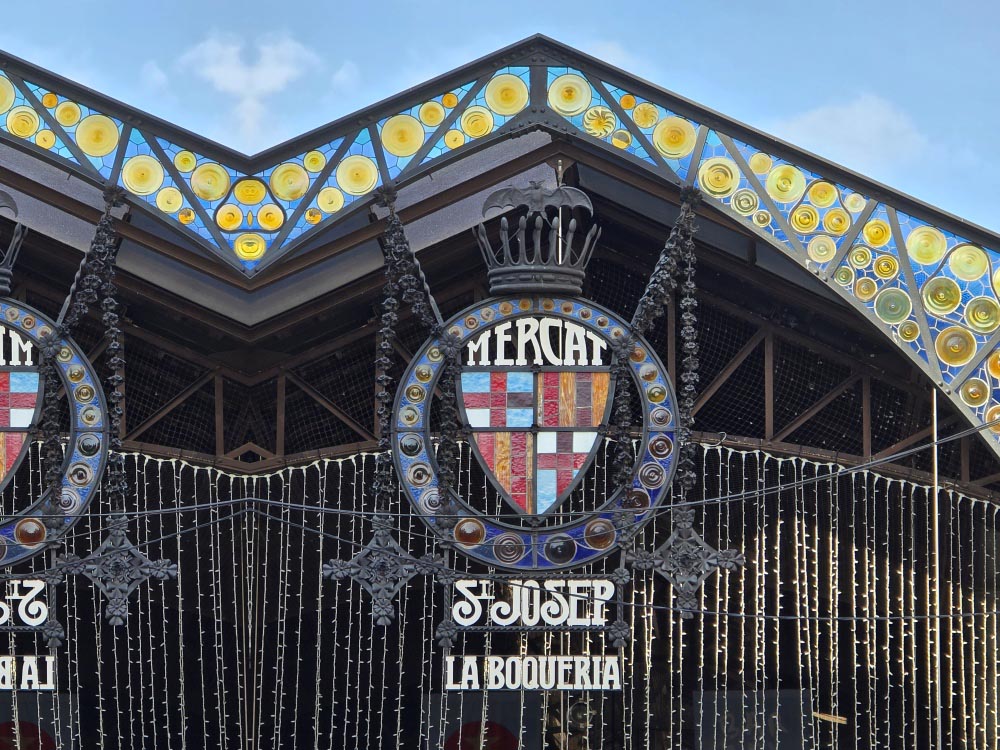
The open air market looked inviting… through the iron gate.
All we could do was looked through the Wrought Iron gate to the market. I’m not sure there would have been time built into our tour, but we can’t help but feel we missed something there simply because we weren’t in Barcelona on a day where the vendors were “open”.
When Fernando sensed we needed a breather, he paused for a 20-minute bathroom break across from a couple of the notable works of Antoni Gaudí, including the world famous Casa Milà, distinctive for its stone quarry-like appearance.
As Fernando explained, and was later confirmed by our visit to Park Güell and the Sagrada Familia, Gaudí’s name is intricately linked to Barcelona. I wouldn’t exactly say Gaudí ranks alongside the Italian Renaissance master artists and architects we saw when in Rome and Florence, but the Spaniard is every bit as distinctive and unique.
Would there be a Barcelona without Gaudí? Hard to say, but the man’s works have certainly stood the test of time (he died in 1926) and no visit to Barcelona would be complete without coming face-to-face with his creations.
“Gaudí was a child of delicate health, which is why he was forced to spend long periods of rest at the Mas de Riudoms, where he would spend hours upon hours contemplating and absorbing the secrets of nature, which he considered his great teacher and transmitter of the highest knowledge as the supreme work of the Creator.”
Nature and Christianity were consistent Gaudí themes, which was hard to absorb in the short amount of time we were there. But by the time we reached Casa Milà, many of us were willing to move along. There wasn’t
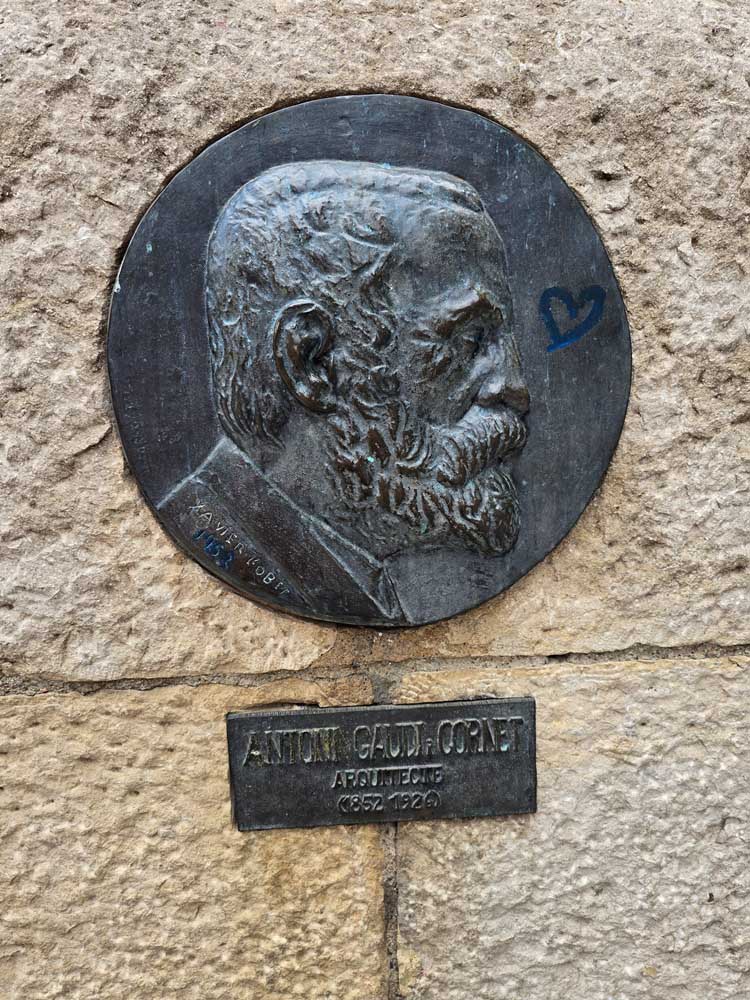
Anthony Gaudi’s influence is everywhere in Barcelona.
time to tour the buildings themselves, though I believe they were open to the public (for a fee, of course). We spotted a McDonald’s in one of the buildings and decided to see what the famous American fast-food restaurant was like in Spain.
We’d looked into another establishment with breads and coffees in there, but opted to save room for lunch, which Fernando had said would come after visiting our next stop, which was Park Güell. Mercifully, a comfortable coach arrived to take us there.
3. Park Güell — Antoni Gaudí spends years perfecting a natural environment
Before visiting Barcelona, we’d heard from folks who’d been there that the Hop on/Hop off bus was a good way to go there – cheaper and reliable and presents the opportunity to stop for as long as you’d want in any particular location.
Since this was a cruise, however, we figured a guided tour was best – and I think if you had limited time such as we did, the tour was very much worth it. Though I can see the benefits from Hop on/Hop off and could go that route for a return visit to the city.
It was about a fifteen-minute ride to Park Güell. We were informed that we’d have about an hour there. Fernando explained Gaudí’s connection to it. The architect laid out the concept for the park, which, if you have a chance to visit there, is highly recommended.
Wikipedia described it: “Park Güell is a UNESCO World Heritage Site in Barcelona designed by Antoni Gaudí between 1900 and 1914. Originally commissioned by industrialist Eusebi Güell as a luxury garden-city residential development, the project failed commercially, resulting in only two of the planned sixty houses being built.”
Gaudí himself lived there and the house he lived in has been made into a museum, though we didn’t go into it.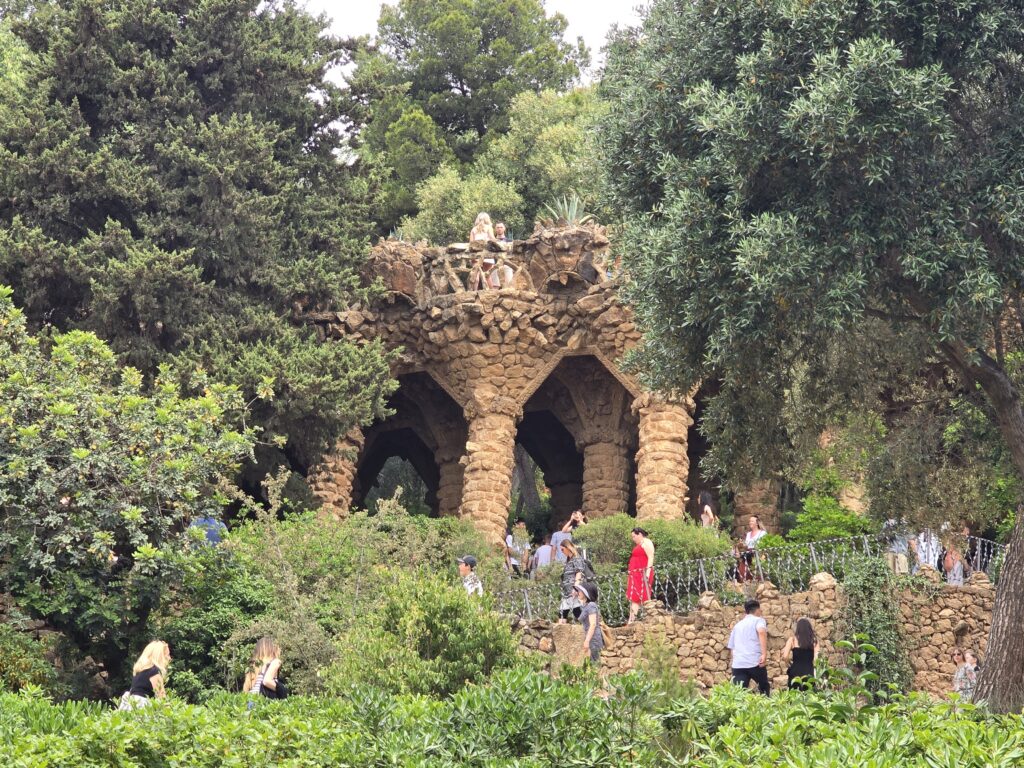
How to explain Park Güell? It’s kind of “you have to see it to believe it.” The architect was very into natural things and the unique shapes and themes displayed in the various exhibits are one of a kind. It’s not like an American central park, though its distinctive Spanish flavor is unforgettable. Take lots of pictures and look at them again when you have time in order to see the immaculate detail of the place. It’s like being at a park and a museum at the same time.
“Originally, Güell and Gaudí envisioned the site as a private residential development of luxurious homes with modern amenities. The park’s common spaces—stairways, terraces, gardens—were designed to embody the political and religious ideals of its creators. Symbolic references include political Catalanism (e.g., on the entrance stairway), and Catholicism (e.g., the Monumento al Calvario, initially conceived as a chapel). Classical elements and Greek mythology references are also present.” – Wikipedia
 The park is elevated, offering panoramic views of Barcelona, including a long range look at where the Olympic Village was placed. Barcelona is quite spread out, it kind of reminded me a little bit of Southern California.
About all I can add about this location… is the place was really cool. And relaxing. A nice stop just before lunch.
4. Lunch near the Sagrada Familia at The Divan Restaurante
After having spent the better part of a half-day in Barcelona, we were ready for lunch. Fernando said our Sagrada Familia ticket time allowed us about an hour and fifteen minutes to eat and turned us loose to visit the local culinary scene.
Most of our fellow tour guests took the same route we did. Barcelona certainly doesn’t lack for open air restaurants. We strolled along a wide avenue, more curious than hungry. Vendors were out front seeking to capture anyone who looked like a tourist, offering deals and booze and pizza and local treats and anything else to get you to stop.
Pizza in Barcelona? It did look good, but we opted for an establishment with a multitude of Tapas and beers, so this looked as good as any. The Divan Restaurante. “It specializes in Turkish and Mediterranean cuisine, offering a diverse menu that includes paella, seafood, pizzas, kebabs, and tapas. The venue is known for its outdoor terrace with direct views of the basilica, making it a popular spot for both lunch and dinner.”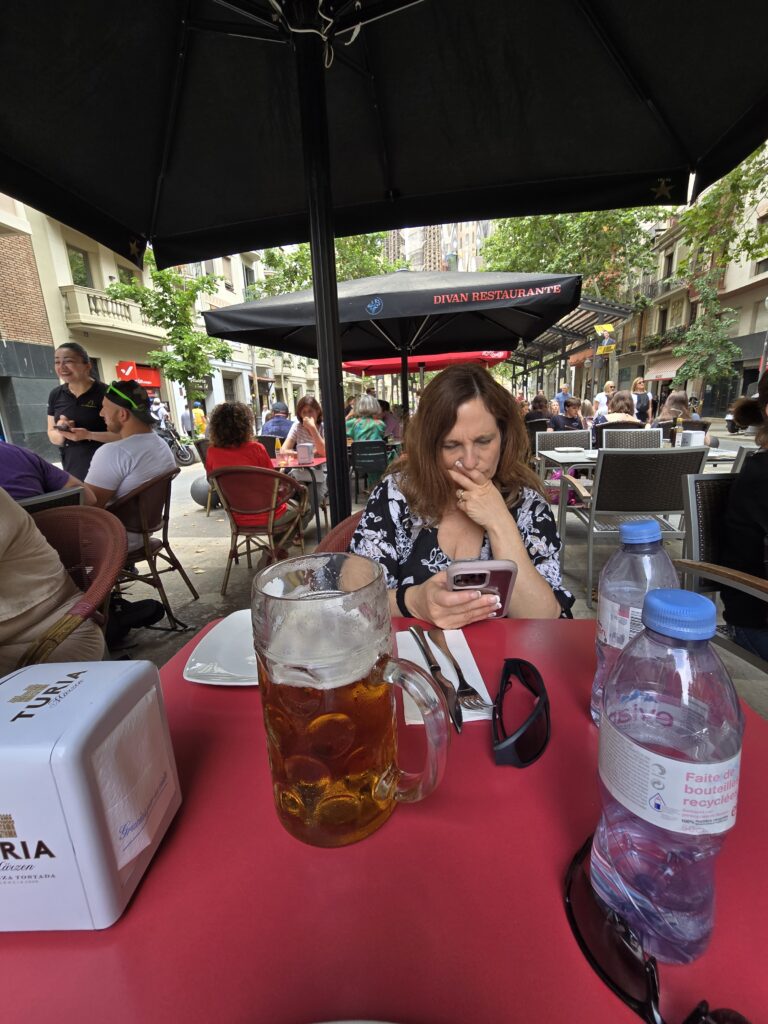
I quickly gathered that Spanish food was nothing like Mexican food in the States. No taco bell entrees here, people.
I couldn’t tell you the names of what we ordered, though Shari asked for an order that was basically a bowl of mushrooms, and we shared a few others that had potatoes and cheese and little sausages. And something akin to garlic bread.
I’d cautioned against ordering too much, but these were “tappas” and were supposed to be small. They weren’t. For two of us, five orders were too much. We shared a big beer between the two of us and felt a little guilty drinking just before going to church. Well, not that guilty.
The avenue was fairly packed, with almost every table taken. The service was attentive, though the waitress seemed a little impatient for us to order. Clearly, they earn their money through serving as many guests as possible. We could see the Sagrada Familia from where we ate lunch, both of us anxious to see the “headliner” attraction for Barcelona, the thing we’d heard so much about.
The food was delicious and the atmosphere was top notch. The cost for the meal was around 40 Euros, which seemed pretty reasonable, all things considered.
At the appointed time we rejoined Fernando and the rest of the tour group. Fernando was curious about where we’d eaten, and we told him. He mentioned that he’d eaten at KFC. So much for the local cuisine.
5. Lose yourself in awe of the Sagrada Familia. Just don’t call it a cathedral.
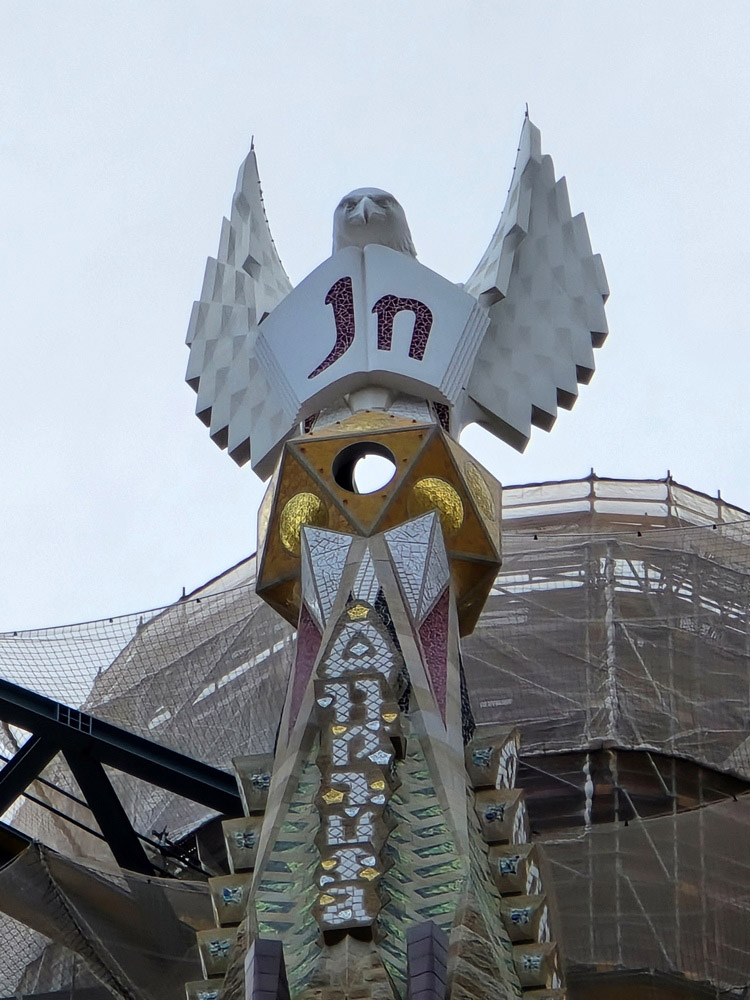 Like with most of what we encountered in Barcelona, we didn’t know what to expect. Rome and Naples had its share of hyped ancient historical sites, but few had set the bar as high as the Sagrada Familia, which has drawn comparison to St. Peter’s Cathedral in Vatican City.
Mention “Sagrada Familia” to someone who’s visited the city and chances are they’ll ask whether you went there. This was hype. Would it live up to the billing?
Wikipedia set the stage: “On 19 March 1882, construction of Sagrada Família began under architect Francisco de Paula del Villar. In 1883, when Villar resigned, Gaudí took over as chief architect, transforming the project with his architectural and engineering style, combining Gothic and curvilinear Art Nouveau forms. Gaudí devoted the remainder of his life to the project, and he is buried in the church’s crypt. At the time of his death in 1926, less than a quarter of the project was complete.
“Relying solely on private donations, Sagrada Família’s construction progressed slowly and was interrupted by the Spanish Civil War. In July 1936, anarchists from the FAI set fire to the crypt and broke their way into the workshop, partially destroying Gaudí’s original plans. In 1939, Francesc de Paula Quintana took over site management, which was able to go on with the material that was saved from Gaudí’s workshop and that was reconstructed from published plans and photographs. Construction resumed with intermittent progress in the 1950s.
“Advancements in technologies such as computer-aided design and computerised numerical control (CNC) have since enabled faster progress, and construction passed the midpoint in 2010.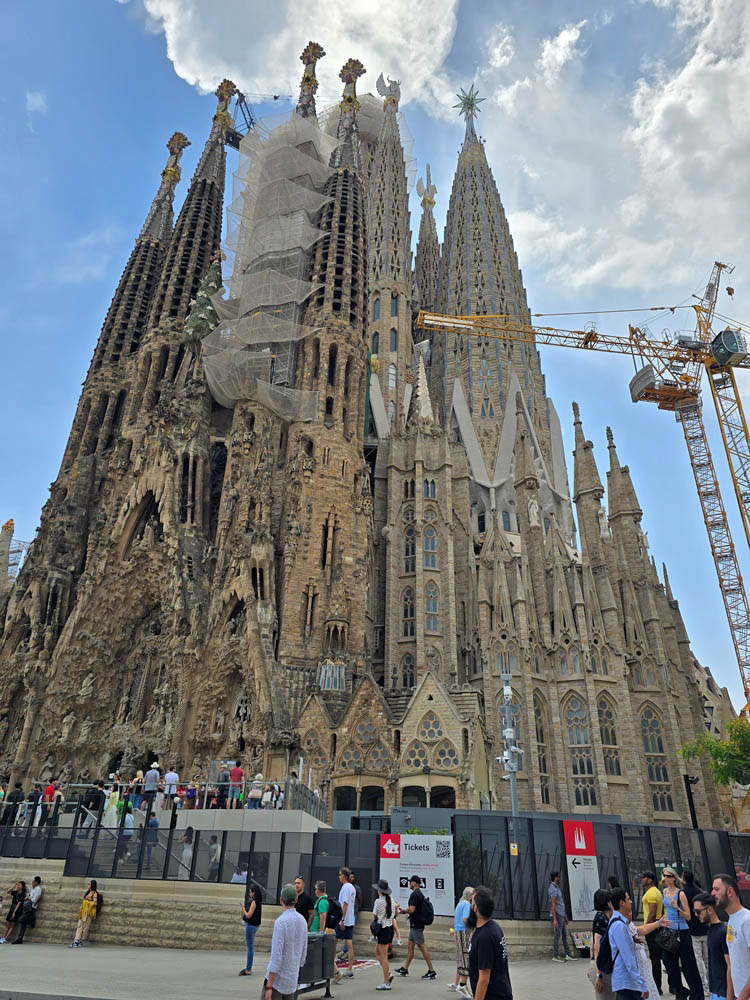
“In 2014, it was anticipated that the building would be completed by 2026, the centenary of Gaudí’s death, but this schedule was threatened by work slowdowns caused by the COVID-19 pandemic. The basilica reached structural completion on 20 February 2026, when the final piece of the central Tower of Jesus Christ was installed. While an official inauguration is scheduled for June 2026 to mark the centenary of Gaudí’s death, work on the sculptures and decorative details of the Glory Facade, along with a controversial monumental stairway, is expected to continue until 2034.
“Describing Sagrada Família, art critic Rainer Zerbst said ‘it is probably impossible to find a church building anything like it in the entire history of art”, and Paul Goldberger describes it as ‘the most extraordinary personal interpretation of Gothic architecture since the Middle Ages’.
“Though sometimes described as a cathedral, the basilica is not the cathedral church of the Archdiocese of Barcelona; that title belongs to the Cathedral of the Holy Cross and Saint Eulalia (Barcelona Cathedral).
“On 30 October 2025, Sagrada Família became the world’s tallest church when a part of its central tower was lifted into place and reached 162.91 m, surpassing Ulm Minster (161.53 m). On 20 February 2026, the 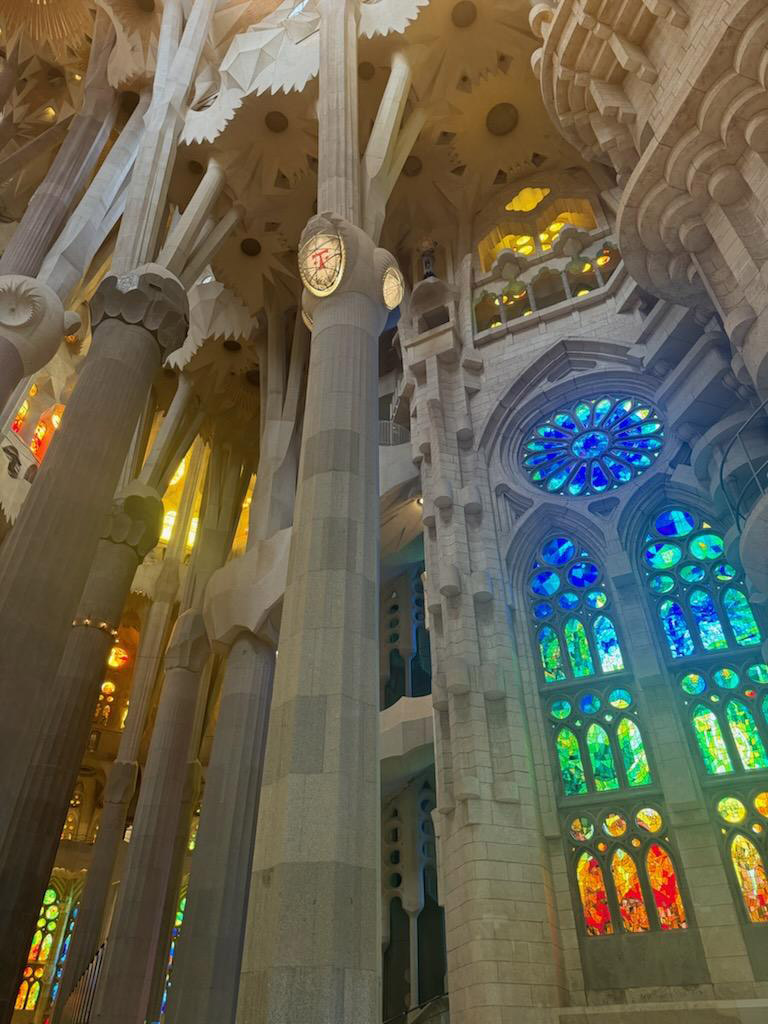 basilica reached its final height of 172.5 metres (566 ft).”
–Those are the hard facts. The experience is quite simply put, overwhelming. We had “skip the line” tickets but still waited about a half-hour before being permitted to go inside, a large crowd of fellow tourists having already gathered in and around the building itself. This was Sunday, of course, and there was a service at the Sagrada Familia earlier in the day.
You’ll strain your neck trying to give your eyes enough of an angle to see the top. Fernando’s description of the building and its various exterior statues and iconography was about as thorough as practicable, but almost constituted a roll-your-eyes moment because there was simply no way to “digest” everything the senses were telling you. We were given a headset to offer a narrative tour, but the noise inside the church was so great that it was impossible to hear much. Fernando tried to fill in the gaps and pointed to this and that and offered a basic overview of what Gaudí hoped to accomplish.
All of this breathtaking grandeur was done through private donations. Construction has taken over a century, even with modern construction techniques. Much of the statuary was envisioned after Gaudí died, so the church actually had several brains behind it. Fernando did say that, due to the enormous stained-glass windows, that the look of the interior was different every time he went in there.
Sagrada Familia had much more of a modern-art vibe to it. Whereas St. Peters had the beautiful fresco works of the Renaissance masters, Sagrada’s art was more interpretive and open to an individual’s impressions. Did this make it better, or worse?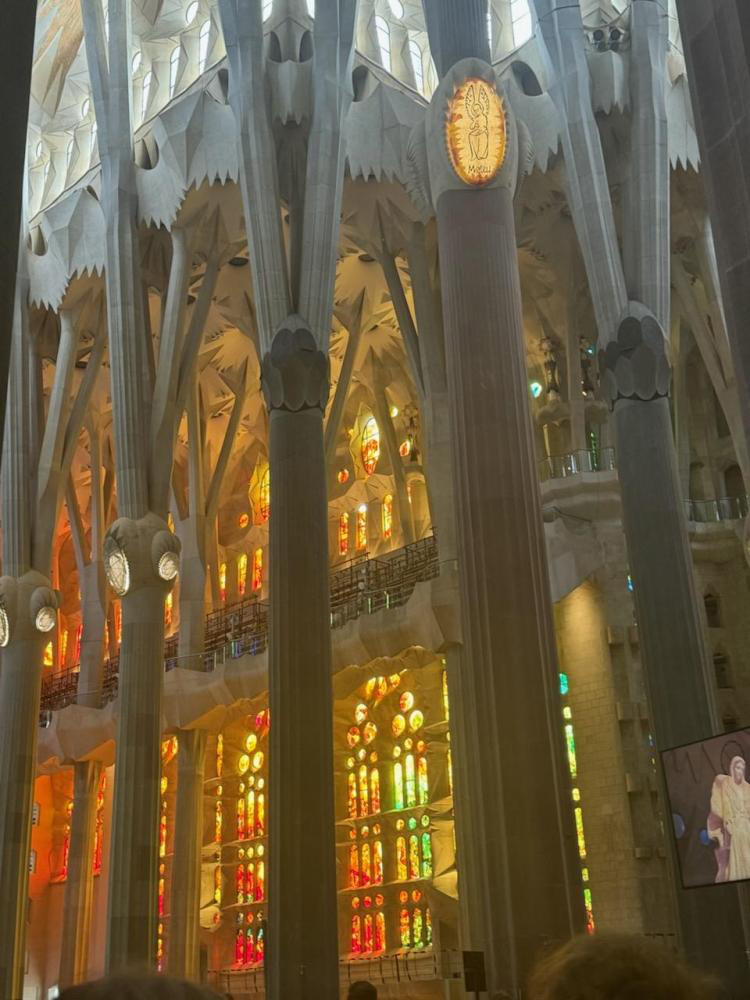
This is a place that demands future – and slower – visits to even attempt to capture it. You’ll find that the imagery is exhausting because of its variety and colors. But soothing at the same time. Who couldn’t visit here and be at peace?
Gaudí was a genius, as were the architects who followed him, them being given free leeway to create and experiment and let the Holy Spirit guide them in fashioning a building meant to last for centuries, or millenniums. The fact that it wasn’t yet complete when we toured left us wondering what it might look like when complete.
There are other tours available to more thoroughly explore the buildings many sections, including the spires, hundreds of feet off the ground. I wonder if you have to walk the stairs?
Fernando explained that we were free to explore the different sections of the Sagrada Familia, though this was the effective end of his part of the tour. There were interpretive exhibits to  explain aspects of the design and construction of the church. How to synopsize it?
Most significant sites can’t be ingrained in such a short time. Snap pictures and try to get your mind around it. Then seek to return to Barcelona and devote more hours to learning the story more fully. Who knows? Maybe it will be done by then!
Note: As mentioned above, construction of the outer portion of the church was finished in 2026. We visited two years prior, in June of 2024.
6. Taxi back to the ship and rest your brain from the overwhelming experience
Barcelona was much more than I’d ever imagined. Hats off to Viator – and Fernando – for providing a well-conceived tour including “skip the line” tickets at a couple of the city’s premier tourist sites.
The biggest drawback from visiting European cities via cruise ship is the lack of time to absorb what you’re seeing and being told. It’s like a bite-sized sample of each dish as part of a large meal.
You’ll get an idea of what the culture is like, but don’t expect to fall in love with any particular aspect. The chances for shopping during our visit to Barcelona were limited, though we could have taken additional time to explore once the Sagrada Familia tour had ended. On a future visit, I would definitely want to return to the church as well as possibly take a look at the Olympic Park. The vaunted Barcelona nightlife would also be interesting. And, of course, the restaurants.
The taxi ride back to the ship was only notable for the fact the driver charged us for having to go to a different drop-off location past the cruise terminal from the one we were supposed to be dropped off at. So I didn’t tip him. It was literally just across the parking lot.
7. Final thoughts on Barcelona
I enjoyed Barcelona more than I thought I would. After having toured Rome and Pompeii/Naples/Amalfi, I wasn’t expecting as much history in Barcelona as there turned out to be. The entire Mediterranean region is  dominated by Roman influence, and Barcelona was no exception, though most of the city is newer than the Eternal City.
Like with every European destination, information overload is an issue. I’d done some preliminary research on what we’d find in Barcelona, but the static text doesn’t do it justice. So many names, so many dates, so many crucial contributions. And Barcelona had a connection to the pre-WW II Spanish civil war as well, the fascists having taken over Spain.
From Wikipedia: “General Francisco Franco’s Nationalist forces captured Barcelona in January 1939, effectively ending the Spanish Civil War months before World War II began. Consequently, during World War II (1939–1945), Barcelona and all of Spain were under Franco’s dictatorship, with the country maintaining official neutrality despite Franco’s ideological sympathy for the Axis powers.
“Impact on Barcelona and Catalonia. The fall of Barcelona resulted in the immediate loss of Catalan self-government and the suppression of the Catalan language and culture. Following the capture, the regime ransacked the city’s synagogues, expelled Jews who had arrived after 1931, and left working-class districts in ruins as punishment for supporting the Republic. Prior to the capture, the city had endured over 400 aerial attacks, including brutal bombardments by the Italian Aviazione Legionaria that killed more than 2,750 people.”
There aren’t any scars from the bombardment remaining, though there are interpretive signs in Spanish. A good guide is essential for history buffs. If you just want to drink in the art and architecture of Barcelona, I would think the Hop on/Hop off bus could suffice.
I’m not really a “Foodie”, but I can see where Barcelona would be a favorite for those who enjoy cuisine. Like most European cities, touring them is like receiving a lecture in architecture and styles. Culture isn’t readily visible, but Barcelonians seemed happy and content. I’d like to go back and spend more time there.
Next up: Palma De Mallorca

Previous Cities from our Oasis of the Seas Mediterranean Cruise:
European Cruise Destinations: Rome – Rome wasn’t built in a day; it can’t be toured in a day, either — https://www.golfintheusa.com/european-cruise-destinations-rome-rome-wasnt-built-in-a-day-it-cant-be-toured-in-a-day-either/
European Cruise Destinations: Naples — GolfintheUSA.com visits Pompeii (and Naples) – Amalfi Coast, Vesuvius and Sorrento https://www.golfintheusa.com/golfintheusa-com-visits-pompeii-and-naples-amalfi-coast-vesuvius-and-sorrento/