
By Jeffrey A. Rendall; Photos by Jeff Rendall and Shari Rendall
Spanish Mediterranean island a favorite for European (and other) vacationers. The views are incredible and the wine ain’t bad, either.
 After several days of historical type touring, we looked forward to a more laid-back morning and afternoon on the island of Mallorca (officially part of Spain), which certainly has historical influences but seems smaller in scale and more touristy in nature.
Mallorca, we had heard, was a major tourist destination for Europeans, particularly from the Netherlands, Ireland, Germany, and the United Kingdom.
Upon exiting Oasis of the Seas, we saw a line of buses and found our particular one, the guide waiting for us and directing us to board the bus and take a seat. The guide explained how we’d be riding for about an hour to reach our first stop, which was situated on a bluff above the ocean.
Today’s tour, unlike our first three European stops, would have a natural scenery element. Mallorca was famous for how it looked, not for its history component, though there’s history there, too.
From Wikipedia: “The island was occupied by the Romans in 123 BC under Quintus Caecilius Metellus Balearicus. It flourished under Roman rule, during which time the towns of Pollentia (Alcúdia), and Palmaria (Palma) were founded. In addition, the northern town of Bocchoris, dating back to pre-Roman times, was a federated city to Rome. The local economy was largely driven by olive cultivation, viticulture, and salt mining. Mallorcan soldiers were valued within the Roman legions for their skill with the sling (Balearic slingers).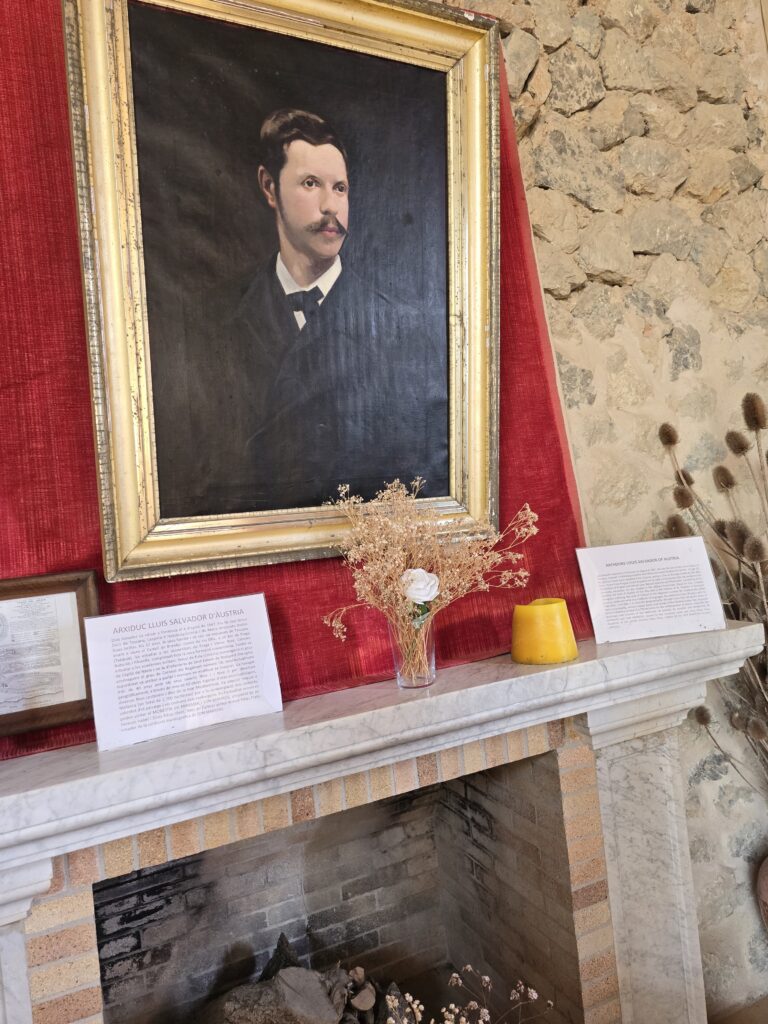
So, as you see, everything appears to be related to everything else in Europe. The history is overwhelming. I guess that’s what university history professors are for.
Our first stop was at a historic, though not ancient, home.
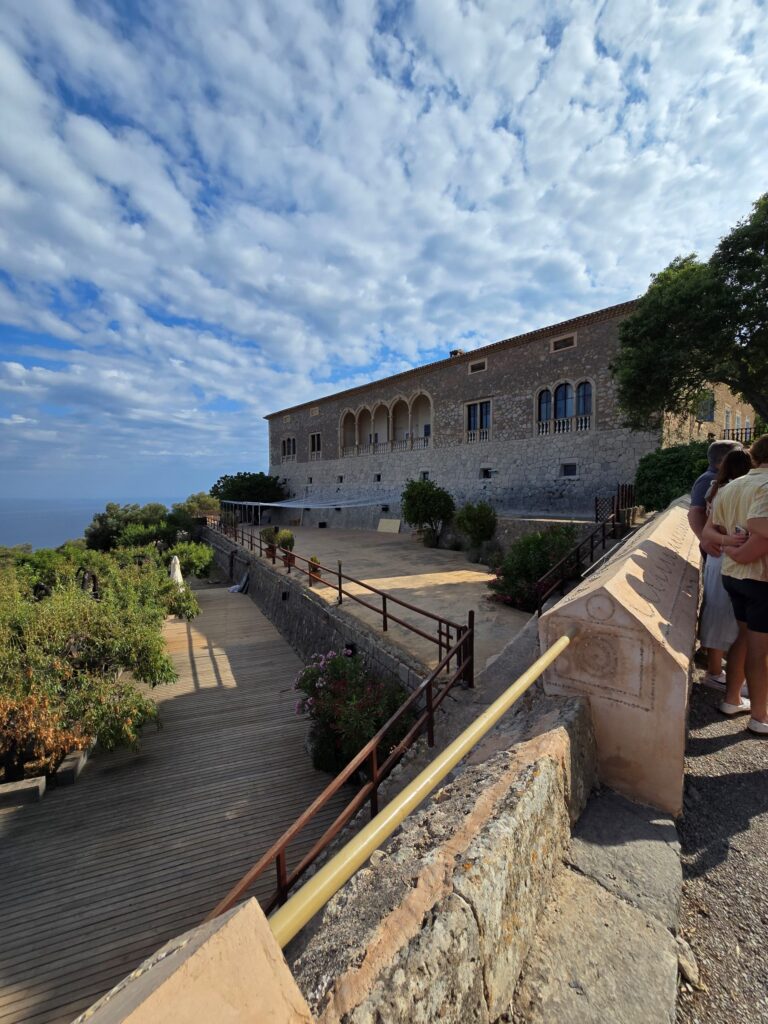
The Archduke Ludwig Salvator of Austria recognized a special location when he saw it
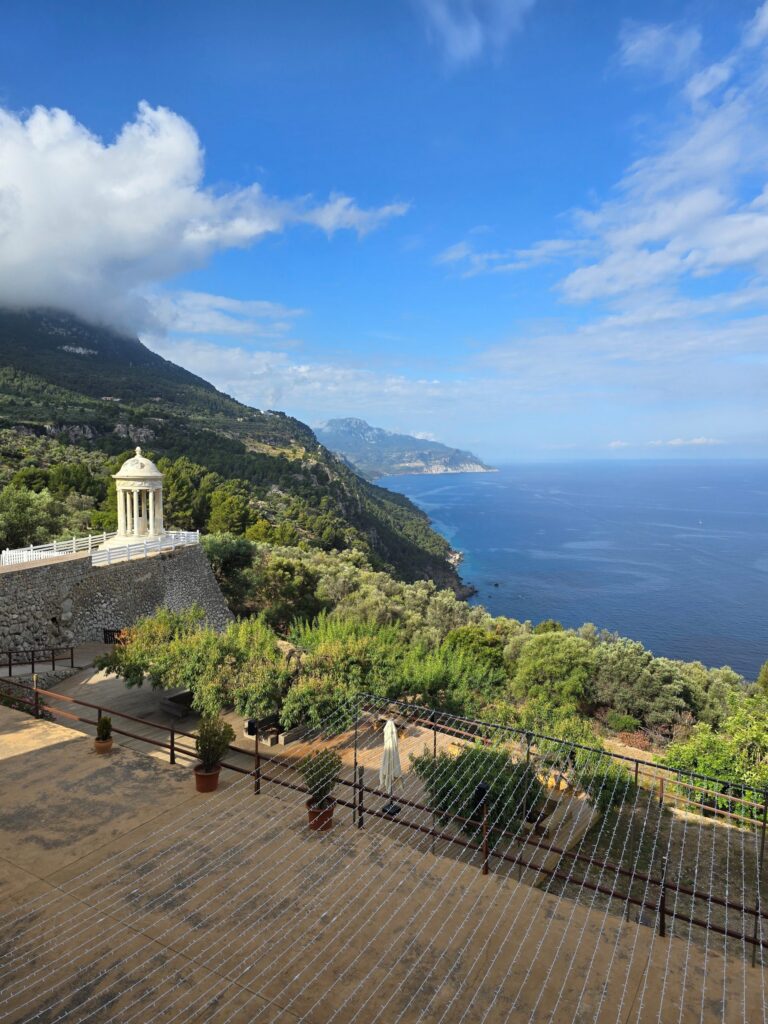
Wikipedia expounded: “Son Marroig is the historic estate in Palma de Mallorca formerly owned by Archduke Ludwig Salvator of Austria, now celebrated as a public attraction featuring traditional Majorcan architecture, antiques, and panoramic sea views…
“The Archduke, a renowned naturalist and honorary citizen of Mallorca, acquired these properties after first visiting in 1867, dedicating much of 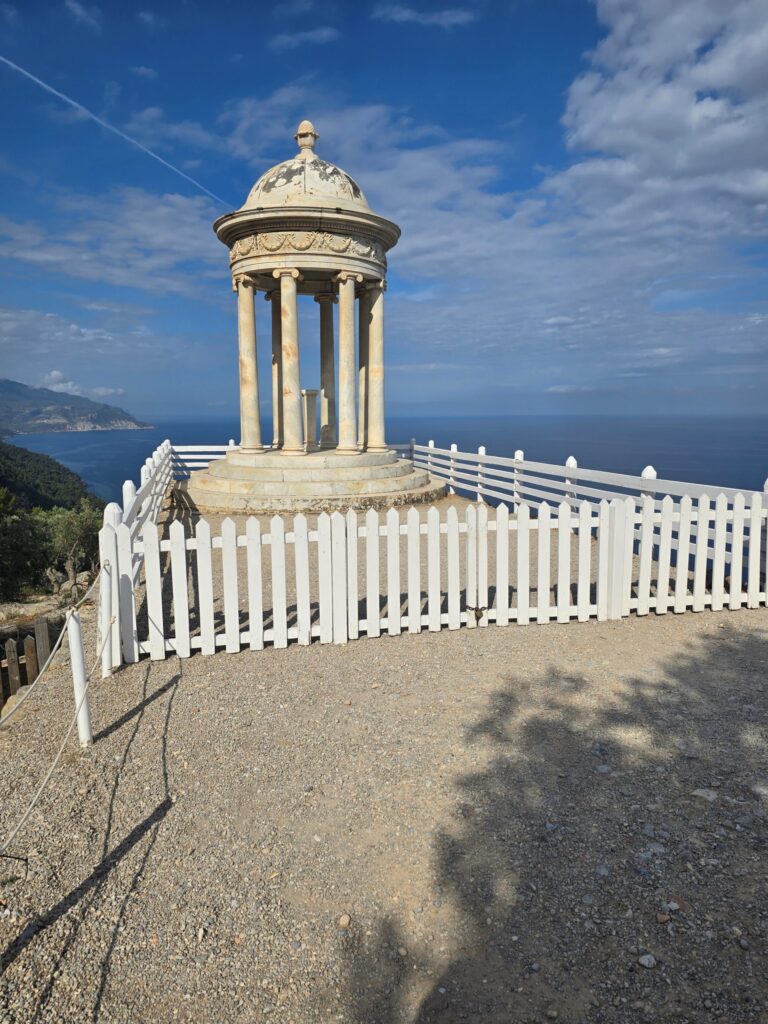 his life to preserving the island’s natural beauty and architecture.”
The guide’s English was reasonably understandable, though the bus’s PR system wasn’t the easiest to hear. I enjoyed the ride up to Son Marroig, though I had no clue what it was called and only subsequently learned about the Archduke through the exhibits at the estate. Mallorca reminded me of the central California coast. The guide did talk about real estate on the island, as it’s become quite popular with the rich and famous. Including Americans, though I don’t recall specifically who’s relocated there.
The estate’s historical connection is interesting, but its main draw is the scenery. It’s quite a spot. A crew was setting up for a wedding out on the terrace, and it has become a draw for nuptials.
We had an hour to explore the estate, which was sufficient time for photos and conversation with fellow tour-ees. There was a small gift-type shop that didn’t appear to entice too many visitors. Our fellow tourists seemed content to relax and absorb the breathtaking scenery. It’s hard to imagine people actually live here, but someone has to, right?
At the appointed time we were informed it was time to retake our seats in the bus and head back towards the flatter portion of the island closer to the city of Palma and the port. We were told we’d be visiting a local winery where we could take a tour of the winemaking process and then sample snacks and wine.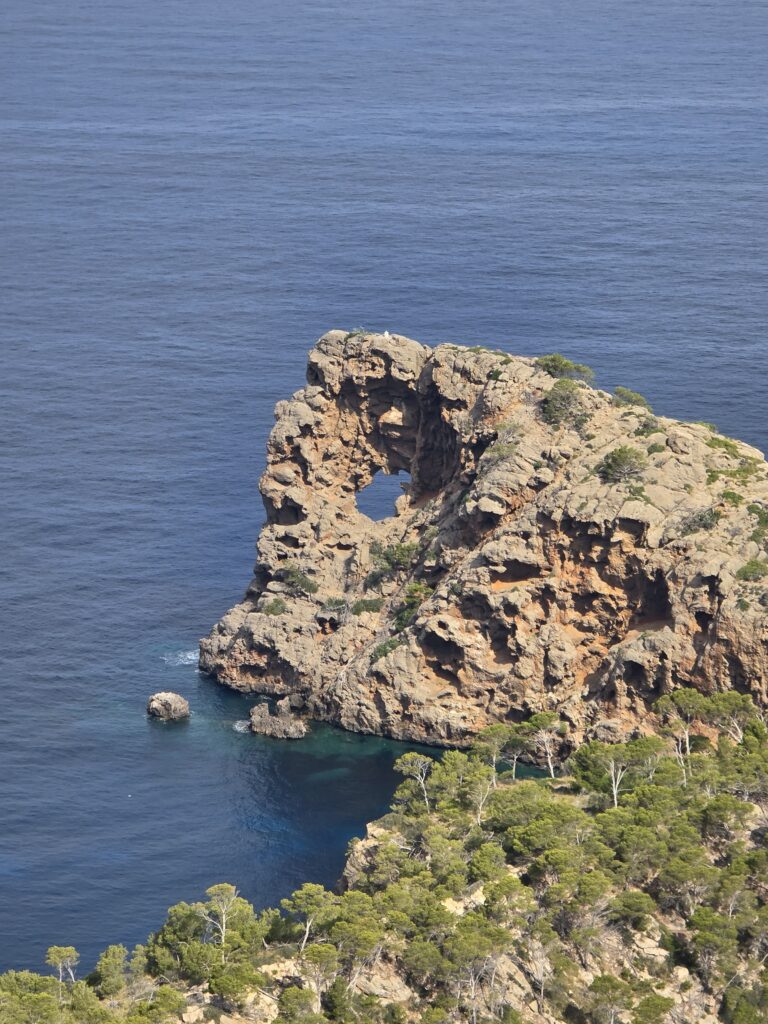
I wasn’t quite sure if we were supposed to go inside and purchase wine to enjoy in the patio area or simply follow the tour, but the crowd gathered in one large room next to the barrels, so the purpose became clearer. Having taken any number of wine tours in the states, I was primarily interested in seeing if the techniques in this part of the world differed from America’s industry.
Macià Batle – Come see why Spanish Mallorcan wines are unique and distinctive
Info on the winery: “Macià Batle is a highly rated winery located in Santa Maria del Camí, Mallorca, Spain, renowned for combining winemaking tradition with art and modern facilities. Situated in the heart of the Binissalem-Mallorca Denomination of Origin, the estate features 70 hectares of vineyards and offers immersive wine tours and tastings that visitors frequently describe as knowledgeable, friendly, and excellent value (often cited around €20 for tastings with snacks).”
That’s a pretty good synopsis. By the looks of it, the winery used French barrels, which must be the standard for winemaking, even in Spain.
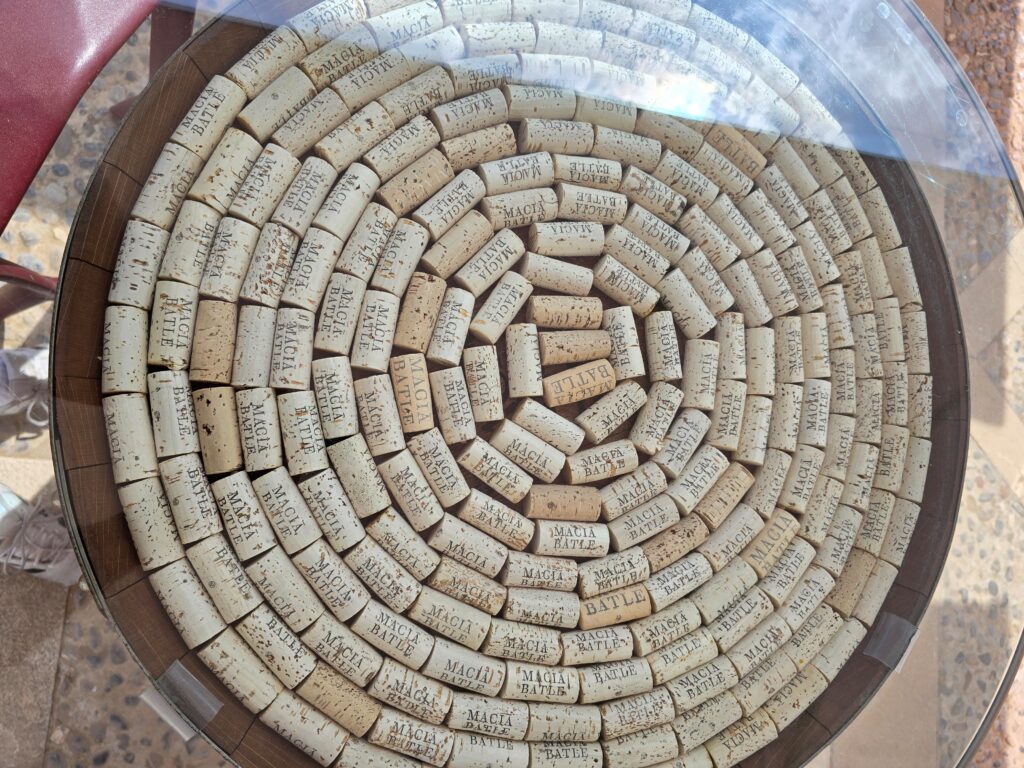 The weather was noticeably hotter on Mallorca, and the visitors seemed to appreciate the air-conditioned interior of the winery. I love winery tours as much as the next American visitor, but it is outstandingly difficult to draw distinctions between one and the others. The only noticeable difference is in the service and the winery décor, both of which were pleasing and helpful and open for questions.
There was a music performance during the presentation of the snacks and wine samples, as a gentleman played the bagpipes for the guests. I’m guessing there was some sort of Scottish connection to the place, or these people had an affinity for bagpipes. The performance added to the flavor of the setting. It was nice.
I would recommend the winery if you’re visiting Mallorca, though I couldn’t suggest any specific wines. They were all good. How’s that for a description?
I guessed that, because the land around the winery and the island of Mallorca itself was similar to California, that the region would be good for growing grapes. The proprietor promoted a wine club for purchase, though it wasn’t clear whether we could ship directly to the United States – and how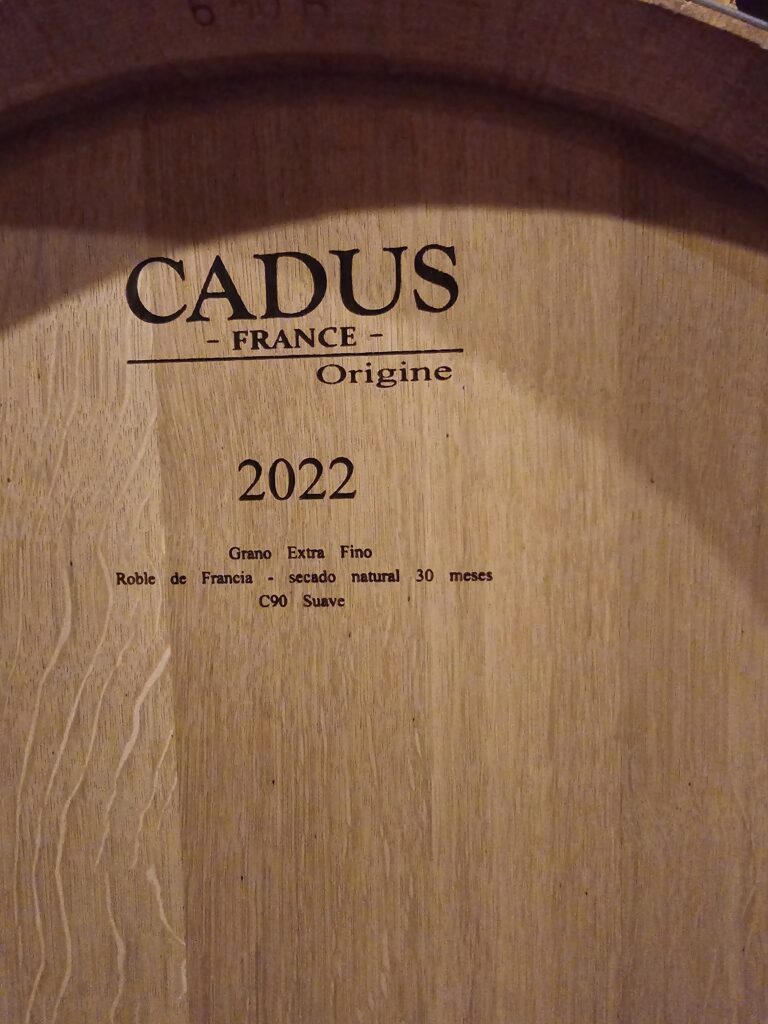 much it would cost to do so.
There might have been time to buy wine and sit outside, though I don’t believe anyone did. It was hot and dry enough outside where cruise passengers seemed ready to head back to Palma and see what was there, which was also close to the cruise port. We’d exited directly from the Oasis of the Seas itself, no tendering necessary.
City of Palma – Quaint Spanish charm without the crushing weight of crowds
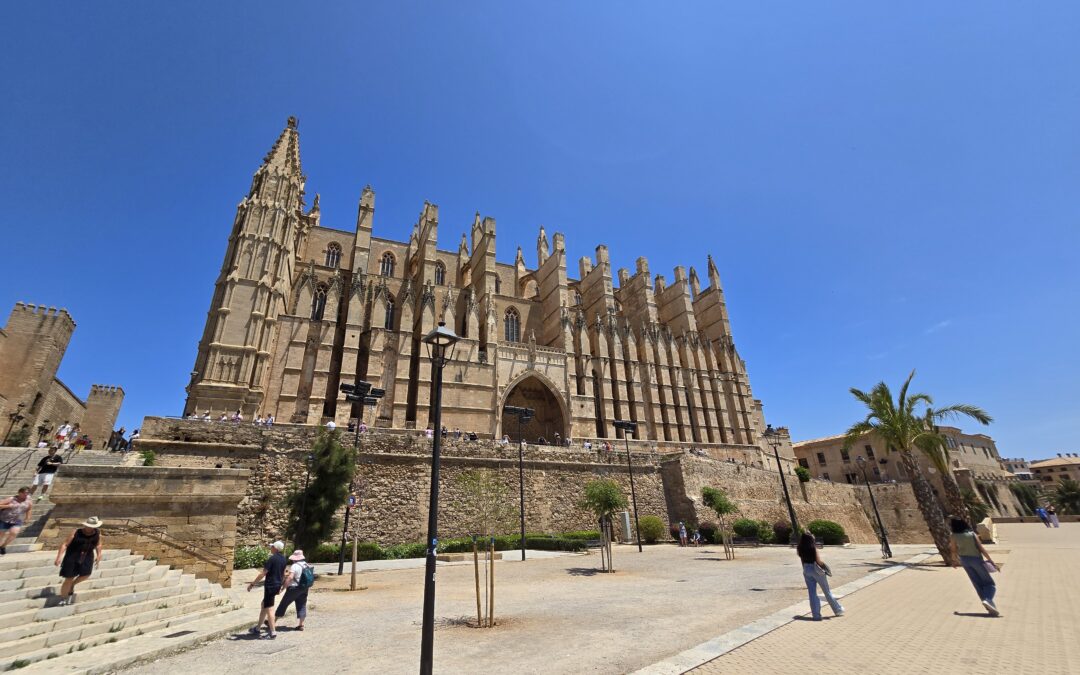
Our guide informed us that we’d have an hour on our own to tour Palma itself, shop or get something to eat. There was a beautiful historic church near the gathering point, so we decided to see what we could from the outside, or possibly venture inside if possible.
From Wikipedia: “Palma Cathedral, officially the Cathedral of Santa Maria of Palma and locally known as La Seu, is a monumental Gothic Roman Catholic cathedral located in Palma de Mallorca, Spain. Built on the site of a former Moorish mosque, its construction began in 1229 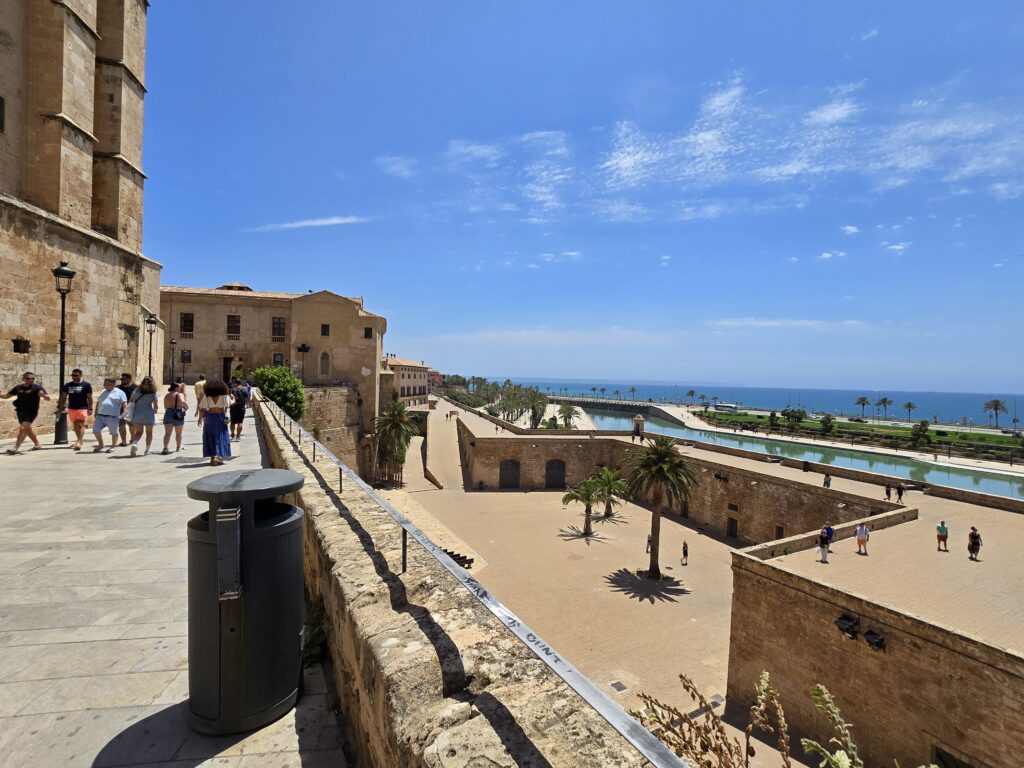 following the conquest by King James I and was completed in 1601, taking nearly four centuries.
“The cathedral is renowned for its massive scale and architectural features, including a 121-meter long nave that reaches 44 meters in height, the tallest of any Gothic cathedral in Europe. Its most famous feature is the ‘Gothic Eye,’ a massive east rose window nearly 14 meters in diameter, which is the second-largest extant Gothic rose window in the world after Strasbourg’s.”
One almost expected Othello to pop around a corner somewhere here. Very vivid place, really.
After having visited St. Peters at the Vatican a few days prior and Sagrada Familia in Barcelona, it would have been interesting to take a tour of the Palma Cathedral. But there wasn’t time, and we hadn’t purchased tickets. I believe we could’ve gained entrance for a quick look, which would’ve required tickets, but we decided against it. These cathedrals rely on tourist dollars to remain viable. A sad reality in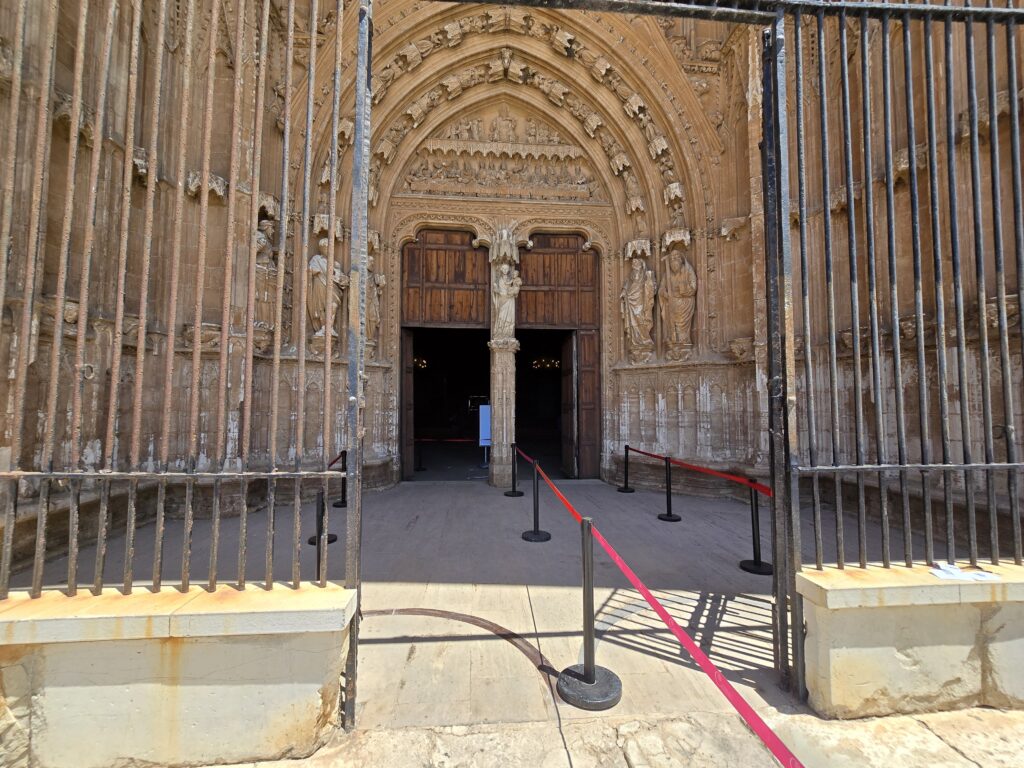 Europe but a reality nonetheless.
The doors to the Cathedral were open and I tried to peek in for a cursory look, but couldn’t see much. This would have to wait for a future visit.
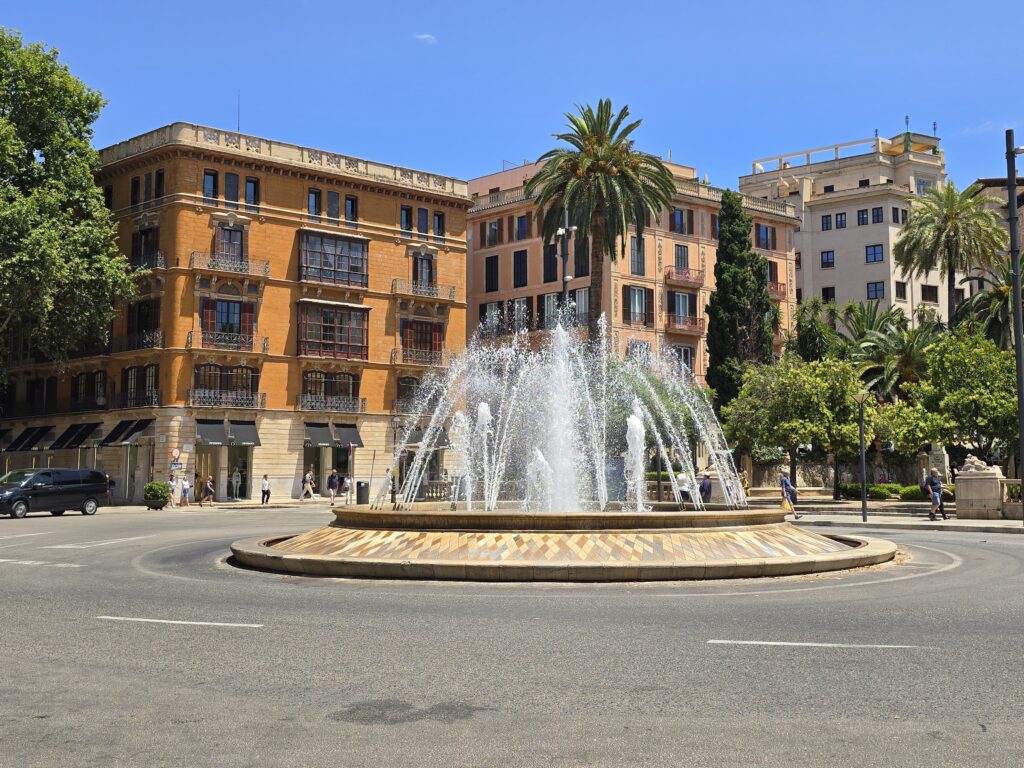
The Cathedral itself was on slightly elevated ground that must’ve served as the defensive walls of the city at some point. The ground contained wide paved walkways where citizens walked to and from. There was a traffic circle near the complex, which I’d assume was a main thoroughfare of the city. The streets leading away from the area were narrow with lots of business establishments and eateries in the vicinity.
Different than Barcelona, but seemed to be distinctly Spanish nonetheless, including the wrought iron railings on upper-floor windows and verandas on the townhomes. One can only imagine it’s quite expensive to live there, but the residents no doubt enjoy the readily-attainable cultural connections and buzz of urban nightlife.
As mentioned before, once outside the Palma vicinity, Mallorca reminded me a lot of coastal central California. Palma itself, at least the reasonably small sample I encountered, looked similar to a much better maintained Caribbean island. Hence, the Spanish connection. The buildings were painted yellow or burnt orange in appearance.
Across the avenue from the Cathedral, there were several street vendors with handbag-type merchandise. I gathered that theft was not an issue as the goods were laid out on a plain white sheet and not locked up in any sense.
One thing I found curious – there was a shop/storefront with a Re/MAX sign with the real estate group’s signature balloon beckoning people to come inside. Really? But I suppose someone had to handle the throngs of would-be Mallorca transplants, or wealthy foreigners who simply sought to purchase a vacation villa there.
Mallorca’s heat and the fact that we’d had a pretty full tour schedule the previous day in Barcelona contributed to a desire to return to the ship when our tour concluded. Like with many excursions, there was time allotted to further explore the immediate vicinity. Shoppers might enjoy perusing the offerings there. We just banked what we’d seen and headed back.
Other articles in this series:
European Cruise Destinations: Rome – Rome wasn’t built in a day; it can’t be toured in a day, either — https://www.golfintheusa.com/european-cruise-destinations-rome-rome-wasnt-built-in-a-day-it-cant-be-toured-in-a-day-either/
European Cruise Destinations: Naples — GolfintheUSA.com visits Pompeii (and Naples) – Amalfi Coast, Vesuvius and Sorrento https://www.golfintheusa.com/golfintheusa-com-visits-pompeii-and-naples-amalfi-coast-vesuvius-and-sorrento/
European Cruise Destinations: Barcelona – Drink in the sights, sounds, culture and history of the Sagrada Familia dominated Barcelona. Prepare to be wowed. — https://www.golfintheusa.com/european-cruise-destinations-barcelona-drink-in-the-sights-sounds-culture-and-history-of-the-sagrada-familia-dominated-barcelona-prepare-to-be-wowed/